
Imported article. Original text and notation are preserved; embedded video opens in its original player. Legacy offers have not been revalidated. View source ↗
Link update: Earlier checkout links below are no longer in use. Practice Prompts is still available. View current Practice Prompts for contents, pricing and terms. Older product details, prices, guarantees and bundle conditions below may no longer apply. See our current guitar resources.
If you’ve ever felt stuck staring at your fretboard, unsure how to make your solos sing, it’s time to change that. Using guitar scale charts to guide your improvisation can open up a whole new world of creative possibilities. In this post, I’ll show you how these simple tools can help you move from predictable to mind-blowing in your guitar solos. Ready to ditch the guesswork? Let’s get into it.
What Are Guitar Scale Charts? And Why Do They Matter?
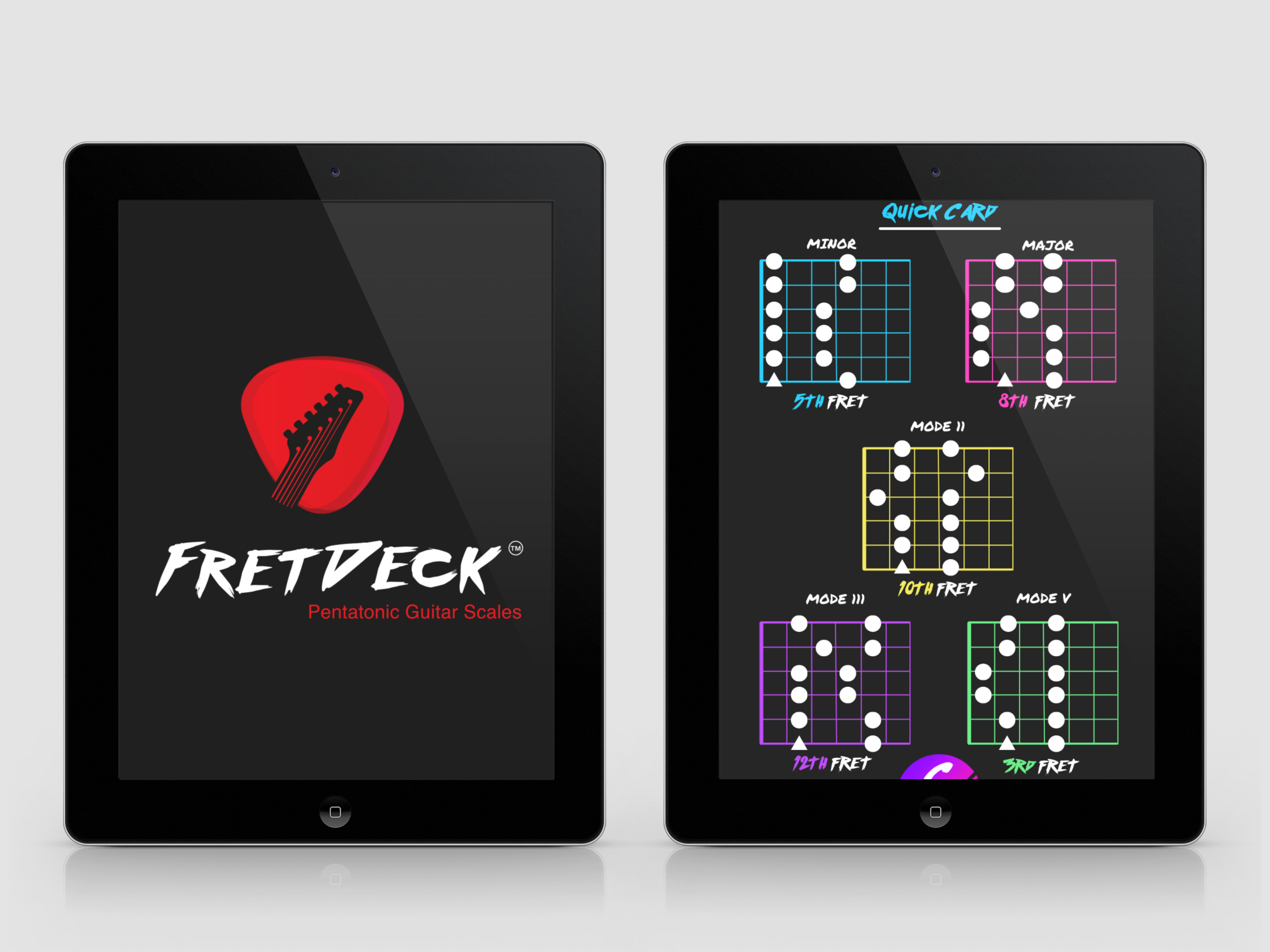
Let’s start with the basics. A guitar scale chart is like a cheat sheet for your fretboard. It shows the exact notes of a specific scale laid out on the neck of your guitar. Think of it as a treasure map, and each note is a piece of gold waiting to be discovered.
But here’s the kicker: too many guitarists look at scale charts and think, “Cool shapes!” without really understanding how to use them. Don’t just memorize these patterns—harness them. A guitar scale chart is a tool, not a crutch. Use it to unlock your creativity, not just to play the same licks over and over.
Download The FretDeck & Pentatonic Secrets Course!
Download Our Course (offer retired)
Step 1: How to Read Guitar Scale Charts (And Actually Use Them)
Guitar scale charts might look intimidating, but they’re dead simple once you know the basics:
- Dots represent notes: Each dot is a note in the scale. Some charts mark the root note (the scale’s starting point) in a different color.
- The fretboard is your map: The chart shows where the scale lives on the guitar neck.
How to Start Practicing with Scale Charts
- Pick a scale: Start with a classic like the pentatonic scale or the major scale.
- Focus on one position: Don’t try to learn the entire fretboard in one sitting. Start with one box or shape.
- Play slow and steady: Practice each note of the scale in order, ascending and descending.
Step 2: Using Guitar Scale Charts to Build Killer Solos
Here’s the fun part: once you know where the notes are, you can start making music.
Phrase Like a Pro
Great solos aren’t about cramming in a million notes—they’re about telling a story. Think of each scale note as a word, and your solo as a conversation. Use your scale chart to guide your phrasing:
- Start with short, simple licks.
- Add pauses to let your phrases “breathe.”
- Experiment with dynamics—go soft, then loud.
Add Flavor with Bend, Slide, and Vibrato
Scale charts show you the notes, but the feel comes from how you play them. Add some spice to your playing with these techniques:
- Bends: Push the string up to reach a higher pitch—it’s a bluesy classic.
- Slides: Glide between notes for a smooth, vocal-like sound.
- Vibrato: Shake the note slightly for extra emotion.
Pro Tip: Start with your scale chart and experiment with adding bends or slides to notes in different positions. You’ll be surprised how quickly your playing sounds more expressive.
Step 3: Move Beyond the “Box” Using Guitar Scale Charts
If you’ve ever played the pentatonic scale, you’re probably familiar with “the box”—a single position on the fretboard where the scale lives. While this is a great starting point, the real magic happens when you break out of it.
Connect the Dots Across the Fretboard
Scale charts aren’t limited to one position. They show how the same scale exists all over the neck. Once you’ve mastered one box, learn how to connect it to others. Here’s how:
- Start by sliding between positions using the root note as your anchor.
- Practice moving diagonally up the fretboard instead of staying in one horizontal area.
- Use your ears—play what sounds good, even if it means breaking out of the pattern.
Download The FretDeck & Pentatonic Secrets Course!
Download Our Course (offer retired)
Improvisation Exercises Using Guitar Scale Charts
To make the most of your scale charts, you need to turn knowledge into action. Here are some exercises to help you improvise with confidence:
1. Jam with a Backing Track
Find a backing track in the key of your scale (YouTube is full of them). Use your chart to explore different notes and create licks. Try sticking to one position at first, then branch out.
2. “Question and Answer” Solos
Play a short “question” phrase using your scale, then “answer” it with a different phrase. For example:
- Question: A simple ascending lick.
- Answer: A descending lick with vibrato.
This exercise helps you think like a storyteller, rather than just a note-chaser.
3. Limitation Licks
Restrict yourself to just 3 or 4 notes from the scale chart. This forces you to focus on rhythm and phrasing instead of overplaying.
Scale Chart Secrets the Pros Won’t Tell You
Want to know why pros like Adam Levy, John Mayer, and Eric Clapton make improvising look easy? Here’s the secret:
- They know their scales—but they don’t rely on them. Instead, they use scale charts as a foundation, then add emotion, personality, and unpredictability to their solos.
- They listen. The best improvisers are constantly listening to the band, the audience, and themselves, adjusting their playing in real time.
Why Guitar Scale Charts Are Your Best Friend (Not Your Boss)
Using guitar scale charts isn’t about following rigid rules—it’s about unlocking your creativity. The goal isn’t to play every note on the chart, but to find the notes that speak to you.
Start slow. Focus on one scale. And most importantly, have fun. Improvisation is about expression, not perfection.
Get Started with FretDeck’s Scale Chart Pack
Want to master improvisation faster? Download FretDeck’s Pentatonic Scales and Practice Prompts—a beautifully designed deck of charts for every major scale, pentatonic shape, and mode you’ll ever need.
- Clear, easy-to-read diagrams for all skill levels.
- Bonus tips on connecting scales across the fretboard.
- Perfect for practice sessions and jam nights.
Download the FretDeck,Courses & Practice Prompts (old checkout link)
Download The FretDeck & Pentatonic Secrets Course!
Download Our Course (offer retired)
Final Thoughts on Guitar Scale Charts and Improvising
Learning to improvise with guitar scale charts is like unlocking a new superpower. Suddenly, the fretboard becomes less of a mystery and more of a playground. Whether you’re jamming with friends, writing your own music, or just noodling at home, these charts will give you the confidence to make every note count.
So grab your guitar, pull up a chart, and start exploring. Your next great solo is waiting. And don’t forget to join the Guitar Freaks Hangout on Discord for tips, tricks, and jam sessions with other passionate players.
Let’s make some music!
Get the free Fret Logic e-book
Get Fret Logic FREE! Sign up to receive the free Fret Logic e-book by email. Get the free Fret Logic e-book by email
For a deeper dive into mastering scales and chords, check out our article on Guitar Charts For Free: Mastering Scales and Chords. This guide offers free resources and insights to help you navigate the fretboard with confidence.