
So many guitarists get frustrated with their progress in guitar scale lessons. They practice for hours, memorize the box shapes, and run drills until their fingers ache, yet the moment a backing track starts, their minds go blank.
You know the feeling. You’re trapped in that one comfortable pentatonic box, playing the same old licks. The rest of the neck feels like a foreign country without a map. As a result, you start to believe the problem is you, your talent, or your fingers.
However, what if the problem isn’t the scales at all? What if the way your guitar scale lessons are structured is fundamentally broken?
The Real Reason Scales Feel Like a Chore
You’ve been told the secret to great lead guitar is to “learn your scales.” So you did. You downloaded the diagrams, watched the videos, and diligently practiced the Major scale, the Minor scale, and the pentatonic patterns.
But here’s the forbidden truth: memorizing shapes is not the same as making music. Running scales up and down is like reciting the alphabet. It’s a necessary first step, but it doesn’t make you a poet. The real frustration comes from the disconnect between the shape you memorized and the sound you want to hear.
This method forces you to think in rigid boxes instead of fluid musical ideas. Consequently, when you try to improvise, your brain searches for a familiar pattern instead of a beautiful melody. You’re not playing music; you’re just connecting the dots. It’s no wonder you feel stuck, bored, and uninspired.
What If You Could See the Fretboard Instead of Just Memorizing It?
Most guitarists spend years guessing where to put their fingers. They memorize shapes without understanding why — and the second they try to improvise or learn a new song, they’re lost again.
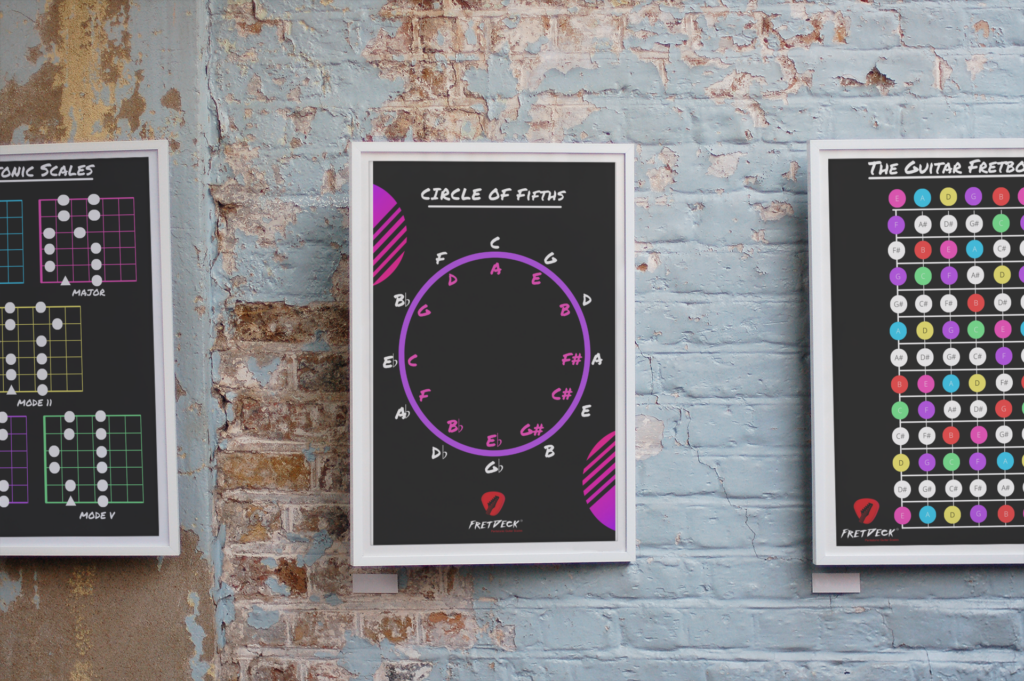
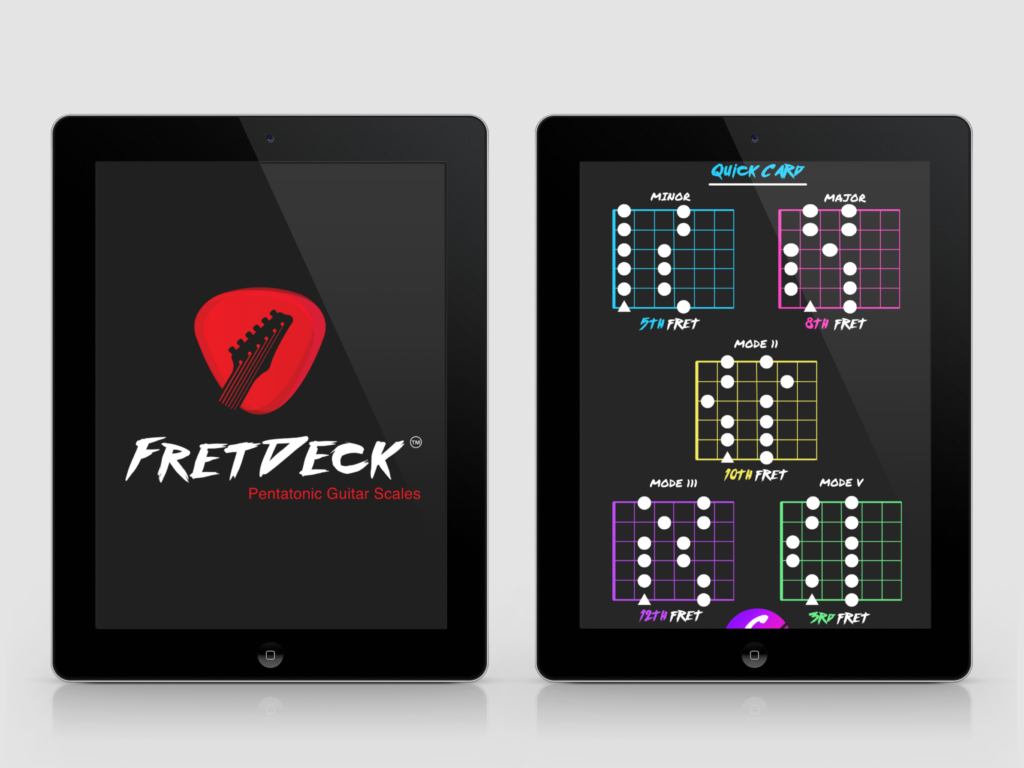
The FretDeck Practice Workstation changes that. It’s the interactive fretboard app that shows you exactly what to play, why it works, and how every note connects — so you finally understand the guitar instead of just copying tabs.

Whether you’re stuck in a rut, tired of noodling the same pentatonic box, or ready to unlock the entire neck — the FretDeck Practice Workstation gives you the visual roadmap to get there. All for just $14/month.
The “Context Over Content” Revolution
The single biggest shift you can make is to stop focusing on the what and start focusing on the why. A scale isn’t just a random collection of notes. Specifically, it’s a set of intervals that create a specific mood or feeling when played over a chord.
Instead of just memorizing the C Major scale shape, ask yourself: Why do these notes sound good over a C Major chord? The answer is context. The notes in the scale (C, D, E, F, G, A, B) directly relate to the notes in the chord (C, E, G). They are the “safe” notes.
Therefore, your practice should change immediately. Don’t just run scales in a vacuum. Put on a simple backing track—even just a single droning chord. Play the scale over it and listen. Really listen. Which notes feel resolved and peaceful? Which ones create tension? This simple exercise moves you from a finger-wiggler to a musician who understands harmony. For example, by learning how scales fit into a chord progression guide, you connect the dots between melody and harmony.
From Mechanical Shapes to Musical Phrases
Running scales mindlessly builds finger dexterity, but it doesn’t build your musical vocabulary. Think about how you learned to speak. You didn’t just chant the alphabet; you learned words and then combined them into phrases to express ideas. The same applies to guitar. Your effective guitar scale lessons should focus on creating musical phrases, not just technical proficiency.
A great way to do this is to limit yourself. For instance, try creating a compelling melody using only three notes from a scale. This forces you to focus on rhythm, phrasing, and note choice rather than just speed. Record yourself playing over a backing track for one minute. The goal is not to play fast, but to play something that sounds like it could be in a song.
Moreover, start stealing licks. Find a simple blues or rock lick from one of your favorite players. A fantastic resource for this is browsing the lessons on Guitar World. Learn the lick, and then analyze it. Which scale is it from? Why does it work over the chord progression? Once you understand it, you own it. You’ve just added a new “word” to your musical vocabulary.
What If You Could See the Fretboard Instead of Just Memorizing It?
Most guitarists spend years guessing where to put their fingers. They memorize shapes without understanding why — and the second they try to improvise or learn a new song, they’re lost again.
The FretDeck Practice Workstation changes that. It’s the interactive fretboard app that shows you exactly what to play, why it works, and how every note connects — so you finally understand the guitar instead of just copying tabs.
Whether you’re stuck in a rut, tired of noodling the same pentatonic box, or ready to unlock the entire neck — the FretDeck Practice Workstation gives you the visual roadmap to get there. All for just $14/month.
👉 Start Using the FretDeck Practice Workstation Now
Rethinking Your Entire Guitar Scale Lessons Journey
The ultimate goal is to break free from the “box” mentality and see the entire fretboard as one interconnected musical landscape. The C Major scale in the first position contains the exact same notes as the C Major scale in the seventh position. They are not separate scales; they are just different ways to access the same collection of sounds.
This is where visualization becomes your superpower. Instead of seeing five separate pentatonic boxes, start seeing the pathways that connect them. For example, find the root note of your scale (like C) in several places on the neck. Now, practice playing scale fragments that start at one root note and end at another. Suddenly, those boxes start to melt away.
A tool like the FretDeck practice app is designed specifically for this, helping you visualize these connections in real-time. As a result, you stop thinking “Which box am I in?” and start thinking “Where can I go next?” This is the key that unlocks true fretboard freedom. This approach is fundamental to how you learn guitar scales effectively.
5 Practical Drills for Musical Scale Practice
To put this all into action, integrate these drills into your best practice routine. Ditch the mindless repetition and try these musical exercises instead.
1. The One-String Solo: Pick one string and one scale. Play a one-minute solo over a backing track using only the notes from your chosen scale on that single string. This forces you to be creative with phrasing and rhythm.
2. Sing What You Play: Before you play a note from a scale, try to sing it first. This builds a powerful connection between your ear, your brain, and your fingers. It’s the fastest way to start playing what you hear in your head.
3. Target the Chord Tones: When a new chord comes up in your backing track, try to land on one of its chord tones (the root, third, or fifth) right on the downbeat. This makes your solos sound purposeful and locked-in with the harmony.
4. Use a Looper Pedal: Record a simple two-chord progression. Now, practice your scale over it. With instant feedback, you can immediately hear what works and what doesn’t, accelerating your learning curve. Many modern amps even have this feature built-in, as detailed in reviews on sites like MusicRadar.
5. Deconstruct, Then Reconstruct: Learn a simple, famous guitar solo. Figure out which scale(s) it’s built from. Then, use those same scales to create your own solo over the same backing track.
Frequently Asked Questions
What is the most important scale to learn first?
While most teachers say the minor pentatonic, the truly foundational scale is the Major scale. Why? Because nearly all other scales and music theory concepts (including minor scales, modes, and chord construction) are derived from it. Understanding the Major scale is like learning the master key that unlocks everything else.
How much time should I dedicate to guitar scale lessons?
It’s about quality, not quantity. Fifteen minutes of focused, musical scale practice like the drills mentioned above is far more valuable than an hour of mindless, mechanical repetition. Make it the most intense, deliberate part of your practice session, then move on to learning songs.
Do I need to be a music theory genius to use scales effectively?
Absolutely not. You don’t need a degree to have a meaningful conversation, and you don’t need one to play a great solo. However, learning just a little bit of theory—like how scales relate to chords—is the difference between a player who copies licks and a musician who creates them from scratch. It provides the “why” behind the “what.”
What If You Could See the Fretboard Instead of Just Memorizing It?
Most guitarists spend years guessing where to put their fingers. They memorize shapes without understanding why — and the second they try to improvise or learn a new song, they’re lost again.
The FretDeck Practice Workstation changes that. It’s the interactive fretboard app that shows you exactly what to play, why it works, and how every note connects — so you finally understand the guitar instead of just copying tabs.
Whether you’re stuck in a rut, tired of noodling the same pentatonic box, or ready to unlock the entire neck — the FretDeck Practice Workstation gives you the visual roadmap to get there. All for just $14/month.
👉 Start Using the FretDeck Practice Workstation Now
Related posts: