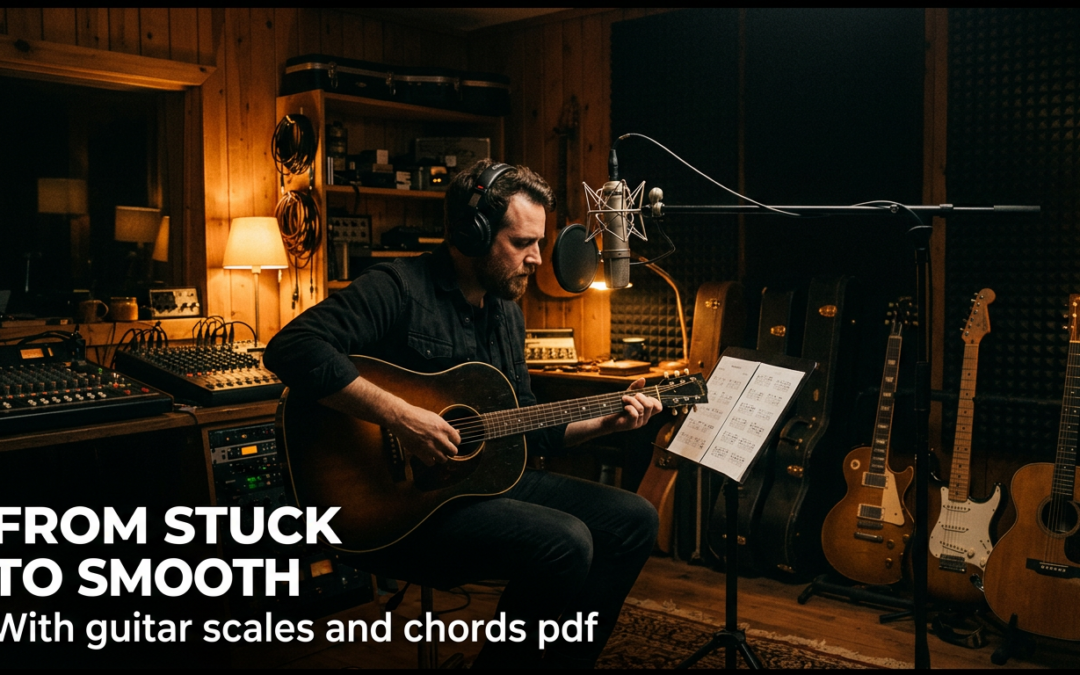

Have you ever downloaded a promising guitar scales and chords pdf? You probably thought it was the missing link, the one document that would finally unlock the fretboard for you. In reality, it likely became just another file collecting digital dust on your hard drive.
You aren’t alone in this experience. Countless guitar players download tons of charts, diagrams, and guides. However, they soon discover that static images on a page do very little to connect the notes under their fingers. The dream of fluidly moving between chords and lead lines remains frustratingly out of reach.
This cycle of hope and disappointment is exhausting. But what if the problem isn’t you? What if the problem is the format itself, and you just need a new way to interact with the information?
Why That PDF Becomes a Digital Dust Collector
Let’s be honest about the typical experience. You find a guitar scales and chords pdf that looks comprehensive. It has dozens of pages filled with intricate diagrams of every scale and chord imaginable. At first, you feel a jolt of motivation.
However, that feeling quickly fades. You stare at a page showing the A minor pentatonic scale in five different positions. They look like random, disconnected dot-to-dot puzzles. You try to memorize one shape, but there’s no context. There is no sound, no rhythm, and no musical application.
Furthermore, the chords section is completely separate. You see diagrams for Am, C, G, and F, but the PDF never explains why those chords work with that scale. As a result, you are left with two isolated buckets of information: a set of “lead guitar” shapes and a set of “rhythm guitar” shapes. The bridge between them is missing entirely. This is why you feel stuck playing in one little box or strumming the same old chord progressions.
What If You Could See the Fretboard Instead of Just Memorizing It?
Most guitarists spend years guessing where to put their fingers. They memorize shapes without understanding why — and the second they try to improvise or learn a new song, they’re lost again.
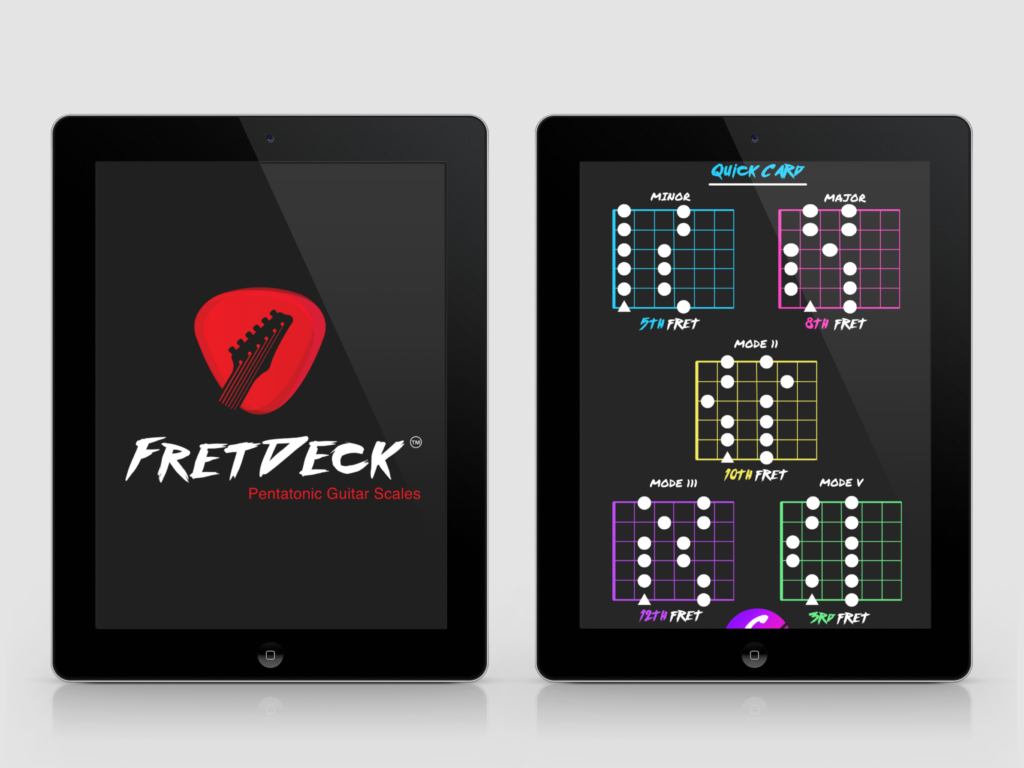
The FretDeck Practice Workstation changes that. It’s the interactive fretboard app that shows you exactly what to play, why it works, and how every note connects — so you finally understand the guitar instead of just copying tabs.

Whether you’re stuck in a rut, tired of noodling the same pentatonic box, or ready to unlock the entire neck — the FretDeck Practice Workstation gives you the visual roadmap to get there. All for just $14/month.
👉 Start Using the FretDeck Practice Workstation Now
From Static Diagrams to Dynamic Understanding
The first major mindset shift is realizing that scales and chords aren’t separate subjects. In fact, they are two sides of the very same coin. A scale is simply a sequence of notes that sound good together. A chord is just three or more of those same notes played at the same time.
For example, the C Major scale contains the notes C, D, E, F, G, A, and B. If you take the 1st, 3rd, and 5th notes of that scale (C, E, and G), you get a C Major chord. If you start on the second note (D) and take every other note (D, F, A), you get a D minor chord. They are intrinsically linked.
A static PDF can’t demonstrate this relationship dynamically. It can only show you the finished products. Therefore, your first step is to stop viewing them as two different things to practice. Instead, see every scale you learn as a “menu” of notes from which you can build chords. This simple mental shift is the foundation for breaking out of memorization mode and into true musical understanding. For more foundational knowledge, check out our beginner guitar tips.
Your New Approach to a guitar scales and chords pdf
Now, let’s make that guitar scales and chords pdf actually useful. Instead of trying to absorb the entire document at once, you will use it as a reference tool for a new, interactive practice method. Pick one key and one scale to focus on for an entire week. Let’s use A minor.
First, find the A minor pentatonic scale in your PDF. Don’t just stare at the diagram. Play each note, one by one, up and down the scale. Listen to the sound. Next, look at the chord section. Find the basic chords that exist within the key of A minor: Am, G, C, F, Dm, E. Play each of those chords.
Now comes the magic. Put on a simple backing track in A minor. You can find thousands on YouTube for free. For the first minute, just strum the chords. Get a feel for the progression. Then, for the next minute, stop playing chords and try playing notes only from your A minor pentatonic scale shape. Notice how every note you play sounds “correct” over those chords. You’re not guessing; you’re using a system. This is the connection that diagrams alone can never teach. A great resource for understanding this theory can be found on sites like Guitar World.
What If You Could See the Fretboard Instead of Just Memorizing It?
Most guitarists spend years guessing where to put their fingers. They memorize shapes without understanding why — and the second they try to improvise or learn a new song, they’re lost again.
The FretDeck Practice Workstation changes that. It’s the interactive fretboard app that shows you exactly what to play, why it works, and how every note connects — so you finally understand the guitar instead of just copying tabs.
Whether you’re stuck in a rut, tired of noodling the same pentatonic box, or ready to unlock the entire neck — the FretDeck Practice Workstation gives you the visual roadmap to get there. All for just $14/month.
👉 Start Using the FretDeck Practice Workstation Now
Connecting the Dots Across the Neck
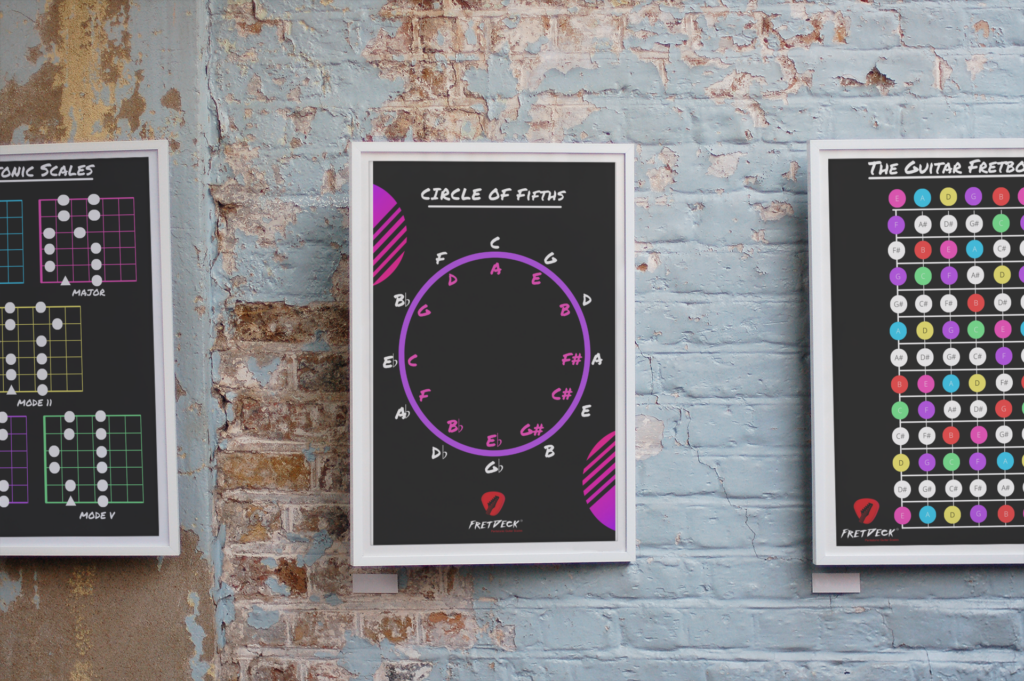
The final piece of the puzzle is breaking out of that one “box” shape. Your PDF probably shows you five different positions for the same scale. To the untrained eye, they look completely different. However, they are all connected.
Think of it like a train route. Each scale position is a station, and there are tracks connecting them. The last few notes of “Position 1” are the first few notes of “Position 2.” Your job is to learn the routes between the stations. Instead of practicing one box up and down, try playing from the bottom of Position 1 to the top, and then slide your hand up to immediately start playing Position 2.
This horizontal thinking transforms the fretboard from a series of isolated boxes into one continuous, interconnected map. Suddenly, you can follow a chord progression anywhere on the neck because you know the scale that connects everything. This is what separates intermediate players from advanced players. To dive deeper, explore our complete guide on how to learn guitar scales effectively.
6 Practical Steps for Musical Mastery
To put this all into action, follow this simple routine. It will make any guitar scales and chords pdf an active part of your growth.
1. Focus on One Key: Choose one key (like G Major or E minor) and commit to it for at least a week. Find the primary scale and the main chords for that key only.
2. Internalize the Sound: Before playing a note, hum the scale. Singing the notes as you play them builds a crucial ear-to-finger connection that diagrams can’t teach.
3. Use Backing Tracks Immediately: Theory without application is useless. From day one, play your chosen scale and chords over a backing track in the same key. This provides instant musical context. A proper chord progression guide can help you find common patterns to practice over.
4. Target Chord Tones: As you improvise with the scale, try to land on a note from the underlying chord right when the chord changes. This makes your solos sound deliberate and melodic, not random.
5. Visualize, Don’t Just Memorize: Use an interactive tool like the FretDeck Practice Workstation to see how the scale notes lay over the chord shapes in real time. This visual feedback accelerates learning tenfold compared to a static PDF.
6. Practice Horizontally: Dedicate five minutes of every practice session to moving between two adjacent scale positions. Play up one shape and down the next, blurring the line between them. This is a powerful technique discussed by many pros, as seen on educational platforms from companies like Fender.
Frequently Asked Questions
### What’s the first scale I should learn?
Without a doubt, you should start with the minor pentatonic scale. It’s used in rock, blues, pop, and country music. Specifically, the A minor pentatonic scale is a great starting point because it’s easy to visualize and the chords that go with it (Am, C, G) are very common for beginners. This scale is the foundation for countless famous guitar solos.
### How do I know which chords go with which scales?
This is the core of music theory, but the simple version is called diatonic harmony. For any major scale, there’s a specific pattern of major, minor, and diminished chords that are built from it. For example, in the key of C Major, the chords are Cmaj, Dmin, Emin, Fmaj, Gmaj, Amin, and Bdim. A good guitar scales and chords pdf should group these together, but your goal is to understand why they belong, not just memorize the list.
### Is a PDF better than a video for learning scales and chords?
Neither is inherently better; they serve different purposes. A video is great for initial demonstration and hearing how things should sound. A guitar scales and chords pdf is an excellent, quick-reference tool once you understand the concepts. However, the most effective tool is an interactive app that combines the visual aspect of a PDF with the dynamic application you’d see in a video, allowing you to explore the concepts yourself.
What If You Could See the Fretboard Instead of Just Memorizing It?
Most guitarists spend years guessing where to put their fingers. They memorize shapes without understanding why — and the second they try to improvise or learn a new song, they’re lost again.
The FretDeck Practice Workstation changes that. It’s the interactive fretboard app that shows you exactly what to play, why it works, and how every note connects — so you finally understand the guitar instead of just copying tabs.
Whether you’re stuck in a rut, tired of noodling the same pentatonic box, or ready to unlock the entire neck — the FretDeck Practice Workstation gives you the visual roadmap to get there. All for just $14/month.
👉 Start Using the FretDeck Practice Workstation Now
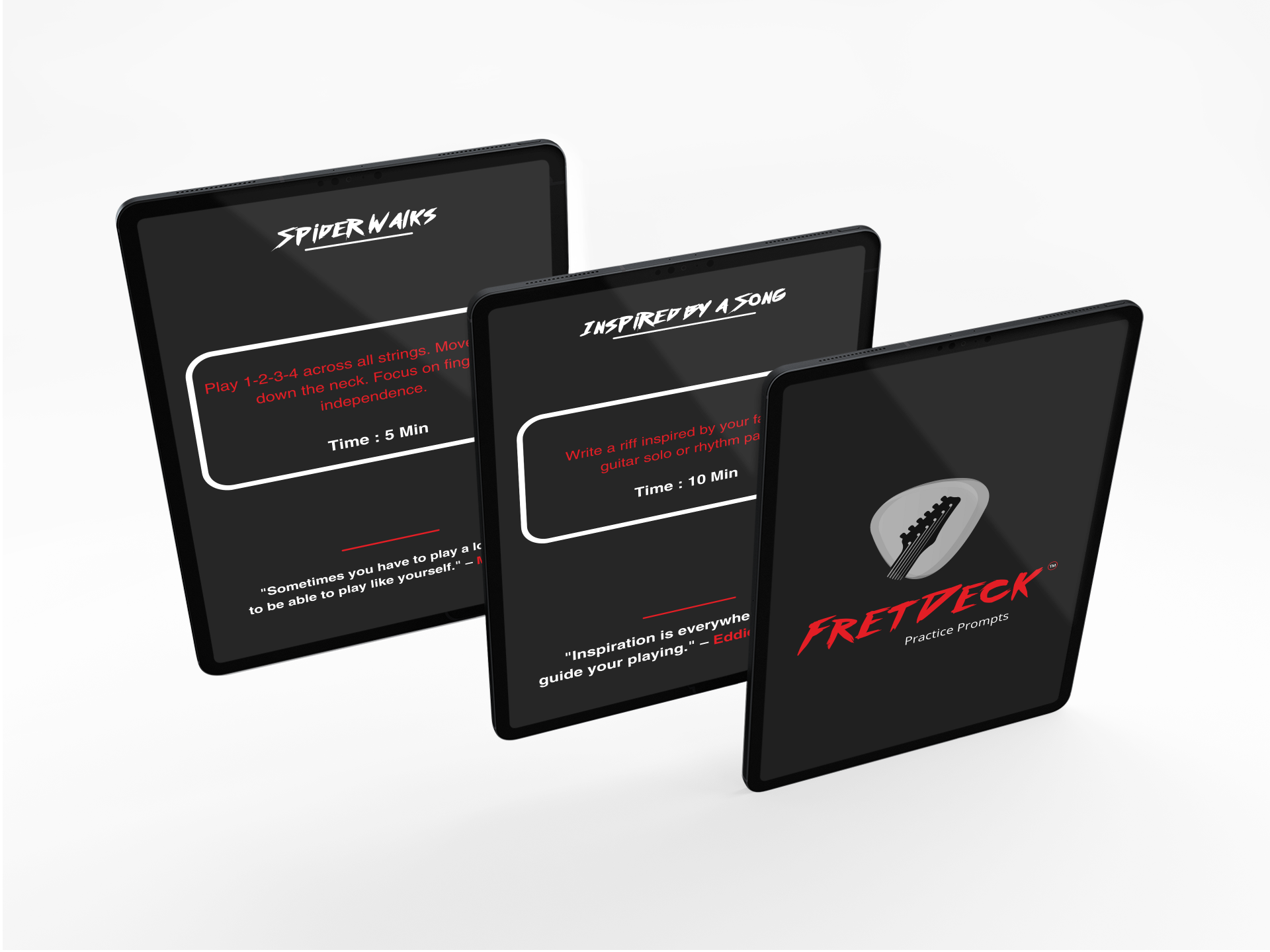
The Simple Guitar Practice System That Eliminates Guesswork
So You Can Stop Stalling… and Start Sounding Better Every Time You Pick Up the Guitar
👉 Get 52 Practice Prompts Now!
Related posts: