
Finding the right guitar scales app can feel like unlocking a cheat code for the fretboard. You stare at the neck of your guitar, a sprawling landscape of frets and strings, feeling completely lost. It’s a common frustration that holds back countless aspiring guitarists.
You know that scales are the key. They are the language of music, the building blocks of every solo and melody you’ve ever loved. However, learning them from a static book or a confusing PDF feels like trying to learn a language from a dictionary with no audio. It’s flat, uninspiring, and disconnected from the real act of making music.
This is where technology steps in to save the day. A dynamic, interactive app transforms this daunting task into an engaging and musical journey. Consequently, you can stop guessing and start playing with purpose.
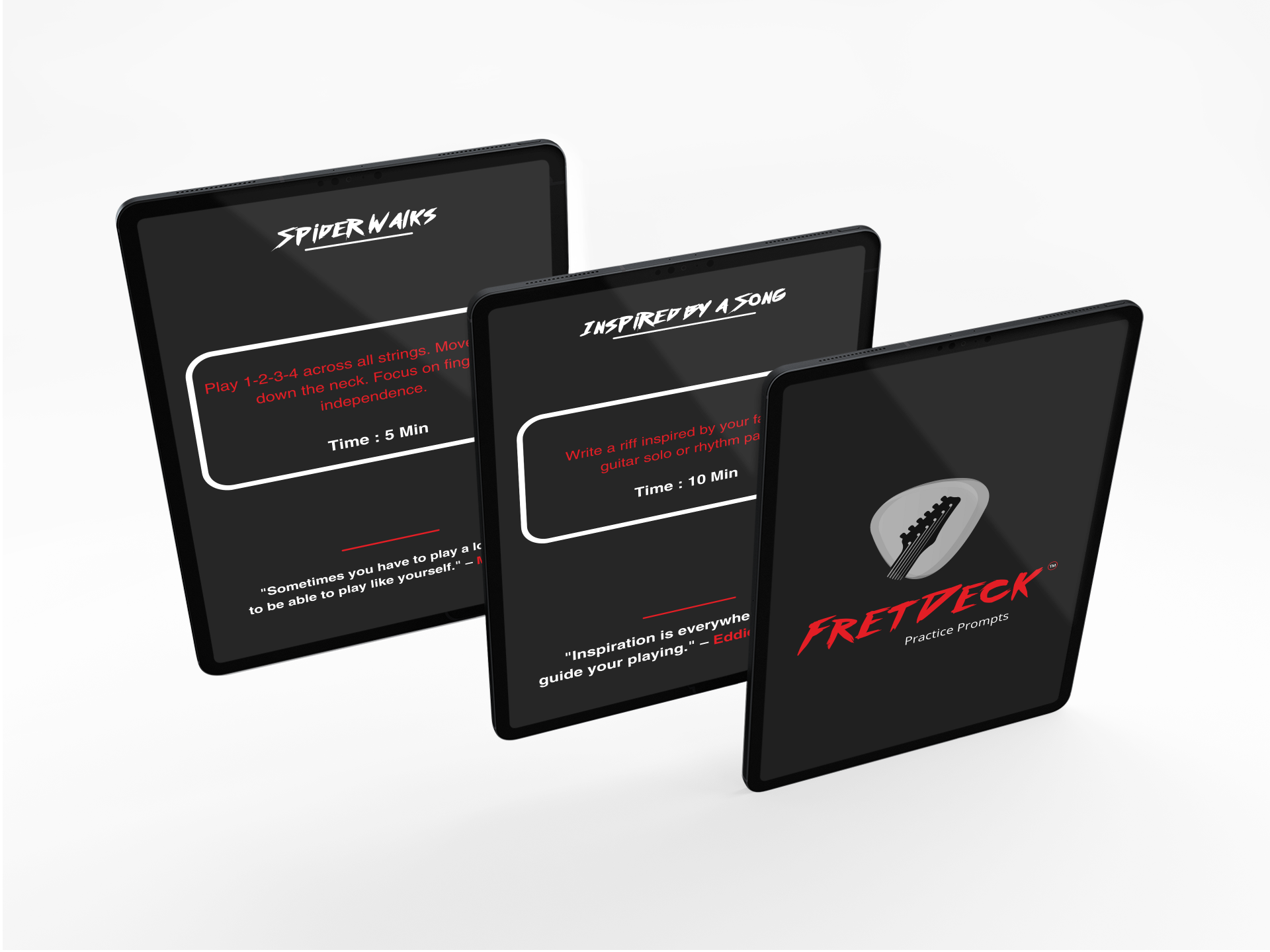
The Simple Guitar Practice System That Eliminates Guesswork
So You Can Stop Stalling… and Start Sounding Better Every Time You Pick Up the Guitar
👉 Get 52 Practice Prompts Now!
The “Scale Book” Problem: Why Paper Grids Fail You
Do you remember that old, dusty scale book? The one with endless pages of cryptic dot diagrams? For decades, this was the standard. You were expected to stare at these grids, memorize them, and somehow translate them into flowing, musical phrases.
The problem, however, is that this method is fundamentally broken for most players. Firstly, it offers no auditory feedback. You can’t hear what the scale is supposed to sound like, which is critical for ear training. Secondly, the information is completely static. The book can’t jam with you, change keys on the fly, or show you how a scale sounds over a chord progression.
As a result, you end up with “finger memory” but not musical understanding. You can play the pattern up and down, but you have no idea how to use it. This leads to a massive disconnect between practice and performance. Furthermore, the sheer volume of information is overwhelming. A single book might throw hundreds of patterns at you, leaving you paralyzed by choice. If you’re just starting, our guide on beginner guitar tips highlights the importance of focused, manageable steps, something books often fail to provide. This is why so many guitarists give up on scales, believing they just “don’t have it.”
How The Right Guitar Scales App Transforms Your Practice
This is where a modern guitar scales app changes the entire game. It’s not just a digital book; it’s a dynamic practice partner. It fundamentally re-wires the learning process from a chore into a creative exploration. Suddenly, the fretboard isn’t a mystery map but an interactive playground.
Instead of just showing you a static diagram, a great app visualizes the scale across the entire fretboard in real-time. For example, you can see the root notes, tap a note to hear it, and watch as the pattern lights up. This visual and auditory feedback loop is incredibly powerful. It connects what you see, what you hear, and what you feel under your fingers.
Moreover, the app can isolate specific positions. You can focus on mastering the classic “box 1” of the pentatonic scale before moving on. It eliminates the overwhelm by serving you exactly what you need to work on right now. As a result, you build confidence with each small victory. The goal is no longer to memorize hundreds of abstract patterns, but to internalize one playable, musical shape at a time. This approach makes the process of how to learn guitar scales infinitely more effective and enjoyable.
Essential Features of a Game-Changing App
Not all apps are created equal. When you’re searching for a guitar scales app that will genuinely improve your playing, there are a few non-negotiable features you must look for. These are the tools that separate a simple reference chart from a powerful practice suite.
First and foremost is the inclusion of high-quality backing tracks. This is the most critical feature. Practicing scales to a metronome is important for timing, but practicing them over a musical progression is what teaches you how to make music. A great app will offer tracks in various styles (rock, blues, jazz, funk) and allow you to change the key and tempo. This context is everything; it trains your ear to hear how scale notes relate to chords. Imagine jamming along to professionally recorded tracks right from your phone—it’s a game-changer. For great examples of backing tracks, you can even check out the play-along resources on Fender’s website.
Secondly, look for comprehensive visualization options. A top-tier app should allow you to see the scale across the entire neck, not just in one position. It should highlight root notes, intervals (3rds, 5ths, etc.), and allow you to switch between different scales and modes instantly. This level of detail transforms the fretboard from a series of random notes into a logical, interconnected system.
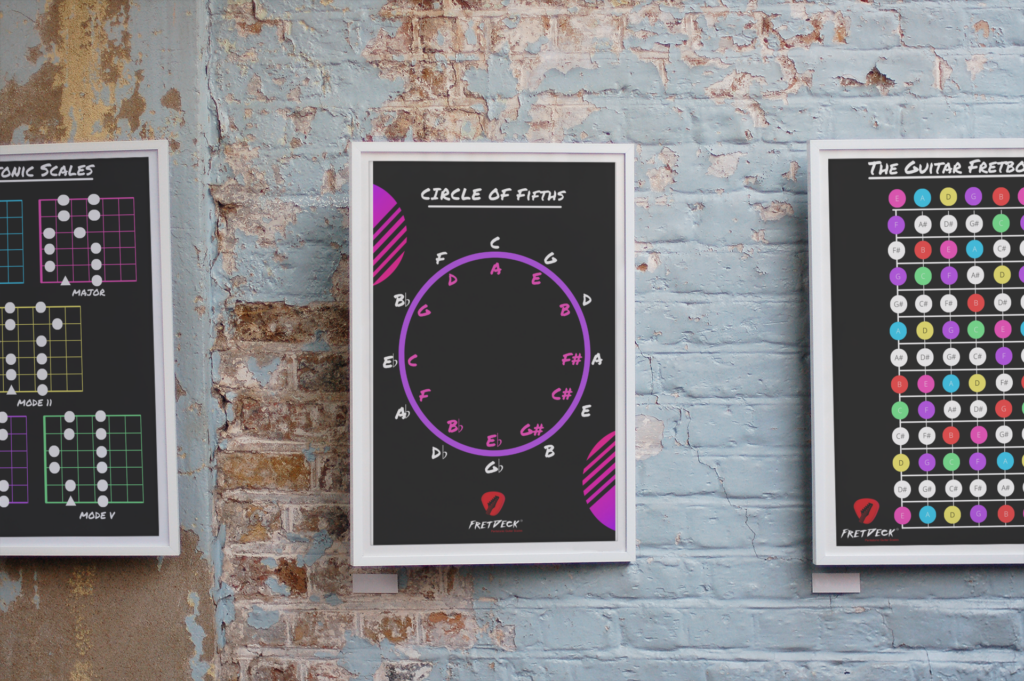
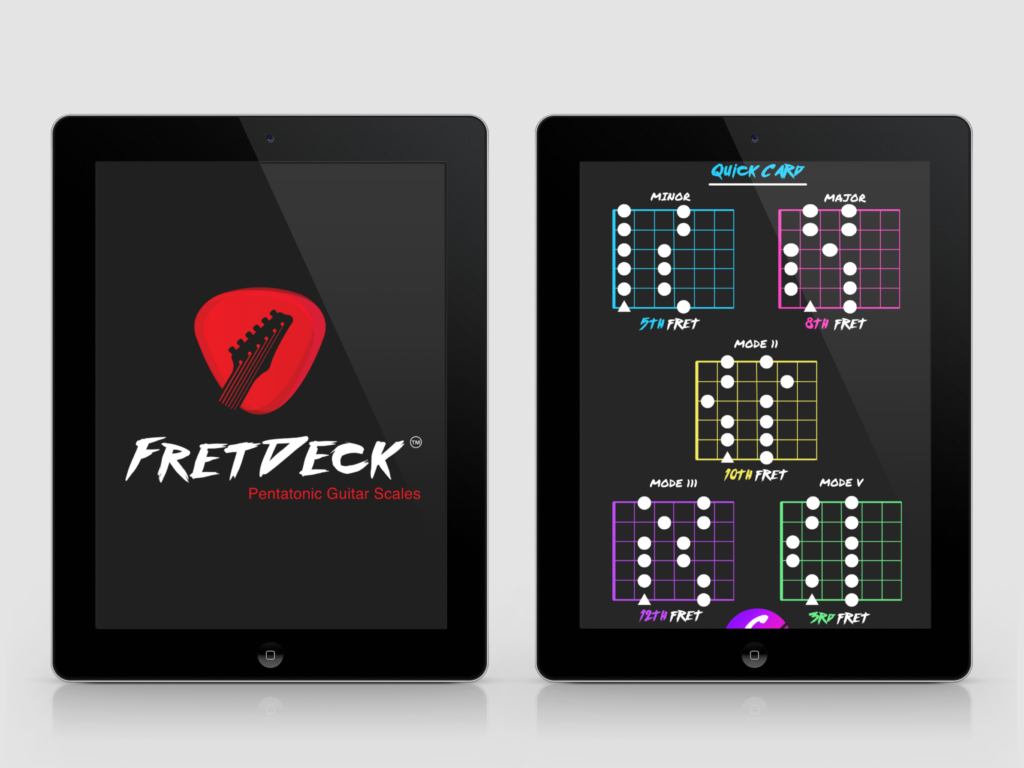
Finally, an essential feature is interactive training and exercises. Some apps go beyond just displaying scales and include built-in exercises. For example, they might have drills for playing in thirds, sequencing patterns, or improvising over changes. This guided practice ensures you’re not just noodling aimlessly. While a great guitar scales app is essential, physical tools like the FretDeck practice card system can also help you visualize patterns away from a screen, providing a different but complementary learning experience.
Beyond Memorization: Turning Scales Into Music
You’ve found an app, and you’ve started memorizing the patterns. That’s a great start, but it’s only half the battle. The true goal is to move beyond rote memorization and start using these scales to create your own music. This is the step where you truly become a guitarist, not just a person who knows scales.
Specifically, you need to focus on phrasing. Phrasing is how you group notes together, using techniques like slides, bends, hammer-ons, and pull-offs to give them character and emotion. A scale is just a collection of notes; your phrasing is what makes it sound like a guitar solo. A good app will show you the notes, but it’s up to you to experiment with how you play them. Record yourself playing over a backing track and listen back. Are you just running up and down the scale, or are you creating memorable melodic ideas?
Furthermore, you must learn to connect the scale shapes. Many guitarists get trapped in a single “box” position. The fretboard opens up when you learn how to seamlessly move between different scale patterns up and down the neck. Use your app to visualize two adjacent scale positions. Practice moving from the top of one shape to the bottom of the next. As you get comfortable, your solos will become more fluid and less predictable. Experts at publications like Guitar World constantly emphasize this concept of connecting patterns for more melodic soloing.
The Simple Guitar Practice System That Eliminates Guesswork
So You Can Stop Stalling… and Start Sounding Better Every Time You Pick Up the Guitar
👉 Get 52 Practice Prompts Now!
5 Practical Steps to Master Scales With an App
Simply downloading a guitar scales app isn’t enough. You need a strategy. Here is a simple, 5-step process to get the most out of your new digital tool.
1. Start with One Scale, One Key. Don’t try to learn everything at once. Pick one essential scale, like the A minor pentatonic, and live there for a week. Focus on Position 1 until you can play it flawlessly without looking. 2. Use the Backing Tracks Immediately. From day one, practice the scale over a relevant backing track. Even if you just play the notes up and down in time, you are training your ear to hear the scale in a musical context. 3. Target the Root Notes. Use the app to highlight the root notes of the scale (in A minor, this would be the ‘A’ notes). Practice starting and ending your phrases on a root note. This immediately makes your playing sound more resolved and professional. 4. Incorporate It Into a Routine. Dedicate 15 minutes of every practice session to the app. A consistent schedule is crucial for progress. Pairing the app with a structured best practice routine will amplify your results significantly. 5. Try to “Sing” a Melody, Then Find It. After you’re comfortable with a scale shape, hum a simple melody over the backing track. Then, use your knowledge of the scale shape to try and find that melody on the fretboard. This is a powerful exercise for connecting your ear to your fingers.
Frequently Asked Questions
### What’s the best free guitar scales app?
While many premium apps offer incredible features, there are some fantastic free options to get you started. Many free versions offer access to common scales like the major, minor, and pentatonic scales. They are a great way to test the waters and see if this learning method works for you before committing to a purchase. The key is to find one with clean visuals and at least a few backing tracks.
### Can an app really replace a teacher?
An app is a powerful supplement, but it cannot fully replace a human teacher. A teacher can provide personalized feedback on your technique, posture, and timing that an app cannot. However, using a guitar scales app is an excellent way to supercharge the time between lessons. It helps you practice correctly and internalize the material your teacher gives you, making your lessons far more productive.
### How long does it take to learn scales with an app?
Progress depends entirely on the consistency and quality of your practice. If you dedicate 15-20 focused minutes every day, you can become very comfortable with the fundamental positions of a scale (like the minor pentatonic) within a few weeks. Mastering all positions and modes of multiple scales, however, is a lifelong journey. The app simply makes that journey faster, more efficient, and much more enjoyable.
The Simple Guitar Practice System That Eliminates Guesswork
So You Can Stop Stalling… and Start Sounding Better Every Time You Pick Up the Guitar
👉 Get 52 Practice Prompts Now!
The Simple Guitar Practice System That Eliminates Guesswork
So You Can Stop Stalling… and Start Sounding Better Every Time You Pick Up the Guitar
👉 Get 52 Practice Prompts Now!