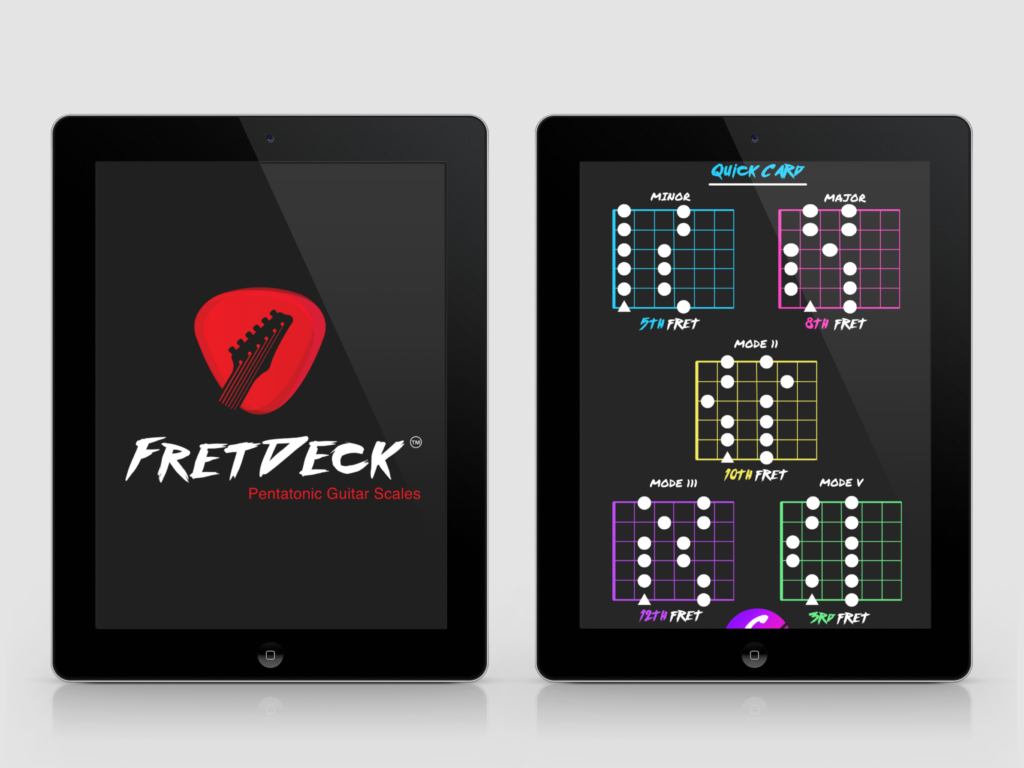

That fancy new guitar scales app on your phone might be the very thing sabotaging your progress. It feels productive, scrolling through endless patterns and shapes, but are you actually getting any better? Or are you just collecting digital dust bunnies in your brain?
You download it thinking this is the key. Finally, you’ll unlock the fretboard, improvise like a hero, and connect all those confusing dots. Instead, you just stare at more diagrams. You trace the same old pentatonic box over and over, feeling trapped and uninspired. You aren’t learning the neck; you’re just memorizing a slightly fancier poster.
The truth is, most players use these apps completely wrong. They treat them like a digital version of a dusty old scale book. This is a recipe for creative stagnation, and it’s why so many guitarists remain stuck in a rut for years, never truly breaking free.
The “Shape Jail” Most Guitarists Live In
You know the feeling. You want to take a solo. Your brain cycles through a mental rolodex of scale shapes you’ve memorized. You land on the trusty A minor pentatonic box at the 5th fret because it feels safe.
The backing track rolls, and you play the notes. Up, down, a few bends here, a bluesy lick there. It sounds… fine. But it doesn’t sound like music. It sounds like you’re just running an exercise. You feel disconnected from the notes, like a robot executing a program.
This is what I call “Shape Jail.” It’s a prison built from memorized patterns without any real understanding of how they connect. Your guitar scales app, with its endless library of isolated shapes, can reinforce these very walls. You see the C major scale in five different positions, but you don’t see the one C major scale that covers the entire fretboard. You’re learning fragments, not the whole language.
As a result, you can’t smoothly transition between positions. You feel lost the second you leave your comfort zone. Furthermore, you can’t target chord tones or create melodic phrases because you don’t actually know what the notes are—you only know where your fingers are supposed to go in a specific, rigid box.
What If You Could See the Fretboard Instead of Just Memorizing It?
Most guitarists spend years guessing where to put their fingers. They memorize shapes without understanding why — and the second they try to improvise or learn a new song, they’re lost again.
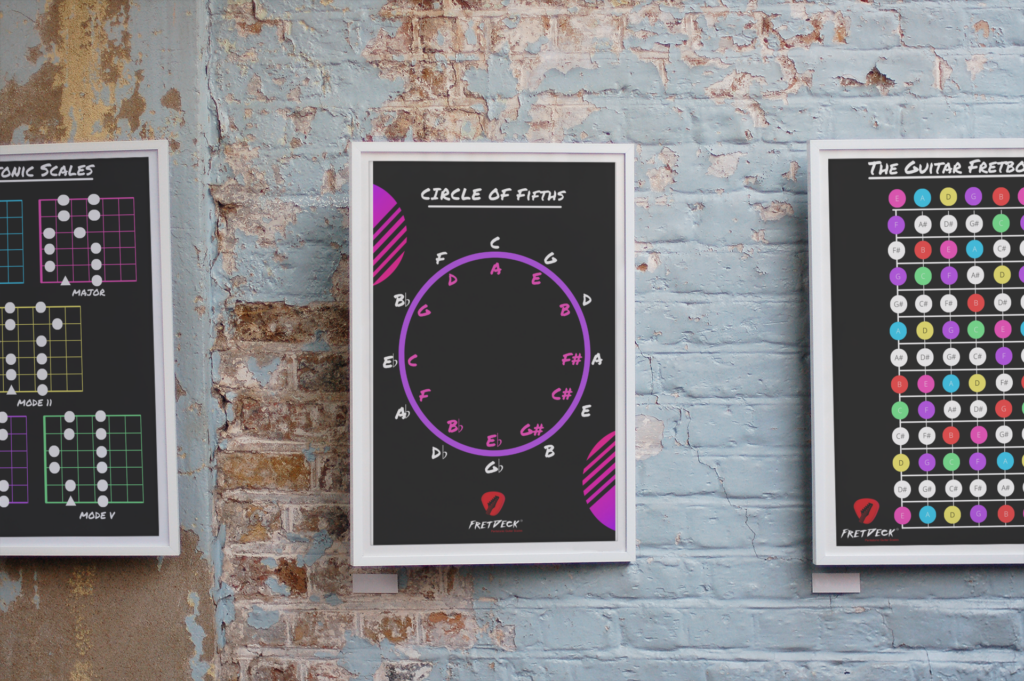
The FretDeck Practice Workstation changes that. It’s the interactive fretboard app that shows you exactly what to play, why it works, and how every note connects — so you finally understand the guitar instead of just copying tabs.
Whether you’re stuck in a rut, tired of noodling the same pentatonic box, or ready to unlock the entire neck — the FretDeck Practice Workstation gives you the visual roadmap to get there. All for just $14/month.
👉 Start Using the FretDeck Practice Workstation Now
The Pro Shortcut: From Shapes to Pathways
So, what’s this weird shortcut pros use? It’s a fundamental mindset shift. They don’t see five different pentatonic shapes. They see one pentatonic scale that sprawls across the entire neck like a superhighway. The “shapes” are just convenient on-ramps.
Instead of thinking “box one,” then “box two,” they think in terms of note names and intervals. They know where the root notes are everywhere. For example, they can instantly find every single ‘C’ on the fretboard. From there, they know how to build the scale around those anchor points.
This changes everything. Suddenly, you’re not trapped. You can navigate the fretboard with fluid confidence because you have a mental GPS. You’re no longer just running patterns; you’re creating melodies by connecting the dots in a way that makes musical sense. Specifically, you begin to see the relationships between the notes, which is the very definition of music.
Thinking this way allows you to break out of the vertical, up-and-down playing that plagues so many amateurs. You can start playing horizontally, up and down the strings, connecting ideas across the entire length of the neck just like you see players on GuitarPlayer.com doing in their lesson videos. This is the path from sounding like a student to sounding like a musician.
The Right Way to Use a guitar scales app
Your app isn’t useless—you’ve just been using it as a dictionary when you should be using it as a map. It’s time to change your approach. A great digital tool, when used correctly, can accelerate your learning exponentially.
First, stop looking at the full scale diagrams. They are overwhelming and encourage rote memorization. Instead, use the app to solve specific musical problems. For instance, start by asking it to show you only the root notes of a scale all over the neck. Practice finding just those notes. Get them under your fingers until it’s second nature.
Next, have the app show you just the roots and the 5ths. Play them over a backing track. You’ll notice they sound strong and stable over most chords. You’ve just learned to outline the basic harmony. Now add the 3rds. Suddenly, you’re defining whether the chord is major or minor. You’re making music, not just running scales.
Moreover, use the app’s features to connect the patterns. If it can highlight a scale across the entire fretboard, use that view. Don’t see it as five boxes. See it as one big, interconnected web of notes. Trace melodic lines that move from one “box” to the next. This horizontal practice is one of the most powerful beginner-guitar-tips for intermediate players to finally break out of their rut. A good guitar scales app should facilitate this, not hinder it.
What If You Could See the Fretboard Instead of Just Memorizing It?
Most guitarists spend years guessing where to put their fingers. They memorize shapes without understanding why — and the second they try to improvise or learn a new song, they’re lost again.
The FretDeck Practice Workstation changes that. It’s the interactive fretboard app that shows you exactly what to play, why it works, and how every note connects — so you finally understand the guitar instead of just copying tabs.
Whether you’re stuck in a rut, tired of noodling the same pentatonic box, or ready to unlock the entire neck — the FretDeck Practice Workstation gives you the visual roadmap to get there. All for just $14/month.
👉 Start Using the FretDeck Practice Workstation Now
Beyond the Pentatonic: Modes, Arpeggios, and True Freedom
Once you adopt this “pathway” mindset, a whole new world opens up. You can finally start exploring modes and arpeggios with confidence.
Modes, which often scare guitarists, become much simpler. You realize the A Dorian mode isn’t some weird new scale you have to memorize from scratch. It’s just the G major scale, but you’re treating ‘A’ as your home base. A good guitar scales app can show you this, but only if you know what to look for. Use it to overlay the G major scale and see how the notes fall when you start and end on A.
The same breakthrough applies to arpeggios. Instead of viewing an arpeggio as yet another separate shape, you start to see it as a selection of notes from within a scale you already know. For instance, a C major 7 arpeggio (C-E-G-B) is simply the 1st, 3rd, 5th, and 7th notes of the C major scale.
You can use your app to highlight these arpeggio tones within the parent scale shape. This visual connection is crucial. It trains your brain and fingers to instantly target the most powerful notes over any given chord, which is the secret to melodic, compelling solos. Legends like Eric Johnson, often featured in articles on GuitarWorld.com, are masters of weaving arpeggios and scales together seamlessly.
This is the ultimate goal: to see the fretboard as a complete, interconnected system where scales, arpeggios, and chords are all different expressions of the same underlying musical principles. Tools like the FretDeck are designed around this very concept, helping you build that mental map faster.
5 Practical Steps to Master Your App Today
Ready to turn your app into a powerhouse tool? Follow this simple, actionable plan.
1. Isolate and Conquer the Root Notes. Pick one key, like G major. Use your app to show only the G notes across the entire fretboard. Spend five minutes playing only these notes over a G major backing track. Your ear will start to recognize “home.”
2. Build a Triad Skeleton. Now, add the 3rd (B) and 5th (D) of the G major scale. You now have the G major triad (G-B-D). Practice finding these three-note groups everywhere on the neck. You’re learning to see the chord inside the scale.
3. Practice Horizontally. Choose two adjacent strings, like the G and B strings. Using the full G major scale display, try to play melodies that only use those two strings, moving up and down the neck. This forces you to break out of vertical boxes, as detailed in our guide to the best-practice-routine.
4. Connect Two Shapes. Play the G major scale in one position until you’re comfortable. Then, intentionally slide up or down to the very next note in the scale that begins the next position. Practice just this transition, back and forth, until it feels smooth. You’re building the bridges between your scale boxes.
5. Sing What You Play. This is a game-changer. As you play a note from the scale on your app, try to sing it. This connects your ear, your voice, and your fingers, turning abstract shapes into concrete musical pitches. It’s the fastest way to internalize the sound and feel of a scale.
Frequently Asked Questions
What’s the best guitar scales app for a beginner?
For a true beginner, the best guitar scales app is one that is simple and focuses on visualization. Look for an app that allows you to highlight individual intervals (like the root, 3rd, 5th) and shows the note names clearly. The goal at first isn’t to learn 100 scales, but to deeply understand one or two by seeing how they are constructed.
How often should I practice scales?
Consistency beats intensity. Spending just 10-15 minutes a day focused on scale practice using these methods is far more effective than a two-hour cram session on the weekend. Use this time not for mindless repetition, but for specific goals, like connecting two positions or mapping out the arpeggios within a scale. This is a core part of learning how to learn-guitar-scales effectively.
Can an app replace a real guitar teacher?
No, an app is a tool, not a teacher. A good teacher provides personalized feedback, identifies your specific weaknesses, and provides a structured curriculum. An app is a fantastic supplement to lessons, providing the visual aids and practice drills to reinforce what your teacher shows you. It’s a powerful map, but a teacher is the experienced guide who helps you read it.
What If You Could See the Fretboard Instead of Just Memorizing It?
Most guitarists spend years guessing where to put their fingers. They memorize shapes without understanding why — and the second they try to improvise or learn a new song, they’re lost again.
The FretDeck Practice Workstation changes that. It’s the interactive fretboard app that shows you exactly what to play, why it works, and how every note connects — so you finally understand the guitar instead of just copying tabs.
Whether you’re stuck in a rut, tired of noodling the same pentatonic box, or ready to unlock the entire neck — the FretDeck Practice Workstation gives you the visual roadmap to get there. All for just $14/month.