
You probably have a folder on your computer filled with a promising guitar scales patterns pdf. You downloaded it, full of hope, believing it held the secret to unlocking the fretboard. However, the reality is often disappointing. You stare at a sea of dots, memorizing shapes but never truly understanding the music behind them.
The dream was to solo like your heroes. The reality is feeling trapped in the same old box pattern, playing notes that sound robotic and disconnected. You follow the chart, but the magic just isn’t there. You feel more like you’re playing a game of “connect the dots” than making actual music. This is a frustratingly common roadblock for guitar players at every level.
Why Your Scale Charts Are Collecting Digital Dust
That collection of scale diagrams wasn’t a lie. It just didn’t tell you the whole truth. The problem isn’t the information itself; it’s the presentation and the method you were told to use.
Most scale PDFs present patterns as isolated, static shapes. They encourage you to memorize where your fingers go, but they fail to explain why they go there. As a result, you learn the shape of the minor pentatonic box, but you have no idea how it relates to the chords being played underneath. You can’t connect one position to the next. Therefore, when you try to improvise, your solo sounds like a technical exercise instead of a melodic statement.
Furthermore, this approach creates a dangerous mental dependency. You feel like you can’t play without seeing the chart first. You become a “shape player” instead of a musician. You’re stuck in a loop of memorizing and forgetting, never truly internalizing the geography of the fretboard. Consequently, that guitar scales patterns pdf becomes a crutch that actually holds you back from real musical freedom.
What If You Could See the Fretboard Instead of Just Memorizing It?
Most guitarists spend years guessing where to put their fingers. They memorize shapes without understanding why — and the second they try to improvise or learn a new song, they’re lost again.
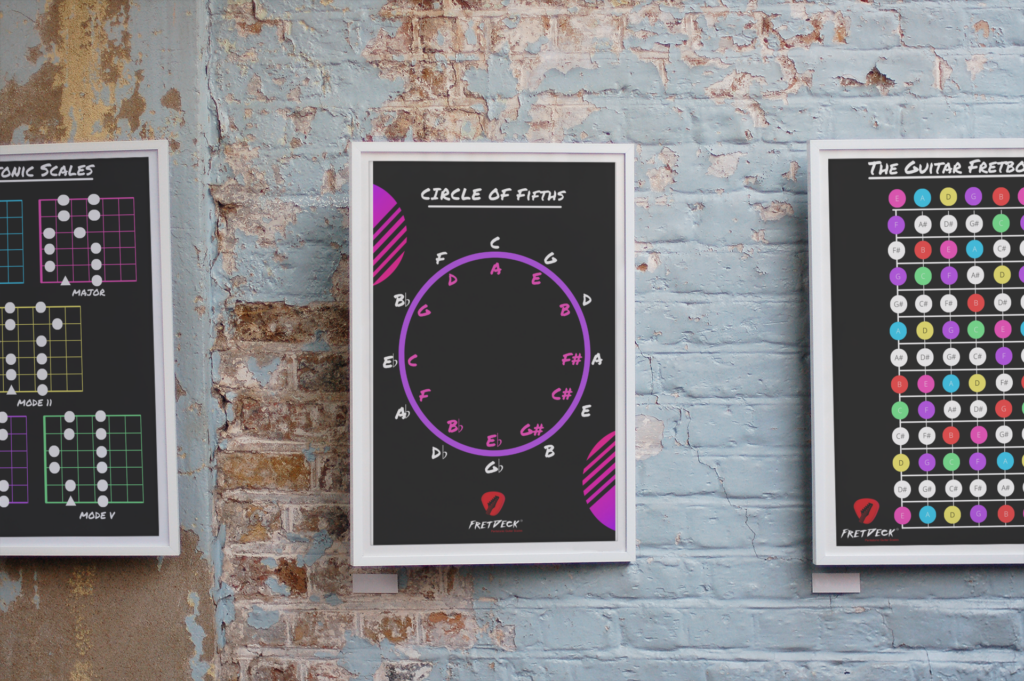
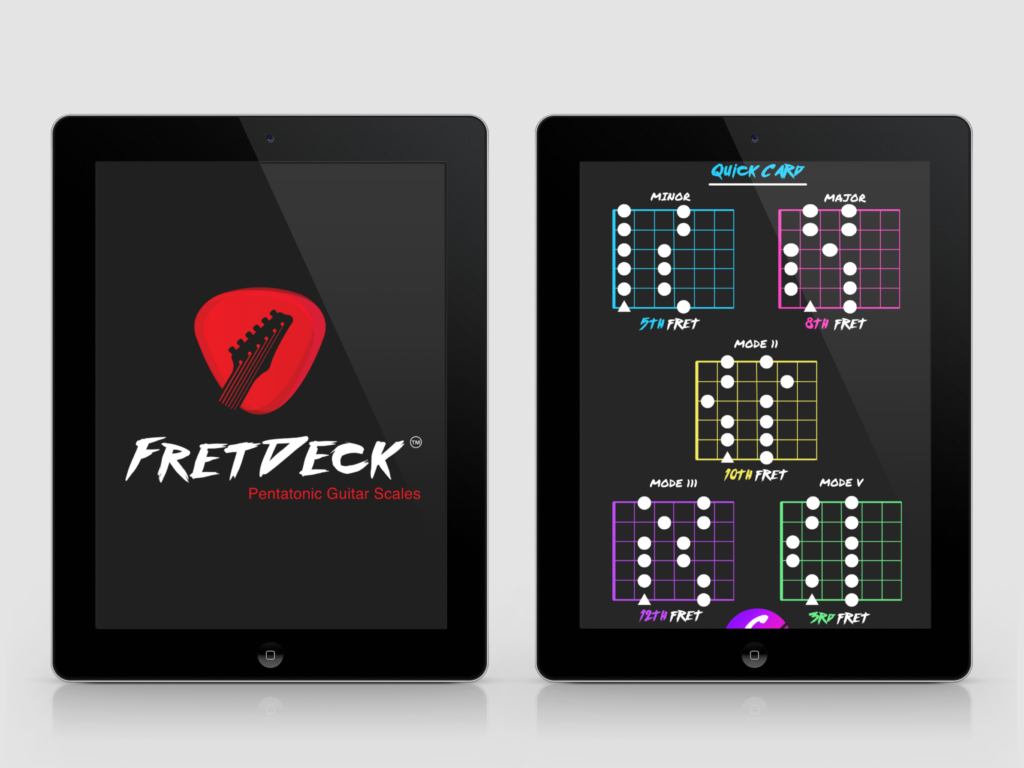
The FretDeck Practice Workstation changes that. It’s the interactive fretboard app that shows you exactly what to play, why it works, and how every note connects — so you finally understand the guitar instead of just copying tabs.
Whether you’re stuck in a rut, tired of noodling the same pentatonic box, or ready to unlock the entire neck — the FretDeck Practice Workstation gives you the visual roadmap to get there. All for just $14/month.

👉 Start Using the FretDeck Practice Workstation Now
The Shortcut: Thinking in Intervals, Not Shapes
So, what is this “weird shortcut” pros use? They stop seeing scales as a series of dots on a page. Instead, they see them as a collection of intervals—the specific distances between notes.
This is a monumental shift in perspective. Instead of memorizing “finger on the 5th fret, then 8th fret,” you start thinking “root note, then a major third.” This simple change has profound consequences. For example, once you understand the interval pattern for a major scale (Whole-Whole-Half-Whole-Whole-Whole-Half), you can build it starting from any note on the fretboard. You are no longer tied to a specific key or position.
This approach transforms the fretboard from a confusing grid of frets into a logical, predictable map. Suddenly, you see connections everywhere. You realize that the same C major scale you learned in the open position also exists up at the 8th fret. Moreover, you begin to hear the unique sound of each interval, which is the key to crafting truly melodic solos. As a result, you start playing with your ears, not just your fingers.
Your Essential guitar scales patterns pdf: The Actionable Framework
This doesn’t mean you should delete your PDF folder. It means you need to use it differently. A truly useful guitar scales patterns pdf should be a starting point, not a destination. It’s a reference tool, not a holy scripture. Forget trying to memorize 50 different scales at once.
Instead, let’s build a better framework. Focus on just two scales to start: the Minor Pentatonic and the Major Scale. Why these two? The Minor Pentatonic is the foundation of blues, rock, and pop music. It’s simple, sounds great instantly, and its five “box” patterns are the gateway to connecting the neck. You can find excellent diagrams for this all over the web, like on Fender’s Play resource page.
The Major Scale, on the other hand, is the theoretical mother of all Western music. Every other scale and chord is derived from it. Learning its structure unlocks the code. The goal isn’t just to download another chart, but to find one that shows you the root notes within each pattern. This is crucial. Your new mission is to use a simple guitar scales patterns pdf to find the root note and then build the scale yourself using your newfound knowledge of intervals.
What If You Could See the Fretboard Instead of Just Memorizing It?
Most guitarists spend years guessing where to put their fingers. They memorize shapes without understanding why — and the second they try to improvise or learn a new song, they’re lost again.
The FretDeck Practice Workstation changes that. It’s the interactive fretboard app that shows you exactly what to play, why it works, and how every note connects — so you finally understand the guitar instead of just copying tabs.
Whether you’re stuck in a rut, tired of noodling the same pentatonic box, or ready to unlock the entire neck — the FretDeck Practice Workstation gives you the visual roadmap to get there. All for just $14/month.
👉 Start Using the FretDeck Practice Workstation Now
Connecting the Dots for Musicality
Knowing the patterns is only half the battle. The other half is making them sound like music. Professionals do this by constantly connecting scales to the underlying harmony. They don’t just see an A-minor pentatonic scale; they see the notes that sound best over an Am chord, a G chord, and a C chord within a progression.
This is where context becomes king. You must practice scales over music. Stop playing them up and down in a vacuum. Put on a backing track. Find a simple chord progression guide and record yourself playing the chords, then practice soloing over it.
Listen for the “target notes”—the notes within the scale that are also in the chord being played. For instance, when the progression moves to a C major chord, emphasizing the notes C, E, and G from your scale will sound incredibly powerful and purposeful. You are no longer just noodling; you are speaking the language of music. This is the bridge between technical skill and true artistry, a topic that deserves a dedicated best practice routine. High-quality music publications like Guitar World often feature lessons on this exact concept.
5 Practical Drills to Internalize Your Scales
Here’s how to put this into action tonight. Forget mindless repetition. These drills force you to internalize the patterns and think musically.
1. Start With One Position. Instead of trying to learn every shape on your guitar scales patterns pdf at once, master one single box pattern. Play it forwards, backwards, in different rhythms, and skipping strings. Own it completely before you even think about moving on.
2. Sing The Notes As You Play. This drill connects your hands, your ears, and your brain. If you can sing it, you truly know it. It feels silly at first, but it’s one of the fastest ways to develop your musical ear.
3. Use a Backing Track (Always). Never practice scales in silence. The context of chords is what gives notes their meaning. There are thousands of free backing tracks online for every key and style. Make this non-negotiable.
4. Connect Scales to Chord Shapes. For every scale position you learn, find the corresponding chord shapes that live inside it. For example, you can find Am, G, and C chord shapes right inside the A-minor pentatonic box. This visual connection is a game-changer. For a deeper dive, check out our guide to learning guitar scales.
5. Practice on a Single String. This is a powerful exercise. Try to play an entire major scale on just one string. This forces you to abandon familiar shapes and focus entirely on the intervallic distances between notes, cementing the core concept. Tools like the FretDeck can visually reinforce this by lighting up the notes for you.
Frequently Asked Questions
What’s the most important scale to learn first?
For most aspiring rock, blues, and pop guitarists, the minor pentatonic scale is the best starting point. It’s musically forgiving, sounds great over a huge range of music, and its 5-pattern system is the standard for learning how to navigate the neck. Many guitar scales patterns pdf collections can be overwhelming, so focusing on this one first provides a quick win.
How do I move beyond the standard pentatonic box?
The key is to learn how the boxes connect. Notice that the last notes of “Box 1” are the first notes of “Box 2.” Practice transitioning between two adjacent boxes over a backing track. Don’t try to leap across the whole neck. Instead, focus on creating a smooth, seamless link between just two positions at a time. This is a fundamental step beyond basic beginner guitar tips.
Are scale patterns the same in every key?
Yes, and this is the beautiful secret! The “shape” or “pattern” of a scale remains the same regardless of the key. The only thing that changes is your starting position (the root note). If you know the A-minor pentatonic pattern starting on the 5th fret, you can play the B-minor pentatonic by simply moving that exact same pattern up two frets to start on the 7th fret. This is why understanding patterns is so powerful.
What If You Could See the Fretboard Instead of Just Memorizing It?
Most guitarists spend years guessing where to put their fingers. They memorize shapes without understanding why — and the second they try to improvise or learn a new song, they’re lost again.
The FretDeck Practice Workstation changes that. It’s the interactive fretboard app that shows you exactly what to play, why it works, and how every note connects — so you finally understand the guitar instead of just copying tabs.
Whether you’re stuck in a rut, tired of noodling the same pentatonic box, or ready to unlock the entire neck — the FretDeck Practice Workstation gives you the visual roadmap to get there. All for just $14/month.
👉 Start Using the FretDeck Practice Workstation Now
Related posts: