

Have you ever downloaded a flashy new app, convinced this was the one that would finally unlock the guitar for you? This next-level guitar app learning experience promised fast results, fun games, and a clear path from beginner to pro. You followed the bouncing ball, matched the colors, and maybe even learned a riff or two.
But then, a week later, something felt off. When you picked up your guitar without the app, you were lost. You could play the game, but you couldn’t play guitar. It’s a frustratingly common story, and it leaves you wondering if you’re the problem. You’re not.
Why Most Guitar Apps Set You Up to Fail
The truth is, the majority of guitar apps on the market are designed like video games, not musical training tools. They prioritize engagement metrics—keeping you tapping and swiping—over genuine skill development. As a result, they inadvertently build bad habits that can take years to unlearn.
For example, many apps teach you to chase dots on a screen. This trains your eyes to follow a cursor instead of teaching your brain to understand the fretboard. You memorize a single path through a song, but you have no idea how to create your own path. Therefore, the moment you try to improvise or play a song by ear, you hit a wall. You’ve learned mimicry, not music.
Moreover, this approach creates a dependence on the app itself. You feel like you’re making progress because the app gives you points and achievements. However, this progress is often an illusion. Real progress happens when you can apply your knowledge away from the screen, and that’s the one thing these gamified apps fail to test. Consequently, you get stuck in a loop of practicing the app, not the instrument.
What If You Could See the Fretboard Instead of Just Memorizing It?
Most guitarists spend years guessing where to put their fingers. They memorize shapes without understanding why — and the second they try to improvise or learn a new song, they’re lost again.
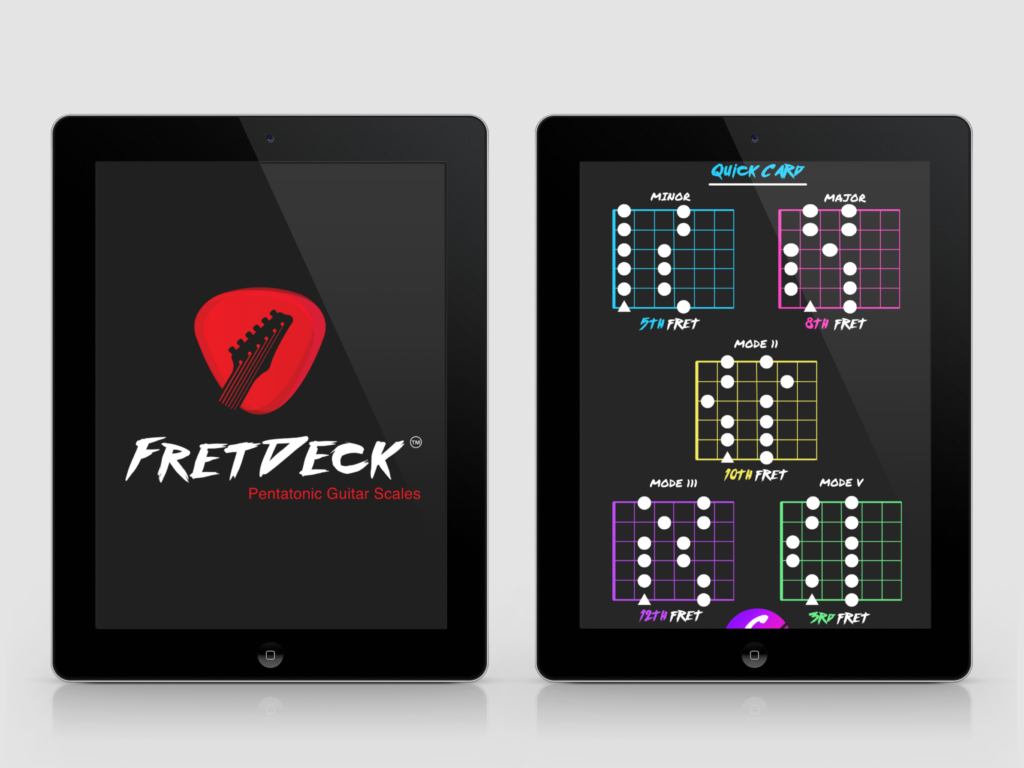
The FretDeck Practice Workstation changes that. It’s the interactive fretboard app that shows you exactly what to play, why it works, and how every note connects — so you finally understand the guitar instead of just copying tabs.
Whether you’re stuck in a rut, tired of noodling the same pentatonic box, or ready to unlock the entire neck — the FretDeck Practice Workstation gives you the visual roadmap to get there. All for just $14/month.

The Shift: From ‘What to Play’ to ‘Why You Play It’
The big shortcut that seasoned players understand is context. They don’t just see a C major chord; they see the root, the third, and the fifth. They know why those notes work together and how they relate to the key of the song. Effective guitar app learning must build this same foundational understanding.
Instead of just showing you a tab, a powerful learning tool should reveal the underlying structure. It should show you the scale degrees, the chord tones, and the intervals. This is the language of music. When you start thinking in this language, the entire fretboard opens up.
Suddenly, you’re not just memorizing one way to play a G chord. You begin to see the G, B, and D notes all over the neck. You can build your own voicings and inversions. This shift from memorizing shapes to understanding systems is the single most important breakthrough you can have as a guitarist. A great app facilitates this exact breakthrough.

Finding the Right Framework for Your guitar app learning
Not all apps are created equal. To find a tool that actually helps, you need to look for one that provides a framework for understanding, not just a list of instructions. This is where the philosophy behind the guitar app learning tool matters more than flashy graphics.
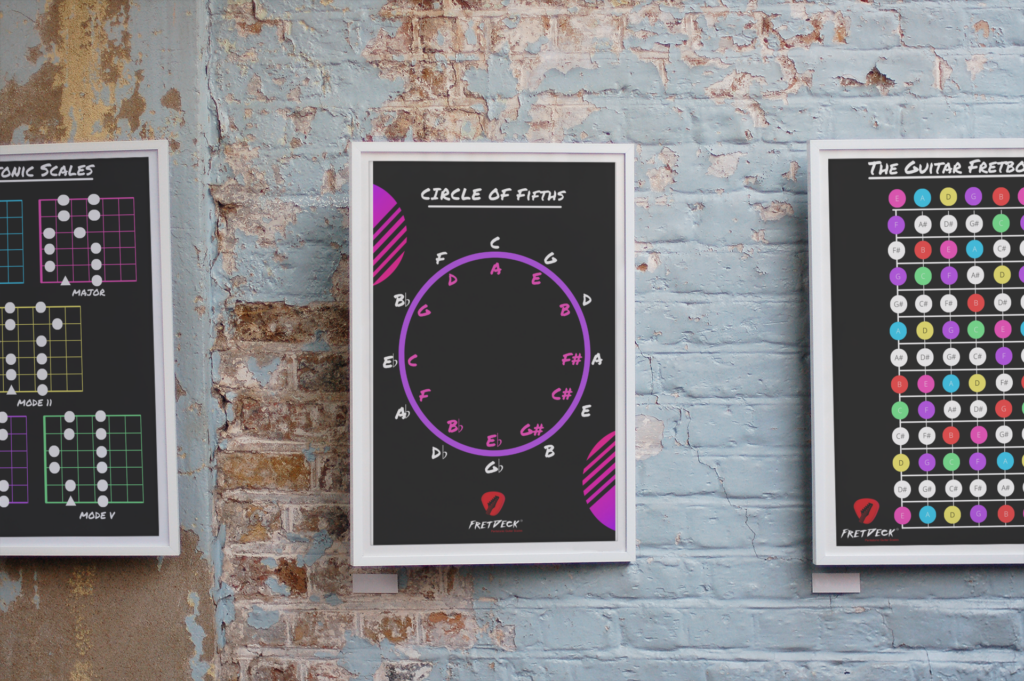
Specifically, look for apps that focus on visualization of the fretboard. You want tools that can instantly show you where all the ‘A’ notes are, or highlight the notes of a D minor pentatonic scale across the entire neck. These visual aids are incredibly powerful. As a matter of fact, they turn abstract theory into a concrete, playable map. For more great insights on theory, check out this piece on learning guitar scales.
Interactive tools like the FretDeck Practice Workstation are built on this very principle. Instead of just giving you a song to copy, this type of app gives you the building blocks—scales, chords, arpeggios—and lets you see how they all connect. It moves you from being a passive recipient of information to an active explorer of the fretboard. This is the difference between being a passenger and learning how to drive.
What If You Could See the Fretboard Instead of Just Memorizing It?
Most guitarists spend years guessing where to put their fingers. They memorize shapes without understanding why — and the second they try to improvise or learn a new song, they’re lost again.
The FretDeck Practice Workstation changes that. It’s the interactive fretboard app that shows you exactly what to play, why it works, and how every note connects — so you finally understand the guitar instead of just copying tabs.
Whether you’re stuck in a rut, tired of noodling the same pentatonic box, or ready to unlock the entire neck — the FretDeck Practice Workstation gives you the visual roadmap to get there. All for just $14/month.
Integrating Apps with Real-World Practice
Even the best app in the world is useless if it doesn’t translate to your hands on the actual guitar. The goal is not to get good at using an app; it’s to get good at playing music. Therefore, your practice sessions must bridge the gap between the digital and the physical world.
A powerful strategy is the “Look, then Play” method. First, use the app to visualize a concept. For instance, you could bring up the A minor scale across the entire fretboard. Study the pattern. See the relationships between the notes. Then, put your phone down, pick up your guitar, and try to replicate it from memory.
This active recall process forces your brain to internalize the information. You’re not just following along; you’re building a mental map. Furthermore, it prevents you from becoming dependent on the screen. For more essential habits, read these beginner guitar tips. The app becomes a reference and a discovery tool, not a crutch. This active integration is the core of successful guitar app learning.
7 Practical Tips to Maximize Your App-Based Practice
To ensure your app time translates into real skill, you need a smart approach. Here are seven tips to get the most out of any practice tool.
1. Set One Goal Per Session: Don’t try to learn chords, scales, and a new song all at once. For example, decide “Today, I will learn the C major scale in the 5th position.” This focus makes your practice targeted and effective.
2. Always Use a Metronome: Most good apps have a built-in metronome. Use it. Starting slow and gradually increasing speed is the key to building clean technique and solid rhythm, a topic discussed in depth by publications like Guitar World.
3. Use the Looping Feature: When learning a tough riff or chord change, use the app’s looping function. Repeating a small section over and over is far more effective than struggling through an entire song. This builds muscle memory efficiently.
4. Record Yourself: This is a feature many players ignore, but it’s pure gold. Record yourself playing a passage, then listen back. You will hear mistakes and timing issues your brain filters out while you’re playing.
5. Explore Chord Progressions: Don’t just learn chords in isolation. Use an app to explore how they fit together. A chord progression guide can provide a great starting point, which you can then explore visually within the app.
6. Apply a Concept to a Real Song: After you learn a new scale or arpeggio on the app, immediately try to find it in a song you love. This real-world application makes the theory stick.
7. Spend Double the Time with the App Off: For every 10 minutes you spend looking at the app screen, spend 20 minutes with your guitar, internalizing and experimenting with what you just learned. This ratio ensures you are building playing skills, not app skills.
Frequently Asked Questions
Can you really learn guitar just from an app?
An app is a powerful tool, but it’s not a complete replacement for physical practice and real-world application. The best approach uses an app as a guide and visual aid to supplement dedicated time with the instrument in your hands. Think of it as your interactive textbook and map.
How much time should I spend on a guitar app daily?
Consistency is more important than duration. A focused 15-20 minutes every day where you learn a concept on the app and then immediately apply it on the guitar is far more valuable than a two-hour session once a week. According to experts at Fender, short, regular practice is key.
Are free guitar apps good enough to start with?
Free apps can be great for basic tasks like tuning your guitar or learning a few open chords. However, they often lack the depth and structured learning frameworks needed for serious progress. A premium, focused tool for guitar app learning is an investment in breaking through plateaus faster.
What If You Could See the Fretboard Instead of Just Memorizing It?
Most guitarists spend years guessing where to put their fingers. They memorize shapes without understanding why — and the second they try to improvise or learn a new song, they’re lost again.
The FretDeck Practice Workstation changes that. It’s the interactive fretboard app that shows you exactly what to play, why it works, and how every note connects — so you finally understand the guitar instead of just copying tabs.
Whether you’re stuck in a rut, tired of noodling the same pentatonic box, or ready to unlock the entire neck — the FretDeck Practice Workstation gives you the visual roadmap to get there. All for just $14/month.
Related posts: