
Learn How To Play Guitar App: What Actually Works

Dear friend,
Do you remember the feeling? You just downloaded a new learn how to play guitar app, your phone screen glowing with promise. This is the one, you think. This time, it’ll click.
You tap open the app. You see a slick interface, maybe some flashy graphics of a guitar neck lighting up. But after 20 minutes of trying to contort your fingers to match the dots on the screen, that old, familiar feeling creeps back in… the cold, sinking realization that you’re just playing a high-tech game of Simon Says. You’re mimicking, not learning. And tomorrow, you’ll be just as lost as you were today.
Why You’re Still Stuck (It’s Not Your Fault)
Listen, the problem isn’t your talent. It’s not your work ethic. It’s the tool. For years, we’ve been sold a bill of goods. We’ve been told that if we just download enough apps, watch enough videos, or collect enough tab sheets, the magic will happen.
But it never does, does it?
You end up with a phone full of apps you never open and a mind full of disconnected fragments. Might learn to play the intro to “Stairway to Heaven,” but you can’t explain why those notes work together. You can play a pentatonic scale box, but the second the backing track changes chords, you’re completely lost at sea.
This is the cycle of frustration that causes 90% of new guitar players to quit within the first year. They believe the lie that learning guitar is about memorizing a million different things. It’s not. It’s about understanding ONE simple system.
Free Book: “Fret Logic” — Master the Fretboard Without Memorizing a Single Shape
Before we go any further, grab my free book Fret Logic — it’s the shortcut I wish I had when I was stuck staring at the neck wondering where the next note was.

Inside, you’ll learn the simple visual system that turns the fretboard from a confusing grid into a map you can actually see. No theory degree required. No boring drills. Just clarity.
👉 Download “Fret Logic” FREE here
What If You Could See the Fretboard Instead of Just Memorizing It?
Most guitarists spend years guessing where to put their fingers. They memorize shapes without understanding why — and the second they try to improvise or learn a new song, they’re lost again.
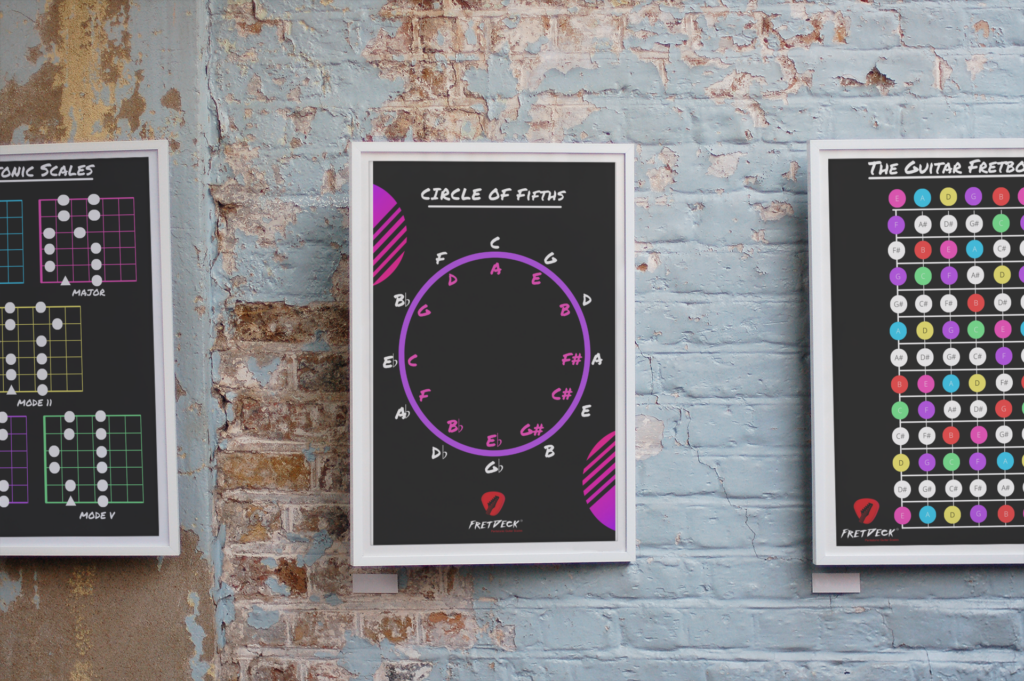
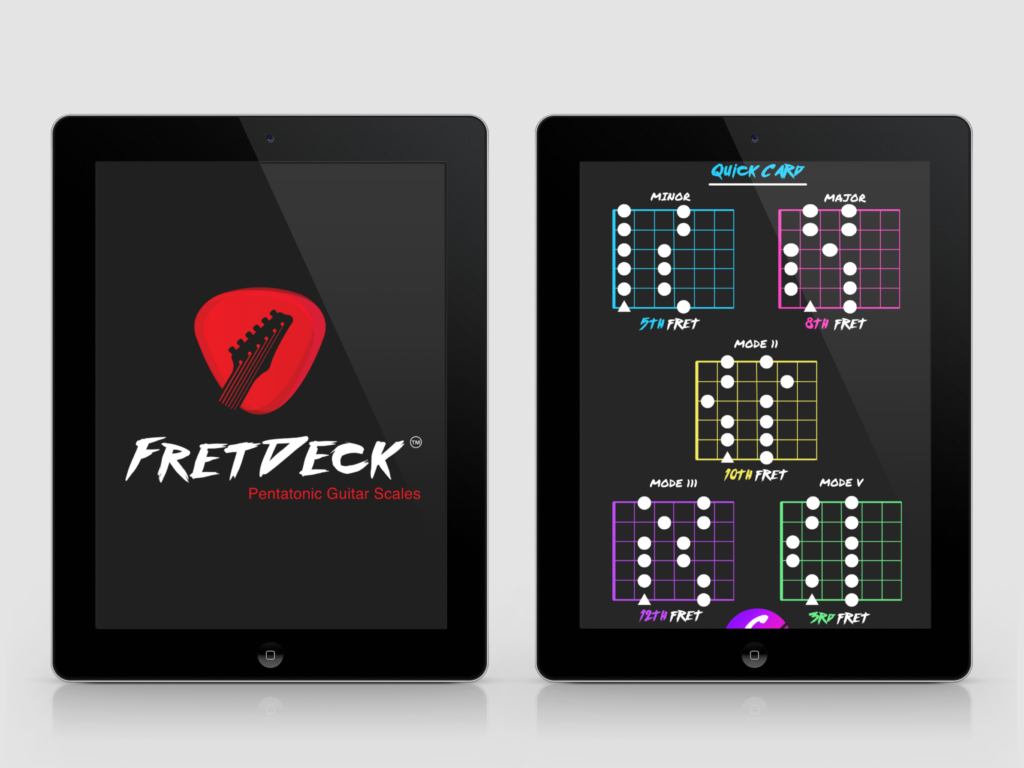
The FretDeck Practice Workstation changes that. It’s the interactive fretboard app that shows you exactly what to play, why it works, and how every note connects — so you finally understand the guitar instead of just copying tabs.
Whether you’re stuck in a rut, tired of noodling the same pentatonic box, or ready to unlock the entire neck — the FretDeck Practice Workstation gives you the visual roadmap to get there. All for just $14/month.
👉 Start Using the FretDeck Practice Workstation Now
The $10,000 Mistake Most Guitar Apps Make
A few years ago, I paid a top-tier guitar coach over $10,000 for a series of private lessons. I wanted to know the “secret sauce” the pros have. What I learned shocked me. It wasn’t some magical scale or a secret chord.
The secret was context.
Specifically, the pros don’t see scales and chords as separate things. They see the fretboard as a single, connected system where every note relates directly to the chord being played right now. Most apps completely miss this. They teach you a scale in isolation. Then they teach you some chords in isolation. They never build the bridge between the two.
As a result, you’re left with two piles of useless information. You can play a C major chord. You can play a C major scale. But you have no idea how to use the notes of that scale to create a beautiful melody over that C major chord. It’s like having a map and a car, but no key to start the engine. These beginner guitar tips are useless without the engine of context.
A good learn how to play guitar app should never just show you dots. It must show you why those dots matter in relation to the music.
The One Thing a Great learn how to play guitar app Must Do
So what’s the solution? The app must provide a visual feedback loop. It must show you the chord progression and, in real-time, show you the “safe” notes (the chord tones) and the “flavor” notes (the other scale tones) that work over each specific chord.
Think about it. When you’re playing over a G chord, the notes G, B, and D are your home base. They will always sound good. When the song moves to a C chord, your home base shifts to C, E, and G.
A truly effective learn how to play guitar app makes this relationship painfully obvious. It doesn’t just give you a static scale pattern and wish you good luck. Instead, it highlights the ‘money notes’ for you as the chords change. Suddenly, you’re not guessing anymore. You’re making intelligent choices. You’re creating music, not just reproducing it.
This is the fundamental difference between an app that keeps you a beginner forever and one that turns you into a real musician. Top players, as profiled in magazines like Guitar Player, all have an intuitive grasp of this chord-scale relationship. An app’s job is to make that intuition visual and accessible to you from day one.
What If You Could See the Fretboard Instead of Just Memorizing It?
Most guitarists spend years guessing where to put their fingers. They memorize shapes without understanding why — and the second they try to improvise or learn a new song, they’re lost again.
The FretDeck Practice Workstation changes that. It’s the interactive fretboard app that shows you exactly what to play, why it works, and how every note connects — so you finally understand the guitar instead of just copying tabs.
Whether you’re stuck in a rut, tired of noodling the same pentatonic box, or ready to unlock the entire neck — the FretDeck Practice Workstation gives you the visual roadmap to get there. All for just $14/month.
👉 Start Using the FretDeck Practice Workstation Now
From Finger-Fumbling to Fretboard Fluent in 15 Minutes a Day
I know what you’re thinking. “This sounds complicated. I don’t have hours to practice theory.” Good news. You don’t need hours. You need 15 minutes of the right kind of practice.
Forget mind-numbing drills. Forget trying to memorize the entire fretboard in one sitting. Here’s the simple, 3-step process that works:
1. Load a simple backing track. A basic 12-bar blues in A will do.
2. Use a tool that shows you the chord tones in real-time. As the track moves from the A chord to the D chord, you should see your target notes on the fretboard change instantly.
3. Just play the target notes. Don’t worry about fancy licks. Just aim for the highlighted notes as the chords change. Try to land on one of them right when the chord changes.
Do this for 15 minutes. That’s it. Within three days, I guarantee something in your brain will click. You’ll start hearing the chord changes before they happen. You’ll start seeing the pathways on the fretboard. This is what a quality best practice routine looks like. It’s focused, contextual, and gives you immediate feedback.
This is exactly how a tool like the FretDeck Practice Workstation is designed to function. It removes the guesswork and trains your eyes, ears, and fingers to work together. It’s not another static app; it’s a dynamic practice partner that builds real, functional skill. The kind of skill that lets you play with confidence over any song. You can find more on the importance of this foundational skill on expert sites like Fender.com.
Your Action Plan for App Success
Stop downloading random apps hoping one will stick. Be deliberate. When you look for a learn how to play guitar app, use this checklist to separate the toys from the tools.
1. Does It Teach a System or Just Songs? A song is a single data point. A system, like understanding how to learn guitar scales in the context of chords, allows you to understand all songs. If the app’s main feature is a library of song tabs, it’s a glorified jukebox, not a teacher.
2. Does It Provide Context? The app MUST show you the chord progression you’re playing over. Furthermore, it must visually connect the notes you’re supposed to play with the chord of the moment. Without this, you’re flying blind.
3. Does It Have an Interactive Feedback Loop? Static diagrams and pre-recorded videos are not enough. A powerful learning tool reacts to the music. As the chords change, the information on the fretboard should change with it. This creates the “Aha!” moments that build lasting skill.
4. Is It Focused on One Thing? Many apps try to be a tuner, a metronome, a tab library, and a teacher all at once. They end up doing everything poorly. The best tool for the job is one that is laser-focused on solving the single biggest problem: seeing the fretboard.
Finding a single learn how to play guitar app that does this correctly is the fastest way to cut years off your learning curve.
Frequently Asked Questions
Can you really learn guitar just from an app?
Absolutely, but only if it’s the right kind of app. If the app merely shows you where to put your fingers for a specific song, you’ll only learn that one song. However, if the app teaches you the underlying system of how notes relate to chords, you’re not just learning a song—you’re learning the language of music itself.
What’s the difference between a tab app and a learning app?
A tab app is a recipe. It tells you the ingredients (notes) for one specific dish (song). A true learning app is a cooking class. It teaches you the principles of flavor and technique so you can create any dish you want. It focuses on the “why” behind the notes, giving you creative freedom.
How long does it take to learn guitar with an app?
This depends entirely on the quality of the app and your consistency. With a generic, mimicry-based app, it can take years to feel confident. With a system-based learn how to play guitar app that provides context and feedback, you can feel meaningful progress and start making your own music in a matter of weeks, practicing just 15-20 minutes a day.
What If You Could See the Fretboard Instead of Just Memorizing It?
Most guitarists spend years guessing where to put their fingers. They memorize shapes without understanding why — and the second they try to improvise or learn a new song, they’re lost again.
The FretDeck Practice Workstation changes that. It’s the interactive fretboard app that shows you exactly what to play, why it works, and how every note connects — so you finally understand the guitar instead of just copying tabs.
Whether you’re stuck in a rut, tired of noodling the same pentatonic box, or ready to unlock the entire neck — the FretDeck Practice Workstation gives you the visual roadmap to get there. All for just $14/month.
👉 Start Using the FretDeck Practice Workstation Now
Related posts: