

The process of learning scales on guitar is sold as the master key to unlocking the fretboard. You’ve been told that if you just memorize enough patterns, your fingers will magically know what to do. So you practice them, day in and day out, but the solos you dream of playing still feel a million miles away.
You run the A minor pentatonic box until your fingers burn. You’ve downloaded countless PDF charts showing five, seven, even twelve different positions. Yet, when a jam track starts, you either freeze up completely or noodle aimlessly inside that one comfortable box.
What if the scales themselves aren’t the problem? What if the way you’re learning them is actually building a wall between you and musical creativity? It’s a frustrating cycle: more practice, same results. It’s time to question the method itself.
The Endless “Scale Shape” Treadmill
Does this sound familiar? You decide today is the day you finally get serious about your lead playing. Find a scale chart online, maybe for the Dorian mode or the Harmonic Minor scale, because it sounds cool.
You spend a solid hour memorizing the finger pattern. Up and down. Down and up. You get faster. Cleaner. You feel a sense of accomplishment because you’ve successfully programmed a physical motion into your muscle memory.
But then, the moment of truth arrives. You try to use it. You pull up a backing track, and your mind goes blank. The shape you just burned into your brain feels disconnected from the music. It feels like a sterile, mathematical exercise, not an emotional, expressive language. As a result, you retreat to the same old pentatonic licks you already know.
This is the treadmill. You’re putting in the work, running in place, but you’re not actually going anywhere. The core issue is that you’ve been taught to treat scales as geometry problems instead of what they truly are: the building blocks of melody.
What If You Could See the Fretboard Instead of Just Memorizing It?
Most guitarists spend years guessing where to put their fingers. They memorize shapes without understanding why — and the second they try to improvise or learn a new song, they’re lost again.

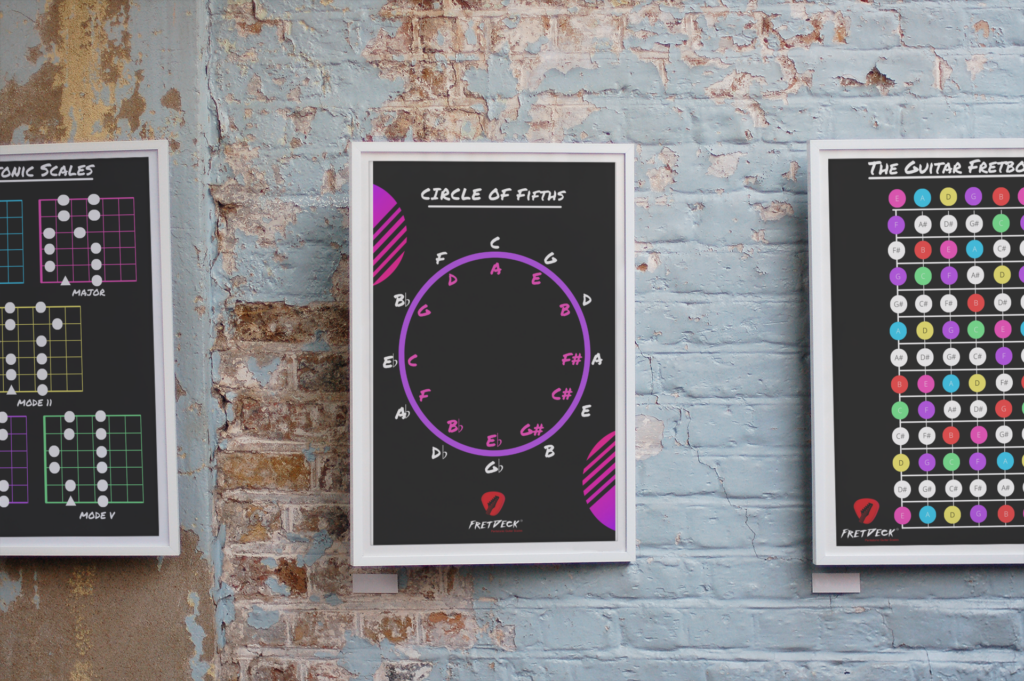
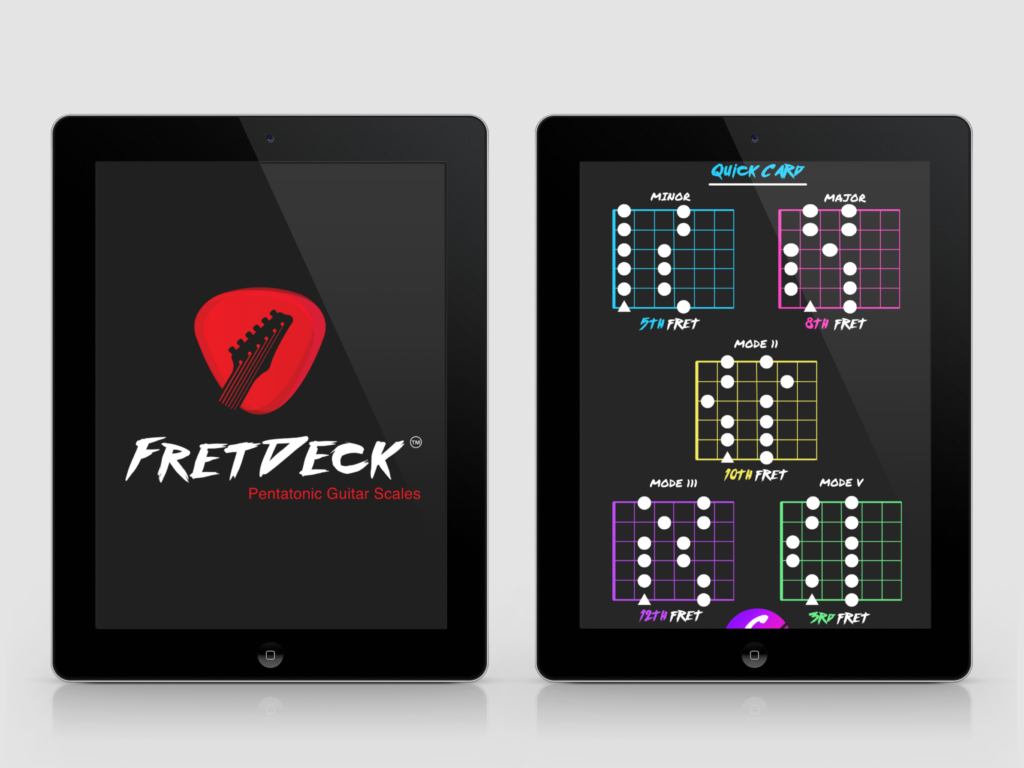
The FretDeck Practice Workstation changes that. It’s the interactive fretboard app that shows you exactly what to play, why it works, and how every note connects — so you finally understand the guitar instead of just copying tabs.
Whether you’re stuck in a rut, tired of noodling the same pentatonic box, or ready to unlock the entire neck — the FretDeck Practice Workstation gives you the visual roadmap to get there. All for just $14/month.
👉 Start Using the FretDeck Practice Workstation Now
The Real Culprit: Context Is King
Here’s the secret the pros know: a scale is meaningless without musical context. Simply knowing the notes of the G major scale is useless. However, knowing how those notes sound and function over a G major chord, a C major chord, or an E minor chord? That’s everything.
Think of it like learning a language. Rote memorizing scale shapes is like memorizing a dictionary. You might know thousands of words, but if you don’t understand grammar, sentence structure, or context, you can’t have a conversation. You’re just reciting a list.
The breakthrough happens when you stop practicing scales in a silent vacuum. You must start practicing them in relation to the chords they are designed to work with. Specifically, this is where you connect the sonic “color” of a scale to the harmonic “foundation” of a chord progression. Suddenly, the notes have a purpose. They have tension and release. They tell a story.
Therefore, the first mental shift you must make is to see scales not as isolated fretboard patterns, but as a palette of melodic choices available to you over a specific chord or set of chords.
Why The Old Way of learning scales on guitar Fails
The traditional method of learning scales on guitar is fundamentally flawed for creating improvising musicians. It focuses entirely on technical execution while completely ignoring musical application. Running patterns up and down with a metronome builds speed, but it doesn’t build a musical mind.
Furthermore, this approach creates what guitarists call “box-think.” You see the fretboard as a series of disconnected, rigid boxes. You learn the “A minor pentatonic box 1” and the “A minor pentatonic box 2,” but you have no idea how to smoothly travel between them. Your solos become predictable and choppy because you’re trapped, mentally and physically, in one position at a time.
Truly masterful players don’t see boxes. They see a continuous map of notes across the entire neck. They understand the intervals and how the scale pattern repeats and connects everywhere. This holistic view, which you can learn more about from resources on sites like Guitar World, is impossible to achieve when your practice is limited to drilling isolated shapes. Effective learning scales on guitar demands a more integrated approach.
What If You Could See the Fretboard Instead of Just Memorizing It?
Most guitarists spend years guessing where to put their fingers. They memorize shapes without understanding why — and the second they try to improvise or learn a new song, they’re lost again.
The FretDeck Practice Workstation changes that. It’s the interactive fretboard app that shows you exactly what to play, why it works, and how every note connects — so you finally understand the guitar instead of just copying tabs.
Whether you’re stuck in a rut, tired of noodling the same pentatonic box, or ready to unlock the entire neck — the FretDeck Practice Workstation gives you the visual roadmap to get there. All for just $14/month.
👉 Start Using the FretDeck Practice Workstation Now
The Breakthrough: Connect Scales to Chords
So, what’s the new way? It’s simple, yet profound: Always practice scales over chords.
From now on, never practice a scale in silence again. If you’re learning the G major scale, you need to hear it against a G major chord. Record yourself strumming a G chord for a few minutes, or find a backing track on YouTube. Then, play the scale over it.
Listen. Really listen. Notice how certain notes feel stable and resolved (these are likely the chord tones: G, B, D). Notice how other notes feel tense and want to move somewhere else. This is your ear training. You are actively connecting the technical shape on the neck to a musical result. This simple shift is the core of a much more effective strategy for learning scales on guitar.
As you get more comfortable, expand this to a simple progression. For example, play your G major scale over a G-C-D progression. Your job is now to create small melodic phrases that sound good as the chords change. This is the beginning of real improvisation, and it’s a million times more valuable than playing a scale shape fast. For more on this, check out our guide to building a best practice routine.
From Memorization to Visualization
The final piece of the puzzle is to move from pure memorization to active visualization. Instead of just remembering “third finger, fifth fret,” you begin to see the relationships between notes. You start to see the entire fretboard as a connected grid of possibilities.
A powerful technique is to visualize the chord shapes on the neck and see how the scale notes fit around them. This anchors your scale patterns to something tangible and harmonic. You’ll start to see that the “safe” notes in your solo are almost always the notes already underneath your fingers in the chord shape.
Tools can dramatically accelerate this process. For instance, using an interactive app like the one from FretDeck can help you see these connections in real-time, bridging the gap between abstract theory and what’s actually happening on your guitar. This type of visual learning is far more permanent than rote memorization, as explained in many lessons you might find on Fender Play. For more scale shapes to get started with, explore our deep dive on how to learn guitar scales.

5 Steps to Revolutionize Your Scale Practice Today
Ready to put this into action? Forget the old way. Here are five simple, actionable steps to fundamentally change how you approach learning scales on guitar.
1. Start on a Single String. Before learning a boxed pattern, play the scale up and down on one string. For a G major scale, for example, play the notes G-A-B-C-D-E-F# all on the low E string. This forces you to focus on the sound and distance (the intervals) between the notes, not just a finger pattern.
2. Sing Every Note You Play. As you play a scale, hum or sing the note. It might feel silly at first, but this creates a powerful connection between your fingers, your ear, and your brain. You can’t make music if you can’t hear it in your head first.
3. Always Use a Backing Track. This cannot be overstated. Context is king. Find a simple drone or a one-chord vamp that matches the scale you’re practicing. The goal is to make every note you play part of a musical conversation.
4. Target the Chord Tones. When you are playing over a chord, consciously try to land your phrases on the notes of that chord (the root, third, and fifth). This will make your solos sound instantly more melodic and purposeful.
5. Create Tiny Melodies. Don’t just run the scale. Take just three or four notes from the scale and try to create a simple, repeatable musical phrase—a lick. This forces you to think creatively and melodically, even with limited material.
Frequently Asked Questions (FAQ)
How many scales should a beginner learn?
Resist the urge to learn dozens of scales at once. True mastery comes from depth, not breadth. For most beginners, you should focus on mastering the Minor Pentatonic Scale and the Major Scale. These two scales form the foundation of 90% of rock, pop, blues, and country music. Once you can actually use them musically over chords, you can explore others. Check out our beginner guitar tips for more advice on where to start.
What’s more important: learning scales or learning songs?
This is a false choice—they are two sides of the same coin. You should do both! Learning songs shows you how scales are used in the real world by your favorite artists. Then, you can take that knowledge back to your scale practice. Analyze a solo from a song you love and see which scale it uses. The song provides the context; the scale provides the vocabulary.
How long does the process of learning scales on guitar take?
This is a lifelong journey, not a destination with a finish line. However, that doesn’t mean you won’t see results quickly. With the contextual practice methods described above—focusing on application over rote memorization—you can feel confident and creative with the basic scales in just a few months. The key is consistent, smart practice, not just mindless repetition. The journey of learning scales on guitar is rewarding at every stage if you approach it musically.
What If You Could See the Fretboard Instead of Just Memorizing It?
Most guitarists spend years guessing where to put their fingers. They memorize shapes without understanding why — and the second they try to improvise or learn a new song, they’re lost again.
The FretDeck Practice Workstation changes that. It’s the interactive fretboard app that shows you exactly what to play, why it works, and how every note connects — so you finally understand the guitar instead of just copying tabs.
Whether you’re stuck in a rut, tired of noodling the same pentatonic box, or ready to unlock the entire neck — the FretDeck Practice Workstation gives you the visual roadmap to get there. All for just $14/month.
👉 Start Using the FretDeck Practice Workstation Now
Related posts: