
How to Finally Understand Guitar Neck Notes — Without Memorizing Boring Charts or Staring at Diagrams for Hours
If you’ve been spinning your wheels trying to memorize the guitar fretboard, you’re not alone.
Most players can rip through a few licks or hammer out a chord progression—but when it comes to naming notes or improvising across the neck with intention, they freeze.
Sound familiar?
You’re not failing. You’re just trying to learn an entire language without a map.
In this post, I’ll show you how to finally unlock the neck using creative frameworks, smart visual tricks, and stories from real students who’ve gone from lost to fluent in fretboard navigation.
And yes—we’ll also show you how FretDeck (our game-changing card system) and our private Guitar Freaks Discord community will help you master the neck faster than any scale chart ever could.


❌ Stop Guessing. Start Shredding.
If you’re still fumbling through scale patterns and box shapes… it’s costing you progress.
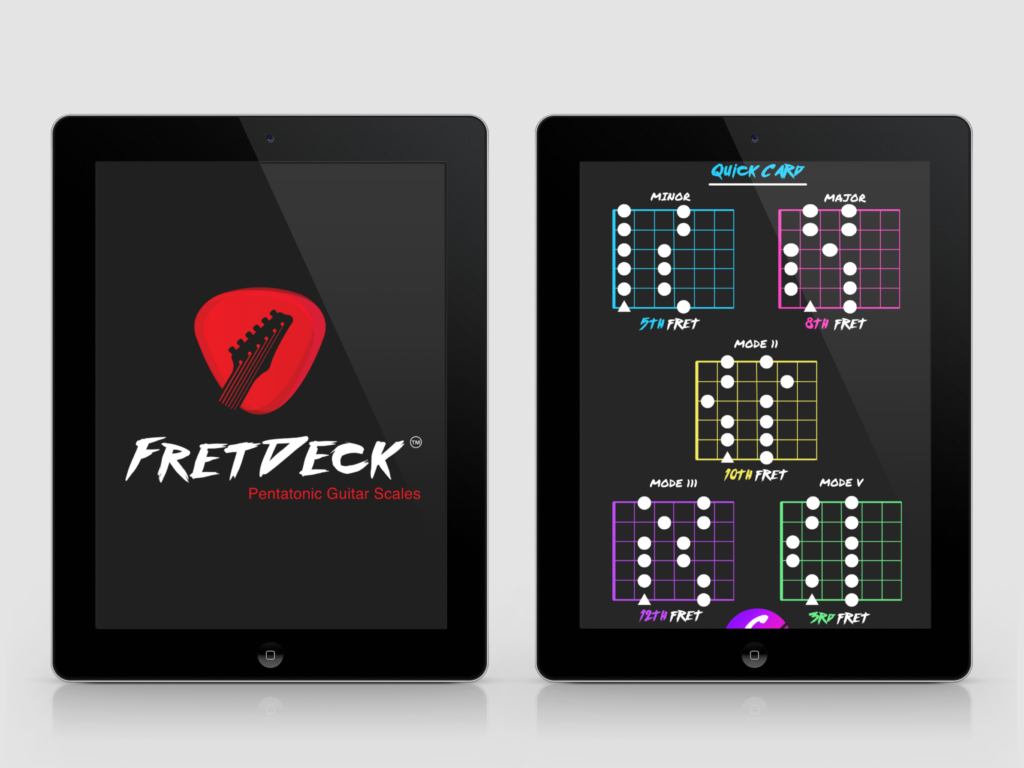
FretDeck™ is the no-fluff system that shows you exactly how to master the fretboard—fast. Early access.
⚡️ This isn’t for dabblers. It’s for players who want results.
👉 Click here to join the pre-launch now
Early access. Limited rewards. Don’t wait.
The Real Reason You’re Still Guessing at Notes
Learning the notes on the guitar neck isn’t about memorization. It’s about recognition and connection.
It’s about developing an instinctive sense of where you are and where you can go.
Until you internalize the fretboard, you’ll keep:
- Playing in one box
- Feeling “lost” past the 5th fret
- Copying licks instead of creating them
This isn’t a knowledge problem—it’s a visualization problem.
So let’s solve it.
🎯 6 Proven Ways to Master Guitar Neck Notes (Even If You’ve Tried Before)
Each method below will help you see the fretboard differently. The trick is to combine methods and rotate them into your daily practice.
1. Visualize with the CAGED System
The CAGED system isn’t just for learning chords—it’s a powerful visual tool for mapping the fretboard.
Each letter in CAGED (C, A, G, E, D) represents a chord shape that connects with scale patterns and triads.
Want to improvise in G major? Start with the E shape at the 3rd fret. Shift to the D shape at the 5th. Then A at the 7th. Boom—you’re already building fretboard fluency.
Use this system to:
- Move chord shapes across the neck
- Connect pentatonic scales and arpeggios to chord tones
- Understand how theory lives on the neck
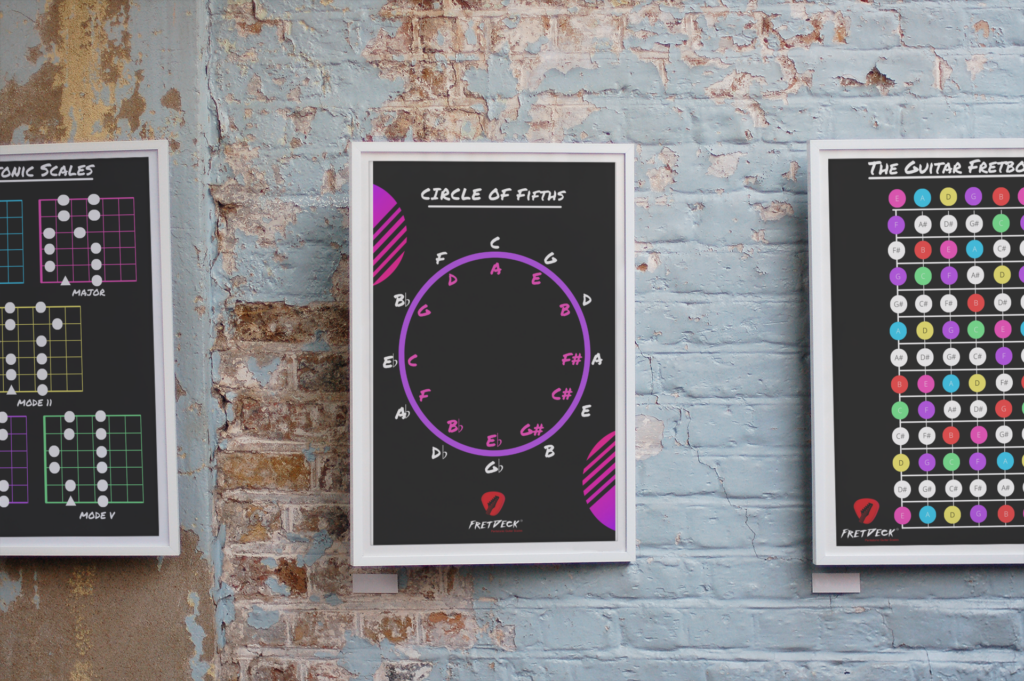
🃏 Pro Tip: FretDeck cards help visualize each CAGED shape across multiple keys. You’ll never forget which shape comes next.
2. Use FretDeck for Micro-Fretboard Challenges
FretDeck isn’t just flashcards—it’s a strategy tool disguised as a deck of cards.
Each card gives you:
- A fretboard diagram of notes, triads, or pentatonic shapes
- A micro-challenge (like “Play the C minor pentatonic in mode 3”)
- A memory test (“Name every G note on the neck”)
Instead of studying the fretboard, you’re engaging with it.
Student Highlight: Jack
“Before FretDeck, I didn’t know where my notes were. Now I can solo in any key—and it actually sounds like music.”
Jack used our Pentatonic Secrets course and FretDeck challenges to finally connect the dots. He went from guesswork to fretboard confidence in 30 days.
3. Train Intervals, Not Just Notes
One of the best-kept secrets in guitar education: interval training will supercharge your fretboard knowledge.
Here’s how to do it:
- Pick a root note on any string
- Play the major 3rd, perfect 5th, minor 7th, etc., from that point
- Do this on different strings, in different directions
Why it works: Intervals are the DNA of music. If you know where the 5th is from any root, you can build chords and riffs on the fly.
Student Highlight: Jennifer
“Interval training helped me build chords and understand jazz changes. I stopped thinking in fret numbers and started hearing music.”
4. Learn One String at a Time (Seriously)
Want to get fluent fast? Slow down and zoom in.
Focus on a single string:
- Start with the low E string
- Say the note out loud as you play it up to the 12th fret
- Do the same backward
- Then quiz yourself randomly
Do this with each string for a few days, then start connecting octaves and shapes.
Octave tip: The same note exists two frets up and two strings down (except between G and B). This trick makes finding notes automatic.
5. Anchor Your Scales with Note Awareness
Scales aren’t just shapes. Every note has a name and a purpose.
Here’s how to stop playing blind scale shapes:
- When you play a scale (say A minor pentatonic), say each note aloud: A–C–D–E–G
- Locate each root note (A) within the pattern
- Visualize which interval each note is (e.g., E = 5th)
Bonus: Play the same pattern starting on a different root note to practice transposing on the fly.
Mode Magic: Shift the starting point of the pattern, and you’re playing Dorian, Phrygian, etc. All from one scale.
6. Apply What You Learn in Real Music
Theory without application is like practicing pushups and never throwing a punch.
Here’s how to put your fretboard knowledge to work:
- Solo over a jam track using only one string — force yourself to find the right notes
- Learn a solo note-for-note (BB King, Clapton, Angus Young) and map every phrase to its fretboard location
- Write a melody and then transpose it to three different keys
Student Highlight: Darren
“The CAGED system helped me see chord shapes everywhere. But it wasn’t until I started soloing with it that it clicked.”
He stopped thinking in patterns and started expressing himself musically.
💡 Tips to Build Your Fretboard Routine
If you want to make real progress, here’s how to structure your practice:
✅ Daily Practice Template (15–30 minutes)
- Warm-up: 5 minutes of chromatic note naming (1 string)
- Interval Training: 5 minutes across 2–3 root notes
- FretDeck Challenge: Pull 1–2 cards and complete the tasks
- Apply: Improvise or write a short riff using today’s focus
- Journal: Log what worked + questions for next time
Stick with this for 30 days, and I promise: the fretboard will feel like home.
🚀 Ready to Stop Guessing? Here’s Your Next Step:
🎸 Grab the FretDeck: Pentatonic Scales — Our best-selling card deck helps you see the fretboard, not just memorize it.
💬 Join the Guitar Freaks Discord — Get feedback, jam tracks, challenges, and community support. No trolls. Just players like you trying to master the neck.
🧠 Want a Shortcut? Take the Pentatonic Secrets Course — Learn all 60 pentatonic scale patterns across every key with guided walkthroughs.
👉 Click here to order FretDeck now on Kickstarter!
❌ Stop Guessing. Start Shredding.
If you’re still fumbling through scale patterns and box shapes… it’s costing you progress.
FretDeck™ is the no-fluff system that shows you exactly how to master the fretboard—fast. Early access.
⚡️ This isn’t for dabblers. It’s for players who want results.
👉 Click here to join the pre-launch now
Early access. Limited rewards. Don’t wait.
Final Word: You Don’t Need More Information. You Need Transformation.
If you’ve read this far, you already care about mastering the notes on guitar neck.
But don’t just read about the fretboard. Experience it.
Get the cards. Do the exercises. Jam with the community.
Your future self—the one who solos with confidence, writes original riffs, and knows exactly where every note lives—will thank you.
P.S. If you’re tired of “just learning shapes,” then now is the time to flip the deck, challenge your ears, and unlock your fretboard. You’re one decision away from being the player you’ve always wanted to be.
Internal Link Suggestion
➡️ Read: 6 Strategies for Visualizing Guitar Fretboard Notes
Outbound Link Suggestion
🎧 Listen to B.B. King’s “The Thrill Is Gone” on YouTube — then map out every note on your neck.
Join Guitar Freaks Hangout on Discord! 🎸
Get Fret Logic FREE!
Join the Guitar Freaks Hangout Discord and get exclusive access to my entire e-book, Fret Logic! Master the fretboard and elevate your solos with this comprehensive guide.
👉 Don’t miss out—join now and download your free copy!
Related posts: