Are you searching for a comprehensive pentatonic scales pdf to finally crack the code of guitar solos? This free guide is exactly what you need to start navigating the fretboard with confidence. You’ve probably heard that the pentatonic scale is the key. For instance, it’s the foundation for countless iconic solos in rock, blues, pop, and country music.
You know that feeling… you want to break free from just playing chords. You want to weave your own melodic lines and sound like the guitar heroes you admire. Therefore, you correctly identify that learning scales is the next logical step on your journey.
The problem is, the path forward feels foggy and overwhelming. You’re stuck in a rut, playing the same three licks over and over. You know the notes are out there on the fretboard, waiting for you. However, you just don’t know how to find them or what to do with them when you do.
The Black Hole of “More Information”
You’ve likely been down this road before. You type “how to solo on guitar” into Google. As a result, you find dozens of articles and videos, each showing you a different scale pattern. You might even download a chart or a promising-looking pentatonic scales pdf.
It sits on your desktop for a few weeks. You open it, stare at the confusing dots and numbers, and feel a wave of paralysis wash over you. Specifically, it feels like being handed a map of a city in a foreign language with no legend and no “You Are Here” marker.
This is the trap of information without application. Simply having the scale shapes isn’t the answer. In fact, it often creates more confusion. You lack a system for understanding, practicing, and, most importantly, using these shapes to make actual music. The file gets forgotten, and you go back to playing “Smoke on the Water” for the thousandth time, feeling more defeated than when you started.
The Simple Guitar Practice System That Eliminates Guesswork
So You Can Stop Stalling… and Start Sounding Better Every Time You Pick Up the Guitar
👉 Get 52 Practice Prompts Now!
The 5-Pattern System: Your Fretboard Roadmap
Imagine being able to see the entire guitar neck not as a random collection of 120+ frets, but as five simple, interconnected shapes. This is the secret. This is the “Aha!” moment that separates struggling guitarists from those who seem to play effortlessly. The pentatonic scale isn’t just one box; it’s a system of five movable patterns that covers the entire fretboard.
Think of it like this: each pattern is a neighborhood. Once you learn the layout of all five neighborhoods, you know the entire city. You can travel from one to another seamlessly. Furthermore, because these patterns are movable, you can play in any key just by sliding the whole system up or down the neck.
This approach transforms the fretboard from an intimidating mystery into a familiar playground. You stop guessing where the “good” notes are. Instead, you know where they are, everywhere on the neck. This system is the crucial context that makes any scale diagram useful.
Your Free Pentatonic Scales PDF: Breaking Down the 5 Shapes
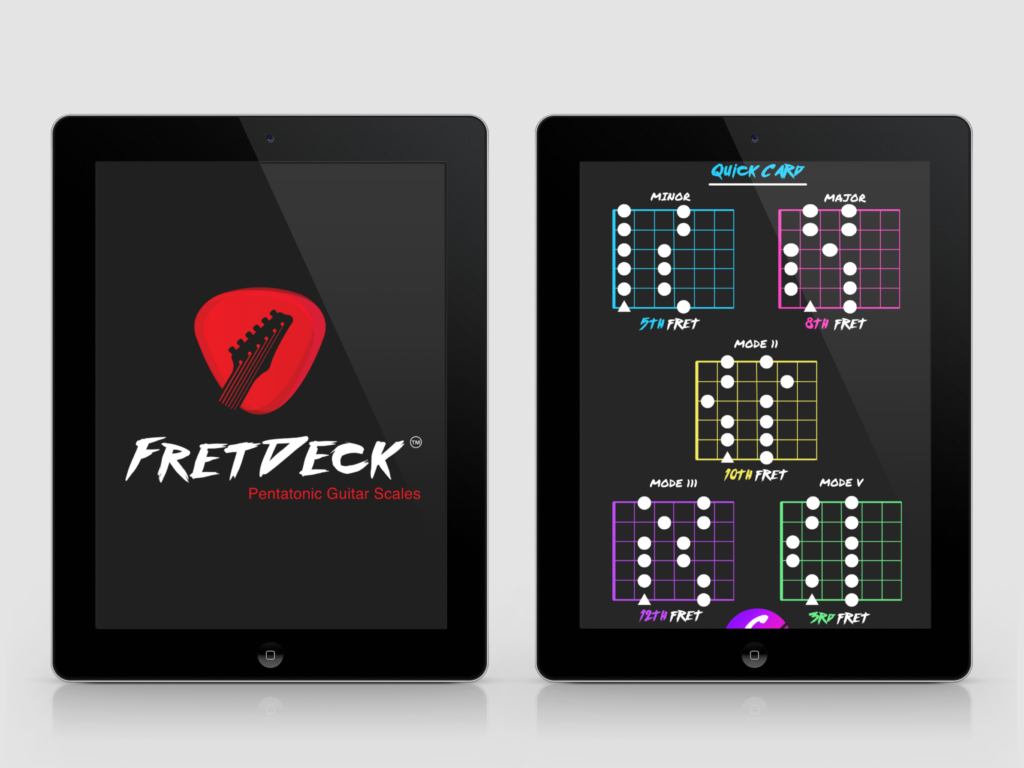
This isn’t just another chart of dots. Our free pentatonic scales pdf is specifically designed to teach you this 5-pattern system. We present the information clearly and concisely, giving you the exact shapes you need to unlock the neck. It’s the map and the legend you’ve been missing.
Inside the download, you will find crystal-clear diagrams for all five minor pentatonic scale patterns. We use A minor as the root key, which is a fantastic starting point for guitarists.

Here is a quick breakdown of what you’ll master:
- Pattern 1: The classic “box” shape that most guitarists learn first, rooted at the 5th fret for A minor. It’s the home base for countless rock and blues licks.
- Pattern 2: This shape connects directly to Pattern 1, starting on the 8th fret. It introduces new melodic possibilities and helps you break out of the main box.
- Pattern 3: Moving further up the neck, this pattern begins at the 10th fret. It has a unique feel and is perfect for creating flowing, melodic runs.
- Pattern 4: Found at the 12th fret, this shape feels familiar as it shares notes with the open position. It’s a crucial connector piece in the system.
- Pattern 5: This pattern bridges the gap back to Pattern 1 an octave higher. It starts on the 2nd/3rd frets and connects everything back to the beginning.
This downloadable pentatonic scales pdf gives you the “what.” It is your visual guide to each neighborhood on the fretboard.
The Simple Guitar Practice System That Eliminates Guesswork
So You Can Stop Stalling… and Start Sounding Better Every Time You Pick Up the Guitar
👉 Get 52 Practice Prompts Now!
Beyond the Shapes: Making Music with the Pentatonic Scale
Okay, so you’ve learned the five shapes from the pentatonic scales pdf. You can play them up and down. Now what? The final and most important piece of the puzzle is turning those sterile scales into expressive music. A scale is just a collection of notes; a solo is a conversation.
This is where technique and phrasing come into play. You must learn to make the notes sing. Great guitarists don’t just play notes; they manipulate them. For example, they use bends to cry and scream, vibrato to add emotion and sustain, and slides to create a sense of fluid movement between ideas. As you dive deeper, you may find these beginner guitar tips helpful for building a solid foundation.
Moreover, phrasing is the art of how you “speak” with your notes. Think about rhythm and space. Don’t just play a constant stream of notes. Instead, try playing a short melodic idea, pausing, and then responding to it. Listen to players like B.B. King or David Gilmour; they are masters of saying more with fewer notes. To improve this, you can learn a lot about improving your phrasing from the experts at Guitar Player.
7 Steps to Master the Pentatonic Scale
Ready to put this all into action? Follow these steps to go from downloading the chart to actually using it. This is your action plan for success.
1. Start with One Pattern. Don’t try to learn all five at once. Pick Pattern 1 from your pentatonic scales pdf and live with it for a week. Play it up and down until it’s committed to muscle memory.
2. Use a Metronome. This is non-negotiable. Set the metronome to a slow tempo (like 60 bpm) and play the pattern using eighth notes. This builds your timing and control. A solid best practice routine always includes metronome work.
3. Find a Backing Track. Go on YouTube and search for an “A minor blues backing track.” Now, forget playing the scale up and down. Simply try to play notes from the pattern over the music. Experiment! There are no mistakes, only discoveries.
4. Learn Simple Licks. The best way to learn the language of soloing is to copy the masters. Find a simple lick from Eric Clapton or Angus Young that uses Pattern 1. Guitar World often has great lick lessons you can explore. This teaches you how notes are combined musically.
5. Connect Two Patterns. Once you are comfortable with Pattern 1, start working on Pattern 2. Then, practice moving between them. Find the notes they share and use them as bridges to travel from one “box” to the next. This is how you truly learn guitar scales across the whole neck.
6. Focus on Phrasing. Record yourself playing over the backing track. Listen back. Are you leaving any space? Could you a bend a note here or add vibrato there? Actively work on making your playing more vocal-like.
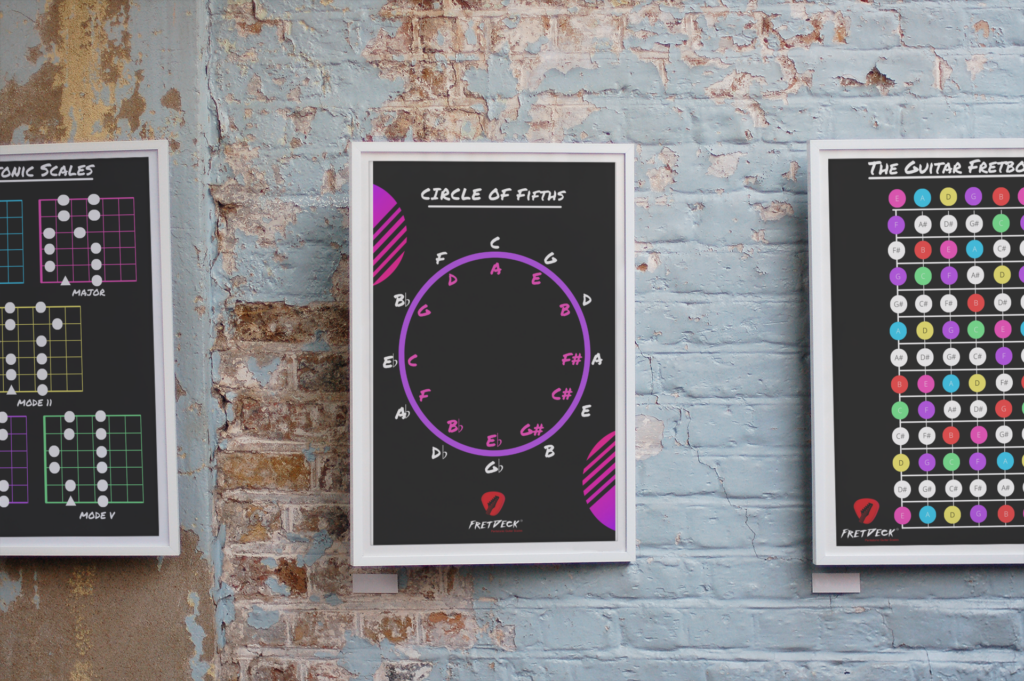
7. Stay Consistent and Organized. Use a practice aid to keep your sessions focused. A tool like the FretDeck card system can give you daily prompts, ensuring you cover all the essential techniques and don’t just noodle aimlessly. Consistency is more important than the length of your practice sessions.
Frequently Asked Questions
What is the most common pentatonic scale?
The most common pentatonic scale for guitarists is the minor pentatonic scale. It’s the sound of blues, classic rock, and much more. The diagrams in our free pentatonic scales pdf focus on this essential scale, giving you the most versatile tool for soloing in popular music. The major pentatonic scale is also very common, especially in country and pop music, and uses the exact same five patterns, just with a different root note location.
How do I connect the pentatonic shapes?
The key is to identify “connector notes”—notes that exist in both shapes. For example, the highest notes in Pattern 1 are the lowest notes in Pattern 2. Practice playing a lick in Pattern 1 that ends on one of these notes, then immediately start a new lick from that same note in Pattern 2. Use slides to glide smoothly between positions. Over time, you will begin to see them as one giant, interconnected super-scale rather than five separate boxes.
Can I use this pentatonic scales pdf for bass guitar too?
Absolutely! The notes and patterns are exactly the same. The bass guitar is tuned identically to the lowest four strings of a guitar (E-A-D-G), just one octave lower. Therefore, all five pentatonic shapes shown in the guide apply directly to the bass fretboard. This makes it a fantastic tool for bass players who want to create more melodic bass lines or even take a solo.
The Simple Guitar Practice System That Eliminates Guesswork
So You Can Stop Stalling… and Start Sounding Better Every Time You Pick Up the Guitar
👉 Get 52 Practice Prompts Now!