
You probably just downloaded another pentatonic scales pdf. You stare at the five boxes, hoping this is the one that finally makes it all click.
However, if you’re like most guitarists, it will end up in a digital folder graveyard. You’ll memorize a shape or two. You might even noodle over a backing track. But you still feel trapped in that one little box, unable to break free and navigate the neck like the pros you admire.
The truth is, the problem isn’t your dedication. The problem is the way those diagrams teach you. They show you what to play, but never how to think. Today, we’re going to fix that for good.
Why Every PDF Feels Like the Same Trap
You spend hours learning the five positions of the pentatonic scale. You’ve seen the diagrams a hundred times. Position 1, Position 2, Position 3, and so on.
The problem is that they feel like five completely separate, disconnected islands. For example, you learn the A minor pentatonic “box” at the 5th fret. Then you learn another box at the 8th fret. But how do you get from one to the other without it sounding clunky and obvious?
This is the pentatonic prison. You can play up and down in one area, but you feel lost the second you try to move. As a result, all your solos start to sound the same. That’s because you’re just running patterns, not creating melodies that flow across the strings. A standard pentatonic scales pdf gives you the map but hides the secret pathways between the locations.
What If You Could See the Fretboard Instead of Just Memorizing It?
Most guitarists spend years guessing where to put their fingers. They memorize shapes without understanding why — and the second they try to improvise or learn a new song, they’re lost again.
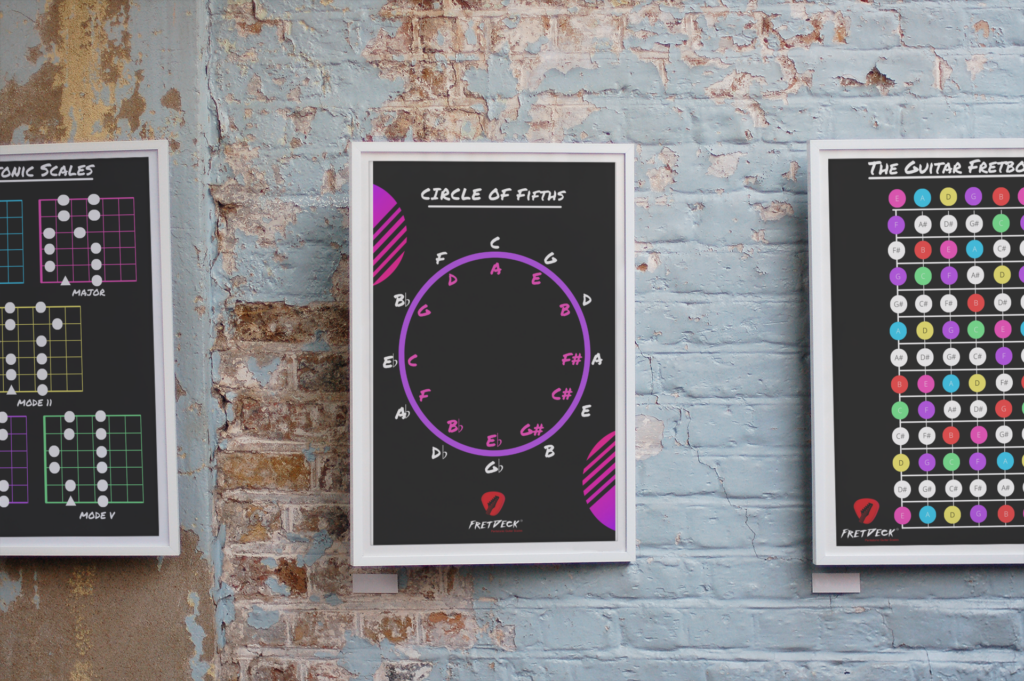
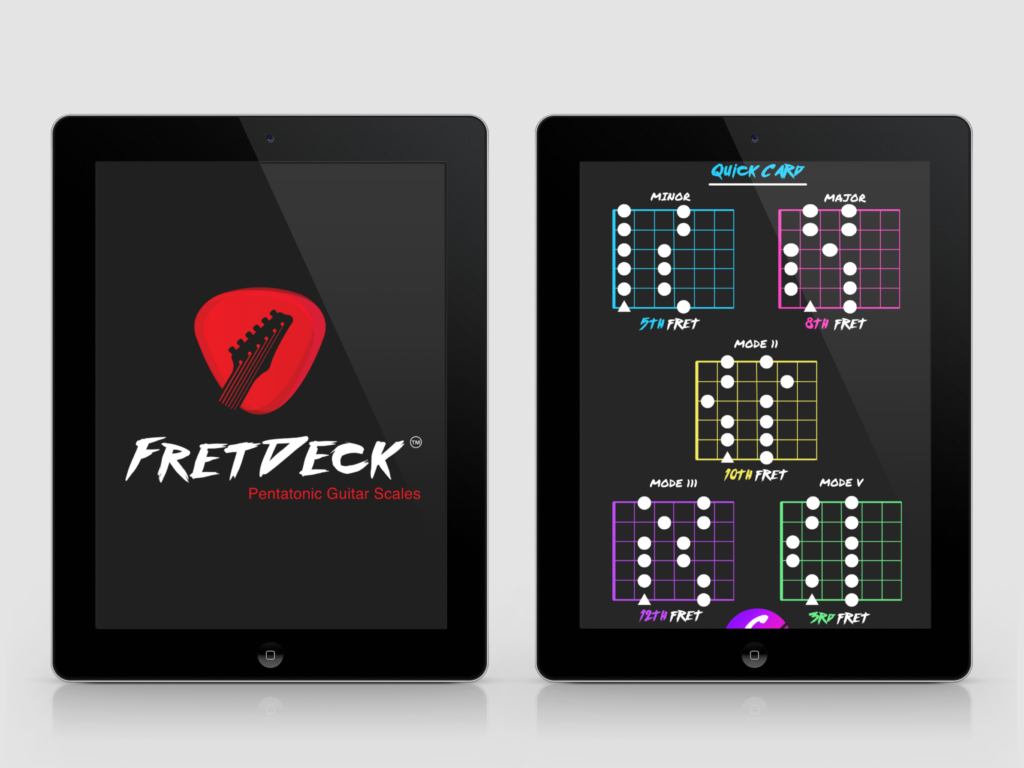
The FretDeck Practice Workstation changes that. It’s the interactive fretboard app that shows you exactly what to play, why it works, and how every note connects — so you finally understand the guitar instead of just copying tabs.

Whether you’re stuck in a rut, tired of noodling the same pentatonic box, or ready to unlock the entire neck — the FretDeck Practice Workstation gives you the visual roadmap to get there. All for just $14/month.
👉 Start Using the FretDeck Practice Workstation Now
The “Anchor Note” Shortcut That Changes Everything
Instead of memorizing five giant shapes, I want you to focus on just one thing: the root note. Let’s stick with our example of A minor pentatonic. Your first step is to find every single “A” note on the fretboard.
- Low E string: 5th fret
- A string: open, 12th fret
- D string: 7th fret
- G string: 2nd, 14th fret
- B string: 10th fret
- High E string: 5th fret
These are your anchors. These notes are your home base, your points of resolution. Instead of thinking about big, clumsy boxes, you can now start thinking about small, powerful melodic cells that revolve around these anchors.
For instance, focus on the “A” on the D string (7th fret). The pentatonic notes right around it are the 5th and 7th frets on the D string and the 5th and 7th frets on the G string. That’s a tiny, four-note “micro-box.” Suddenly, you have a melodic tool you can use instantly, and you know exactly where you are on the neck because you’re anchored to the root note.
Moreover, you can do this for every single anchor note. You begin to see the pentatonic scale not as five boxes, but as a connected web of notes all tied to the root. This is how players like David Gilmour and B.B. King make their solos sing—they are always aware of their anchor notes.
Your New and Improved pentatonic scales pdf Framework
Now, let’s build on this. Your new pentatonic scales pdf framework isn’t a static document; it’s a dynamic mental map. This is where we connect the dots and finally break out of the boxes for good.
Think horizontally, not just vertically. Take two of your “A” anchor notes, for example, the one on the low E string (5th fret) and the one on the D string (7th fret). Your job is no longer to play the box at the 5th fret. Instead, your job is to create a musical line that travels from that first anchor to the second one.
You could slide from the G (3rd fret, E string) up to the A (5th fret). Then, you could play the C on the A string (3rd fret) and the D on the A string (5th fret). Finally, you could play the E on the D string (2nd fret) and then slide all the way up to your target anchor note, the A on the D string (7th fret).
See the difference? You just traveled across the neck using pentatonic notes, but you weren’t thinking about a box shape. You were thinking about a destination. This simple mental shift is the key
Related posts: