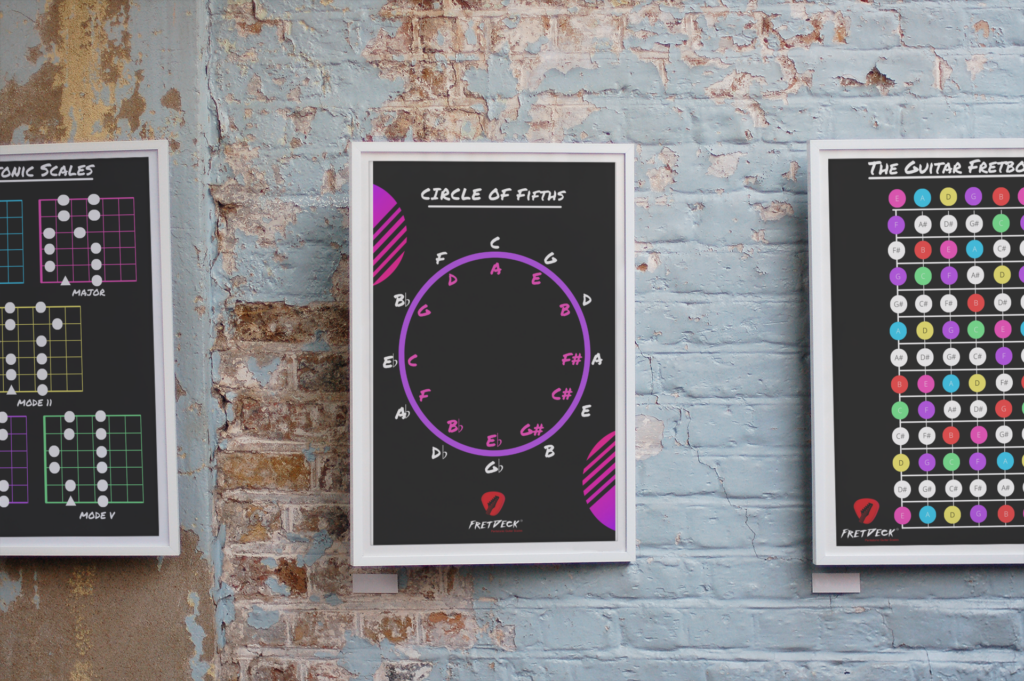
Are you searching for a complete and easy-to-understand scales in guitar pdf? You’ve landed in the right place, because this guide provides exactly that, helping you unlock the fretboard with crystal-clear diagrams.
You know that scales are the secret language of music. They are the building blocks of every riff, solo, and melody you love. However, finding a good resource can feel impossible.
Most charts are either too simplistic or wildly complex. As a result, you remain stuck, unable to connect the dots and truly express yourself. This is one of the most common hurdles, especially for new players, and you can find more help in our beginner guitar tips.
The Fretboard Riddle: Why You Feel Stuck
Does the guitar neck look like a confusing jumble of random frets and strings? You might learn a cool lick from a YouTube video, but you have no idea how to move it to a different key or create your own version of it. Consequently, you feel trapped in one small box on the fretboard.
This frustration is incredibly common. You see your favorite players gliding effortlessly up and down the neck, and it seems like magic. The truth is, it isn’t magic. It’s a system.
They aren’t guessing where to put their fingers. Instead, they have a mental map of the fretboard built from scale patterns. Without this map, you are essentially driving in a new city without GPS. You’re left making random turns, hoping you stumble upon your destination. For that reason, progress stalls, and the guitar starts gathering dust.
The Simple Guitar Practice System That Eliminates Guesswork
So You Can Stop Stalling… and Start Sounding Better Every Time You Pick Up the Guitar
👉 Get 52 Practice Prompts Now!

The Master Key: Understanding The Major Scale
Every journey needs a starting point. In the world of music theory and guitar scales, that starting point is the Major Scale. Think of it as the “mother scale” from which almost all other Western music scales and chords are derived.
Furthermore, its bright, happy sound is instantly recognizable. You’ve heard it in countless nursery rhymes and pop songs. It follows a specific intervallic formula: Whole-Whole-Half-Whole-Whole-Whole-Half. While that sounds technical, our scales in guitar pdf visualizes it for you.
Specifically, we break the Major Scale down into five distinct, moveable shapes. These patterns are often associated with the CAGED system. By learning these five shapes, you unlock the entire fretboard. You’ll be able to play a C Major scale in five different places, and each shape will connect to the next, forming a continuous path up the neck.
Unleashing Your Inner Rock God: The Pentatonic Scale
If the Major Scale is the foundation of theory, the Pentatonic Scale is the foundation of rock and blues guitar. It is, without a doubt, the most important scale you will ever learn for soloing in popular music. It has only five notes per octave, which makes it incredibly versatile and easy to learn.
The Minor Pentatonic scale, in particular, is the sound of Slash, Jimmy Page, and B.B. King. It’s gritty, soulful, and fits perfectly over most rock, blues, and even pop chord progressions. As experts at Guitar World often note, this scale is a guitarist’s absolute bread and butter.
Similar to the Major Scale, the Pentatonic Scale is broken down into five interlocking positions or “boxes.” Memorizing these five boxes is your ticket to improvising your first real guitar solos. Our guide maps out each box clearly, showing you the root notes so you always know where you are.
The Simple Guitar Practice System That Eliminates Guesswork
So You Can Stop Stalling… and Start Sounding Better Every Time You Pick Up the Guitar
👉 Get 52 Practice Prompts Now!
Your Ultimate Scales in Guitar PDF Collection
So, why is a single, clean scales in guitar pdf so crucial for your progress? The internet is a chaotic place, filled with conflicting diagrams and confusing explanations. Bouncing between ten different websites to learn one scale is a recipe for disaster.
A well-organized PDF centralizes your learning. Importantly, it gives you a single source of truth you can print out and put on your music stand. This eliminates digital distractions and allows for focused, deliberate practice.
Our downloadable guide isn’t just a collection of charts. Moreover, it’s a systematic road map. We present the scales in a logical order, starting with the most essential and building from there. This systematic approach ensures you aren’t just memorizing random patterns; you’re understanding how they connect. Having a great scales in guitar pdf is the first step toward true fretboard mastery.
Adding Emotional Color: Minor Scales and Modes
Once you have the Major and Pentatonic scales down, it’s time to add more emotional depth to your playing. This is where the Natural Minor scale and its variations come in. The Natural Minor scale creates a sad, melancholic, or pensive sound.
For a more dramatic, tasty flavor, you can explore the Harmonic Minor scale. By raising just one note of the Natural Minor scale, you get a sound that’s perfect for neoclassical metal or Spanish-influenced melodies. Our guide lays out these patterns clearly, showing you exactly which notes to change.
Furthermore, you can begin exploring modes. Modes are simply scales derived from the Major Scale but starting on a different note. For example, the Dorian mode is famously used in songs like “Oye Como Va.” The Mixolydian mode is the sound of countless classic rock and country solos. If you want to dive deeper, Fender offers some excellent articles demystifying modes. Think of modes as different flavors you can use to spice up your solos.
How to Practice Scales For Real Results
Simply knowing the patterns in your scales in guitar pdf is not enough. You must integrate them into your muscle memory and your ear. Here are five practical steps to turn these shapes into real music.
1. Start Slow, Use a Metronome. Speed is the byproduct of accuracy. Set a metronome to a very slow tempo (like 60 bpm) and play one scale position up and down. Focus on clean, clear notes. Only increase the speed when you can play it perfectly.
2. Learn One Position, Then Connect. Don’t try to learn all five boxes at once. Master one position until it feels comfortable. Afterwards, find where it connects to the next position up the neck and practice transitioning between the two.
3. Vocalize The Notes. As you play a scale, try to sing or hum the note of each degree (1, 2, 3, 4, 5…). This simple exercise connects your fingers to your ears and dramatically improves your musical intuition. It trains you to hear the sounds you want to create.
4. Break Out of Linear Playing. Don’t just play scales up and down. Play them in thirds (1-3, 2-4, 3-5, etc.). Play them in sequences of three or four notes. This is how you start creating melodic ideas instead of just running exercises. For more ideas, check out our guide to the best practice routine.
5. Improvise Over Backing Tracks. This is the final and most important step. Find a backing track online in a key you know a scale for (e.g., “A minor backing track”). Now, try to use the scale patterns to create your own melodies. This is where the magic happens.
Frequently Asked Questions
How many guitar scales should I learn?
You can feel overwhelmed by the sheer number of scales. However, you should start with just two: the Minor Pentatonic and the Major Scale. These two scales will cover 90% of the music you want to play. Once you have mastered their five positions, you can then branch out to minor scales and modes. You can find more structured help on our page about how to learn guitar scales.
What is the fastest way to memorize guitar scales?
The fastest way is through a combination of repetition, context, and visualization. Use frequent, short practice sessions to build muscle memory. Always practice scales over a backing track to give them musical context. Finally, use fretboard visualization tools, like the excellent card-based system FretDeck, to practice visualizing the patterns even when you’re away from your guitar.
How do I use scales to make music?
The key is to stop thinking of them as “scales” and start seeing them as a collection of target notes. The notes of a scale will always sound good over the corresponding chords. When a G Major chord is playing, any note from the G Major scale will sound consonant. Start by targeting the root notes of the chords with your scale runs, and then begin to weave more melodic phrases in between.
The scales in guitar pdf you’ve been looking for is more than just a document; it’s a map to musical freedom. Your journey to mastering the fretboard begins now. Download the guide, grab your guitar, and start transforming those patterns into music.
The Simple Guitar Practice System That Eliminates Guesswork
So You Can Stop Stalling… and Start Sounding Better Every Time You Pick Up the Guitar
👉 Get 52 Practice Prompts Now!