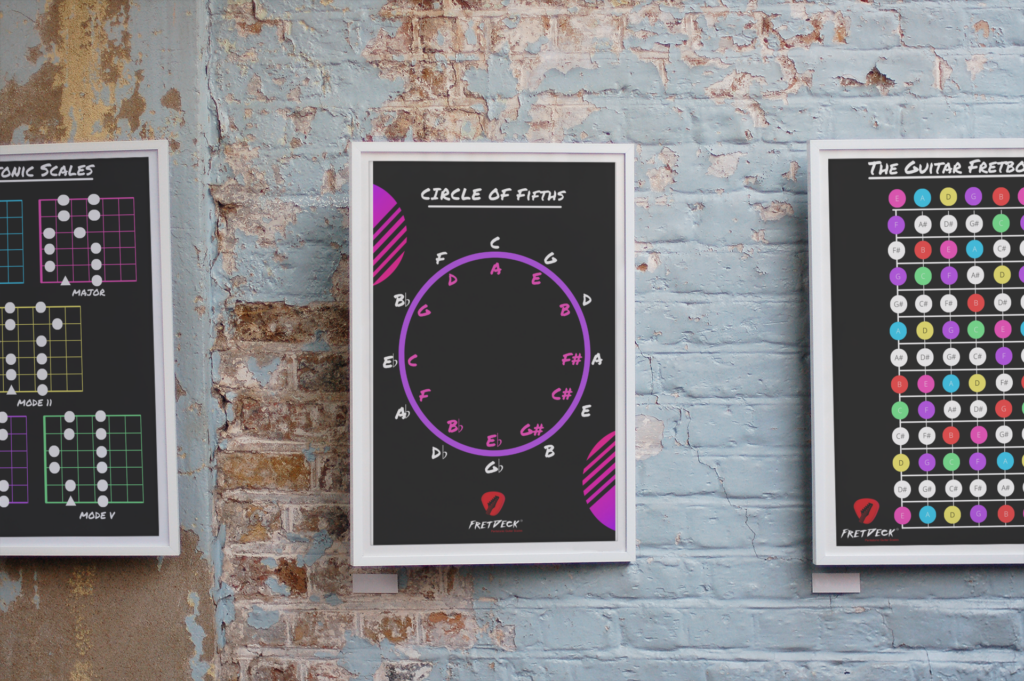

Your hard drive is a graveyard, isn’t it? If you were to search for “scales in guitar pdf,” you’d find a dozen different files, all promising to be the one that finally unlocks the fretboard. You download them with a rush of hope, thinking this is the missing piece.
But the hope fades. The PDFs sit there, unopened, joining the others in digital dust. You’re left with the same frustration, noodling in the same familiar box, wondering why rows of black dots on a page haven’t magically transformed you into a guitar god. The truth is, the problem isn’t your motivation; it’s the myth that a simple document holds the key.
The Digital Hoarding Trap
You know the cycle. You feel stuck, so you go hunting for a solution. A quick search brings up endless options: “The Ultimate Scale Book PDF,” “Every Scale You’ll Ever Need,” “Fretboard Mastery Chart.” Each one feels like a golden ticket.
However, once you download it, reality sets in. You’re looking at a static, lifeless grid of dots. There’s no context. No sound. No guidance on how to use it. It doesn’t tell you which scale to play over which chord, how to transition smoothly between positions, or how to make it sound like actual music.
As a result, you feel overwhelmed. The chart shows you seven different positions for the major scale, but where do you even start? This leads to analysis paralysis. Consequently, you either try to memorize one shape and quickly get bored, or you close the file and go back to playing the one pentatonic lick you know. The PDF didn’t solve your problem; it just gave you a new one.
What If You Could See the Fretboard Instead of Just Memorizing It?
Most guitarists spend years guessing where to put their fingers. They memorize shapes without understanding why — and the second they try to improvise or learn a new song, they’re lost again.
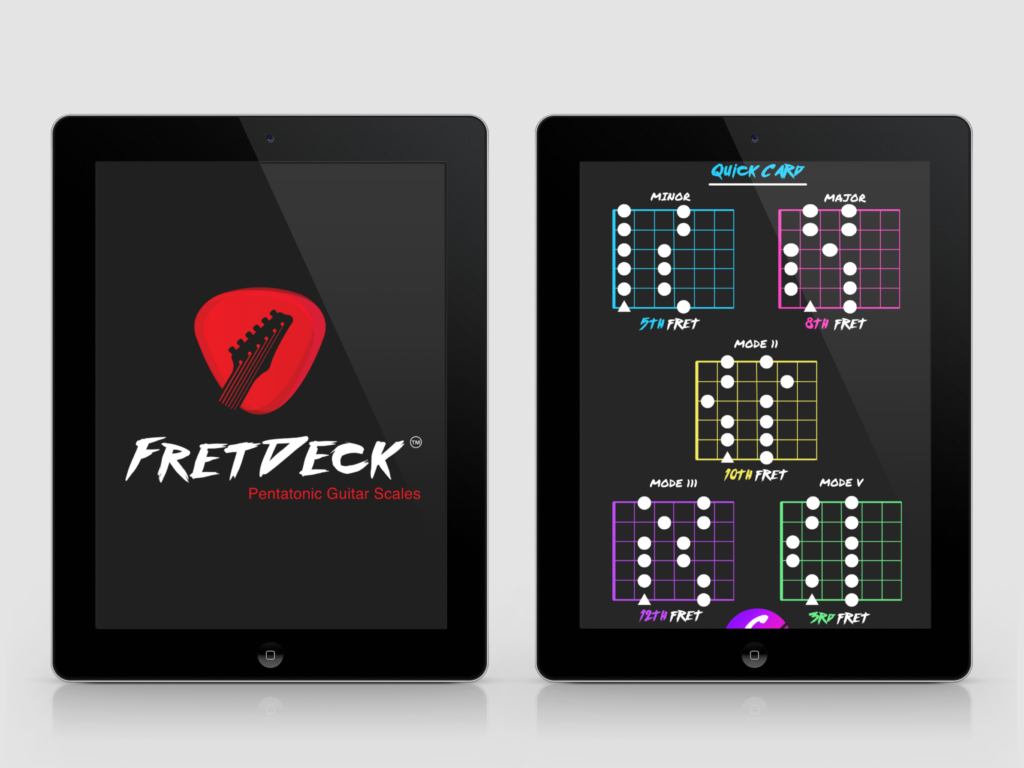
The FretDeck Practice Workstation changes that. It’s the interactive fretboard app that shows you exactly what to play, why it works, and how every note connects — so you finally understand the guitar instead of just copying tabs.
Whether you’re stuck in a rut, tired of noodling the same pentatonic box, or ready to unlock the entire neck — the FretDeck Practice Workstation gives you the visual roadmap to get there. All for just $14/month.

👉 Start Using the FretDeck Practice Workstation Now
From Static Diagrams to Dynamic Practice
The first shift you must make is understanding that a scale PDF is a map, not a vehicle. A map is useless if you never get in the car and start driving. Similarly, a scale chart is just data until you turn it into a physical, musical exercise.
Your goal isn’t to collect more maps. Your goal is to explore the territory. This means you need to stop passively downloading and start actively engaging. For example, instead of just staring at the five pentatonic shapes, pick one. Just one. Commit to learning its sound, its feel, and its connection to the root note.
Furthermore, dynamic practice involves incorporating rhythm and context. Don’t just play the notes up and down like a robot. Play them over a backing track. Try to create a simple melody using only the notes from that one scale shape. This active approach transforms dead information into living, breathing music. It’s one of the most powerful beginner guitar tips you can ever implement.
Why Your “scales in guitar pdf” Collection Is Failing You
Let’s be brutally honest about the limitations of that folder full of files. A standard scales in guitar pdf is a one-dimensional tool in a three-dimensional art form. It’s fundamentally broken for several reasons.
First, there is zero auditory feedback. You can’t click a dot to hear what the note is supposed to sound like. Is it a major third? A flat seventh? The PDF doesn’t tell you. Music is an auditory experience, and learning from a purely visual, silent medium is like trying to learn to cook from a textbook with no pictures or taste-testing.
Second, it utterly lacks musical context. A great guitarist knows why they are choosing a specific scale. They understand that a Mixolydian scale sounds great over a dominant 7th chord, for example. Your PDF doesn’t explain this crucial relationship. It just shows you a pattern. To truly use scales, you need to understand their function, a topic explored in depth on sites like Guitar World in their lessons on music theory.
Finally, a static PDF presents a finite, rigid path. It doesn’t adapt to you. Can’t show you how a C Major scale and an A minor scale contain the exact same notes. It can’t highlight the notes of a chord within the scale shape. This is where interactive tools, like the FretDeck system, provide a massive advantage by showing you these connections in real-time.
What If You Could See the Fretboard Instead of Just Memorizing It?
Most guitarists spend years guessing where to put their fingers. They memorize shapes without understanding why — and the second they try to improvise or learn a new song, they’re lost again.
The FretDeck Practice Workstation changes that. It’s the interactive fretboard app that shows you exactly what to play, why it works, and how every note connects — so you finally understand the guitar instead of just copying tabs.
Whether you’re stuck in a rut, tired of noodling the same pentatonic box, or ready to unlock the entire neck — the FretDeck Practice Workstation gives you the visual roadmap to get there. All for just $14/month.
👉 Start Using the FretDeck Practice Workstation Now
The 3-Step System to Make Any PDF Work
So, should you delete all your files? Not necessarily. You can turn any scales in guitar pdf from a source of frustration into a powerful tool by applying a simple, active system.
Step 1: Choose One Scale, One Position. Stop trying to learn everything at once. Open one of your PDFs and pick a single scale—the Minor Pentatonic is a perfect start. Now, ignore all the other positions and focus on just one box shape. Your only goal is to get this one pattern under your fingers.
Step 2: Find and Emphasize the Root. Look at the pattern and identify all the root notes within that shape. For example, in A minor pentatonic, find all the ‘A’ notes. When you practice, start and end on that root note. This small action trains your ear to hear the scale’s “home base,” which is crucial for musical phrasing.
Step 3: Apply It Over a Backing Track. This is the most important step. Search YouTube for an “A minor backing track.” Now, play your scale pattern over it. Don’t just run up and down. Try to make melodies. Experiment with bending, sliding, and leaving space. The goal is to make music, not just play notes. By following this simple process, you can finally learn guitar scales in a way that actually sticks.
Beyond the Page: Integrating Scales into Music
Knowing a scale shape is useless if you can’t apply it. The ultimate goal is to see the fretboard not as a collection of boxes, but as a connected musical landscape. This happens when you start seeing the relationship between scales and chords.
Every song is built on a chord progression guide. Your job as a lead guitarist is to choose a scale that fits over that progression. For example, if a song is using the chords G, C, and D, the G Major scale will work beautifully over all of them.
Instead of just running the G Major scale, try targeting the chord tones. When the band is playing a G chord, try to land your melody on a note from that chord (G, B, or D). This makes your solos sound intentional and melodic, not random. This concept of theory in practice is what separates amateurs from pros and is often discussed in educational articles on sites like Fender.com. A great scales in guitar pdf becomes a reference, not a rulebook, in this musical journey.
Here are some practical tips to get more from your scale practice:
1. Print It and Write On It: A physical copy is easier to focus on. Circle the root notes. Write in the note names. Add your own fingering suggestions. Make it an active document.
2. Focus on One String at a Time: Instead of learning a whole shape, try playing the scale on just the G string. This forces you to see the notes horizontally up and down the neck, breaking you out of vertical box patterns.
3. Use a Metronome: Start slow. Playing scales perfectly in time with a metronome builds clean technique and a strong rhythmic foundation. This is a core part of any best practice routine.
4. Sing the Notes: As you play each note of the scale, try to sing it. This connects your fingers, your ears, and your brain, dramatically speeding up the learning process.
5. Practice in the Dark: Once a shape is familiar, try playing it with your eyes closed. This builds muscle memory and forces you to rely on your ears and sense of touch.
Following these tips will make your use of any scales in guitar pdf far more effective than just staring at the dots on the screen.
FAQ About Guitar Scales and PDFs
What’s the most important scale to learn from a scales in guitar pdf?
For rock, blues, and pop music, the Minor Pentatonic scale is unquestionably the most important. It’s a simple 5-note scale that is incredibly versatile and sounds good over a massive range of music. Almost every iconic guitarist has built a career on this scale. Start there.
How do I practice scales without getting bored?
The key is to make it musical. Use backing tracks from YouTube, vary your rhythms, and give yourself creative challenges. For example, try to create a 4-bar melody using only three notes from the scale. Or try playing the scale using only slides. This turns a rote exercise into a creative game.
Are PDFs better than video lessons for learning scales?
They serve different purposes. A scales in guitar pdf is a great, quick reference chart for shapes and positions. It’s a map. A video lesson, however, can provide context, show technique, and demonstrate phrasing in a way a static document can’t. The best approach is to use both: use the video to understand the application, and the PDF as a handy reference during practice.
What If You Could See the Fretboard Instead of Just Memorizing It?
Most guitarists spend years guessing where to put their fingers. They memorize shapes without understanding why — and the second they try to improvise or learn a new song, they’re lost again.
The FretDeck Practice Workstation changes that. It’s the interactive fretboard app that shows you exactly what to play, why it works, and how every note connects — so you finally understand the guitar instead of just copying tabs.
Whether you’re stuck in a rut, tired of noodling the same pentatonic box, or ready to unlock the entire neck — the FretDeck Practice Workstation gives you the visual roadmap to get there. All for just $14/month.
👉 Start Using the FretDeck Practice Workstation Now
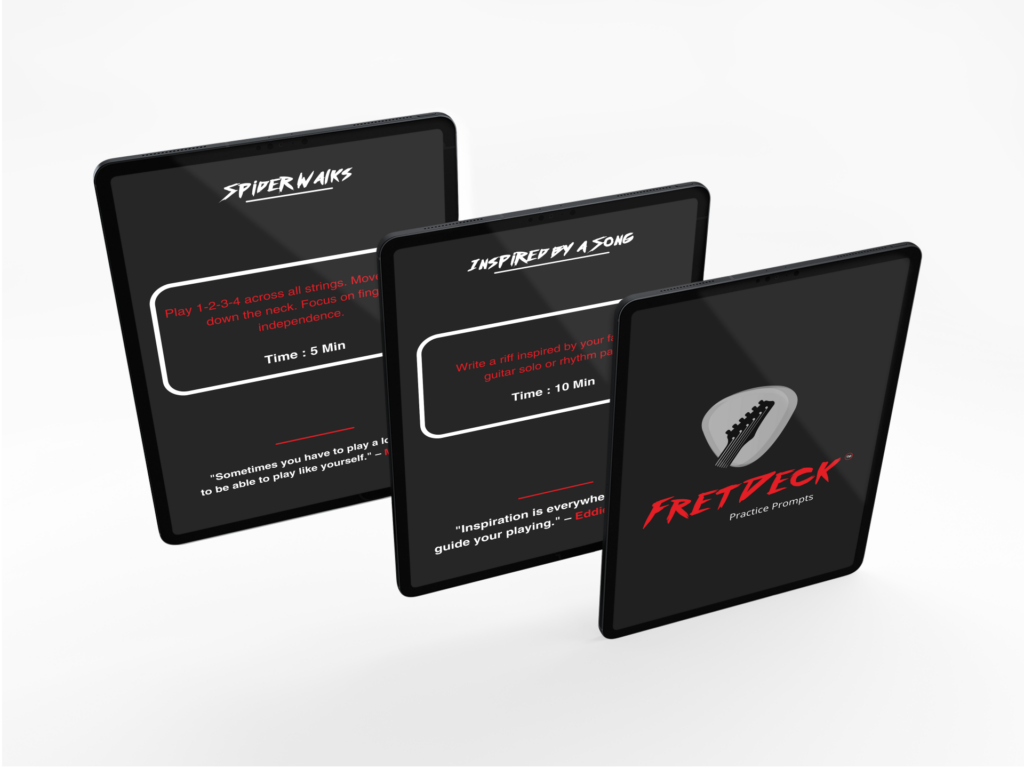
The Simple Guitar Practice System That Eliminates Guesswork
So You Can Stop Stalling… and Start Sounding Better Every Time You Pick Up the Guitar
👉 Get 52 Practice Prompts Now!
Related posts: