
Let me ask you something. Do you have a burning desire to play guitar better, but the only guitar practice tips you’ve ever found feel like they were written by a robot? I’m talking about the ones that make your eyes glaze over and your guitar gather dust in the corner. You know what I’m talking about. You pick up your axe, full of hope, and 20 minutes later you’re back on the couch, frustrated, with nothing but sore fingers and the same clumsy mistakes to show for it.
It’s a soul-crushing feeling. Believe me, I’ve been there. You can feel the music in your head, clear as a bell. But when you try to get it out through your fingers… it’s a disaster. A clunky, out-of-time mess.
It feels like there’s an invisible wall between the player you are and the player you want to be. And you’ve started to wonder if you’ll ever break through it.
This is the heart of mastering guitar practice tips — and most guitarists never get it.
Why Your Fingers Feel Like They’re Stuck In Mud
Here’s a hard truth most instructors won’t tell you: it’s not your fault. It’s not a lack of talent. It’s not because you don’t have “the gift.”
The problem is you’ve been fed a diet of garbage advice. You’ve been told to “practice for an hour a day.” But nobody told you what to do in that hour. So you noodle. You play the same three songs you already know. You fumble through a scale you half-remember, then give up.
As a result, you’re not practicing. You’re just playing. And there’s a world of difference between the two. Playing is for fun. Practicing is for getting results. Specifically, it’s about isolating a problem and solving it. This is where most generic guitar practice tips fall apart; they don’t give you a system for improvement.
Therefore, you feel stuck. You see a tiny bit of progress and then slam right back into the same wall. Your chord changes are still slow. That one tricky riff in the solo still trips you up every single time. And the idea of improvising a solo? It feels about as likely as flapping your arms and flying to the moon.

What If You Could See the Fretboard Instead of Just Memorizing It?
Most guitarists spend years guessing where to put their fingers. They memorize shapes without understanding why — and the second they try to improvise or learn a new song, they’re lost again.
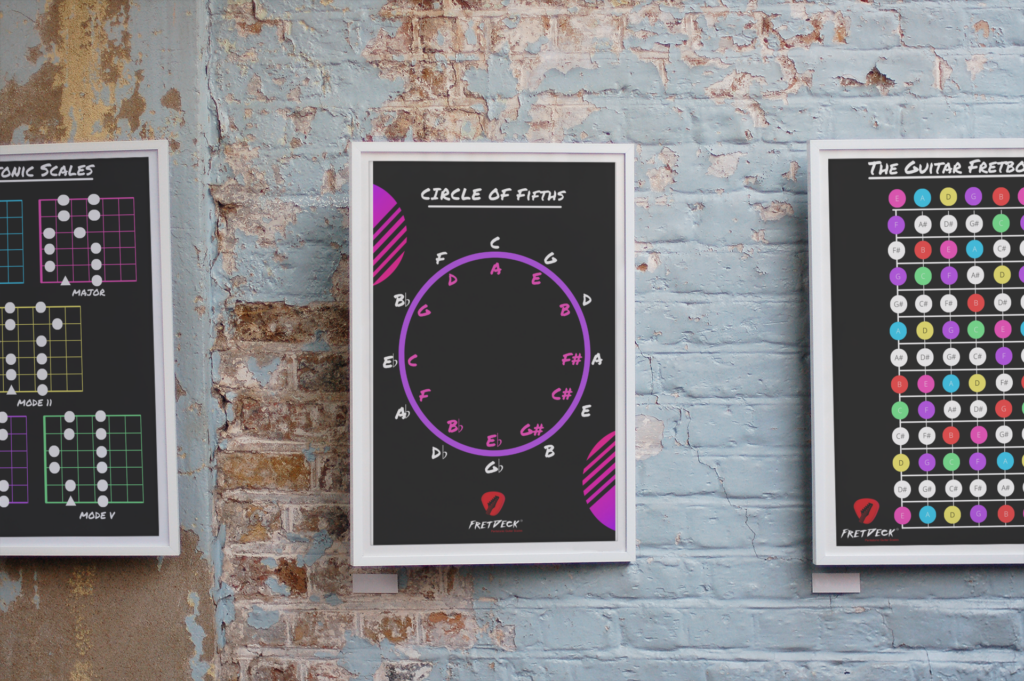
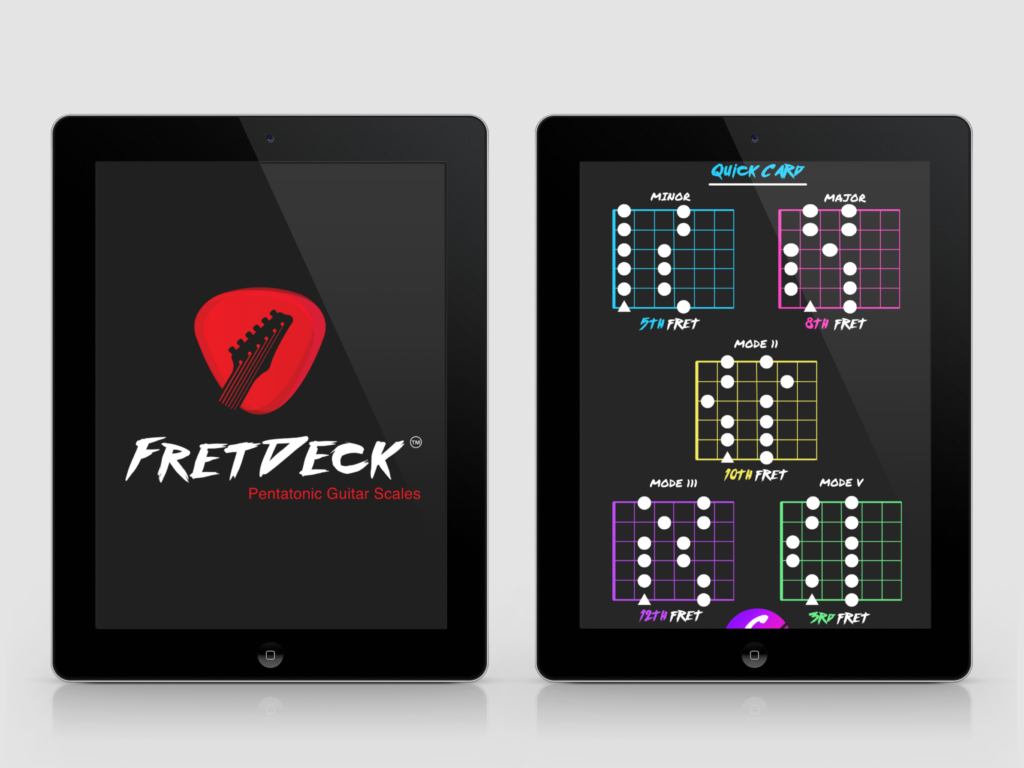
The FretDeck Practice Workstation changes that. It’s the interactive fretboard app that shows you exactly what to play, why it works, and how every note connects — so you finally understand the guitar instead of just copying tabs.
Whether you’re stuck in a rut, tired of noodling the same pentatonic box, or ready to unlock the entire neck — the FretDeck Practice Workstation gives you the visual roadmap to get there. All for just $14/month.
👉 Start Using the FretDeck Practice Workstation Now
The $10,000 Secret: Practice Smarter, Not Harder
I once paid a world-class marketing consultant $10,000 for one hour of his time. You know what he told me? “Do less.” He told me to find the one single thing that would move the needle and do only that thing until it was done.
It was the best advice I ever got. And it applies perfectly to the guitar.
Your brain can’t fix 20 problems at once. If your chord changes are sloppy, AND your timing is off, AND your bends are out of tune… you can’t tackle them all at the same time. You’ll just get overwhelmed and quit.
Instead, you need to get surgical. You need to pick ONE problem. Just one. For example, maybe it’s the change from a G chord to a C chord. That’s it. For the next 15 minutes, that is your entire world. Nothing else matters. You don’t play songs. Don’t run scales. You just work on that one, single, microscopic movement. This is the foundation of the best practice routine you can possibly build.
This isn’t about time. It’s about focus. A 15-minute, laser-focused session on ONE problem is worth more than five hours of mindless noodling.
The Only guitar practice tips You’ll Ever Need
Forget everything else you’ve read. The secret is breaking things down until they are laughably easy. I mean so small, so simple, that you literally cannot fail.
Does a solo feel impossible? Don’t practice the solo. Practice the first three notes. Get them perfect. The timing right. Get the tone right. Get the feel right. Once those three notes are so ingrained in your muscle memory that you could play them in your sleep, and only then, you add the fourth note.
This sounds slow. It feels slow. But let me tell you, my friend, this is the fast lane. This is how pros learn impossible-sounding licks in an afternoon while amateurs spend a month and still can’t play them cleanly.
Furthermore, this method builds momentum. Every time you successfully play that tiny little piece, your brain gets a hit of dopamine. It gets a reward. It says, “Hey! I can do this!” Before you know it, you’re looking forward to your practice sessions because you’re constantly winning. You’re not fighting the guitar anymore. You’re dancing with it. These are the guitar practice tips that create real, lasting change.
What If You Could See the Fretboard Instead of Just Memorizing It?
Most guitarists spend years guessing where to put their fingers. They memorize shapes without understanding why — and the second they try to improvise or learn a new song, they’re lost again.
The FretDeck Practice Workstation changes that. It’s the interactive fretboard app that shows you exactly what to play, why it works, and how every note connects — so you finally understand the guitar instead of just copying tabs.
Whether you’re stuck in a rut, tired of noodling the same pentatonic box, or ready to unlock the entire neck — the FretDeck Practice Workstation gives you the visual roadmap to get there. All for just $14/month.
👉 Start Using the FretDeck Practice Workstation Now
From Fumbling To Fluid: The Power of ‘Slow-Motion’ Practice
Here’s where the rubber meets the road. You’ve picked your one tiny problem. Now, how do you solve it? You grab a metronome and you set it to a speed that is painfully, embarrassingly slow.
I don’t care if the song is 120 beats per minute (BPM). You’re going to start at 50 BPM. Or 40. Or whatever speed allows you to play the part perfectly, with zero mistakes.
This is non-negotiable. Every time you play a mistake, you are training your fingers to make that mistake. You are building bad muscle memory. Practicing slowly and perfectly builds good muscle memory. You are teaching your hands the exact, most efficient path from A to B.
Once you can play it perfectly 5 times in a row at 50 BPM, you bump it up to 52 BPM. Not 60. Not 70. Just 52. Prove to yourself you can own it there. Then 54. Then 56. As the masters at Guitar World have said for decades, the metronome is your best friend. It never lies and it will make you an honest, tight player.
This methodical process is the secret sauce. Moreover, it’s what separates the shredders from the lifetime noodlers.
Your New, Unbeatable Practice Blueprint
Alright, let’s put this into action. Here are five things you can do TONIGHT to completely change the game.
1. The 5-Minute Warm-Up That Doubles Your Speed. Before you do anything, spend five minutes just playing simple chromatic exercises up and down the neck. Don’t think. Just let your fingers move. The goal isn’t music; it’s getting blood flowing to your hands. This simple act primes the pump for effective practice. It’s one of the best beginner guitar tips that even pros use daily.
2. Record Yourself (Even When It Hurts). Grab your phone. Hit the record button. Play a little. Now listen back. Yes, it can be cringeworthy. But the microphone tells no lies. You’ll hear the timing issues and bum notes your ears filter out while you’re playing. Listen, identify ONE problem, and make that your target for the session.
3. Deconstruct, Don’t ‘Learn’, a Song. Pick a song you want to learn. Now, tear it apart. Don’t try to play the whole thing. Isolate the hardest 4-second chunk. Put it on a loop. Use the slow-motion method. Master that tiny piece. Then, and only then, move on to the next one.
4. Master The Map (Your Fretboard). Noodling the same pentatonic box is a prison. To break free, you need to see how the whole fretboard connects. Instead of just memorizing shapes, you need to understand the ‘why’ behind them. This means you need to learn guitar scales and see how they are laid out across the neck. For a visual learner, tools like the FretDeck Practice Workstation can be a godsend, showing you the connections visually so it finally clicks.
5. The End-of-Session ‘Fun’ Rule. This is critical. After your focused, 15-20 minute surgical practice, you MUST spend the last 5 minutes just having fun. Play a song you love. Jam over a backing track. Make some noise. As a result, you train your brain to associate practice with a reward, making you eager to come back tomorrow. Find some inspiration from the incredible artists featured on MusicRadar to keep things fresh.
Frequently Asked Questions
How long should I practice guitar each day?
Forget the clock. Focus on the quality. A 20-minute hyper-focused session where you solve one specific problem is 100 times more valuable than two hours of mindless strumming. Consistency beats quantity every single time. Aim for 20-30 focused minutes, 5 days a week. You’ll be shocked at the results.
What’s the fastest way to get better at guitar?
The fastest way is to practice slowly. I know it’s a paradox, but it’s the god-honest truth. By practicing slowly with a metronome, you build perfect muscle memory from the start. You’re not wasting time “un-learning” mistakes later. Identify your single biggest weakness, attack it slowly and methodically, and you’ll improve faster than you ever thought possible.
Why do my fingers hurt so much?
If it’s the tips of your fretting hand, that’s likely callus-building, and it’s a rite of passage. It gets better! However, if you feel sharp pain in your wrist, hand, or forearm, stop immediately. That’s a sign of bad technique or tension. Shake it out, and focus on playing with a lighter touch and a relaxed wrist. Don’t be a hero and play through pain.
What If You Could See the Fretboard Instead of Just Memorizing It?
Most guitarists spend years guessing where to put their fingers. They memorize shapes without understanding why — and the second they try to improvise or learn a new song, they’re lost again.
The FretDeck Practice Workstation changes that. It’s the interactive fretboard app that shows you exactly what to play, why it works, and how every note connects — so you finally understand the practice tips for guitar instead of just copying tabs.
Whether you’re stuck in a rut, tired of noodling the same pentatonic box, or ready to unlock the entire neck — the FretDeck Practice Workstation gives you the visual roadmap to get there. All for just $14/month.
👉 Start Using the FretDeck Practice Workstation Now
Related posts: