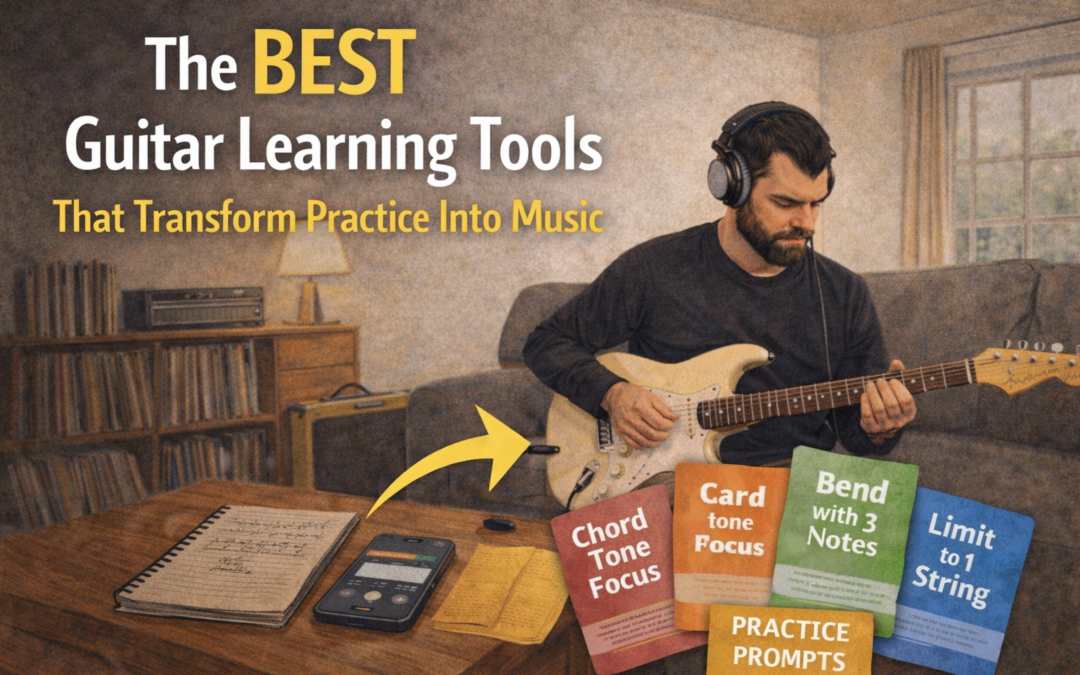
The right guitar learning tools can turn years of confusion into clear, connected fretboard mastery.
Most guitar players don’t quit because they lack talent.
They quit because they feel stuck.
They’ve watched the videos.
They’ve memorized a few scales.
They know five or six chords.
But when it’s time to actually make music?
Nothing connects.
I know that feeling because I lived it.
I used to sit in front of my dad’s old vinyl record player, dropping the needle on classic rock albums and running the minor pentatonic scale over and over again. I could play the pattern. I could move it around.
But I didn’t understand the fretboard.
That’s when I realized something most guitarists never hear:
It’s not about more information.
It’s about better guitar learning tools.
Let’s talk about the tools that actually move the needle.
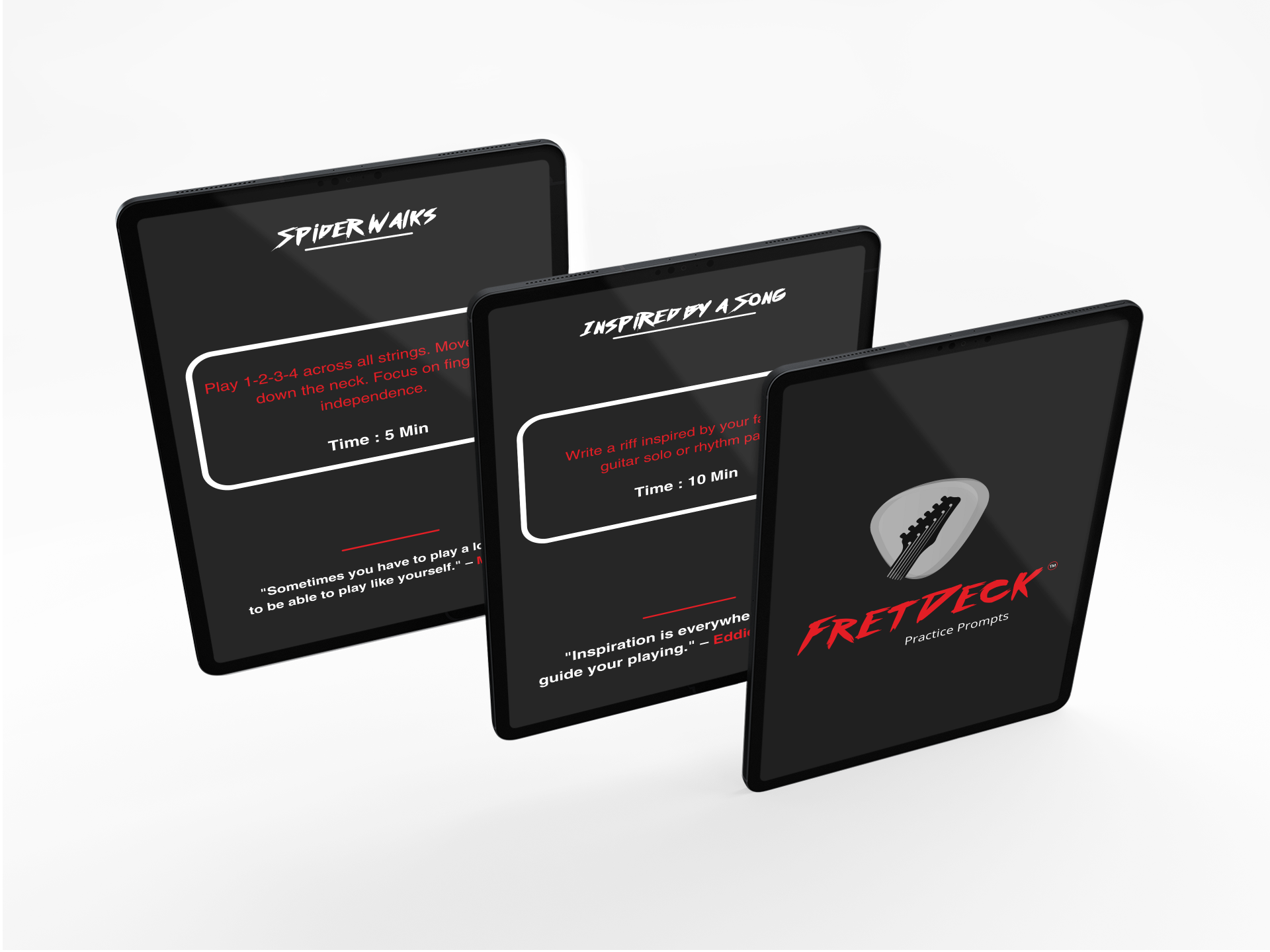
The Simple Guitar Practice System That Eliminates Guesswork
So You Can Stop Stalling… and Start Sounding Better Every Time You Pick Up the Guitar
👉 Get 52 Practice Prompts Now!
Why Most Guitar Learning Tools Fail
Search “guitar learning tools” and you’ll find:
- Apps
- YouTube channels
- Online courses
- Backing tracks
- Tab libraries
- AI teachers
The problem?
They overload you.
They give you more content, not more clarity.
You don’t need 400 more licks.
You need a system that helps you:
- Connect scales to chords
- See the neck as one piece
- Practice with intention
- Build real musical instincts
The right guitar learning tools simplify. They don’t overwhelm.
The 5 Guitar Learning Tools That Actually Work
1. Physical Fretboard Systems (Not Just Diagrams)
When I started building my own system, I realized something important:
Learning improves when you can hold the information.
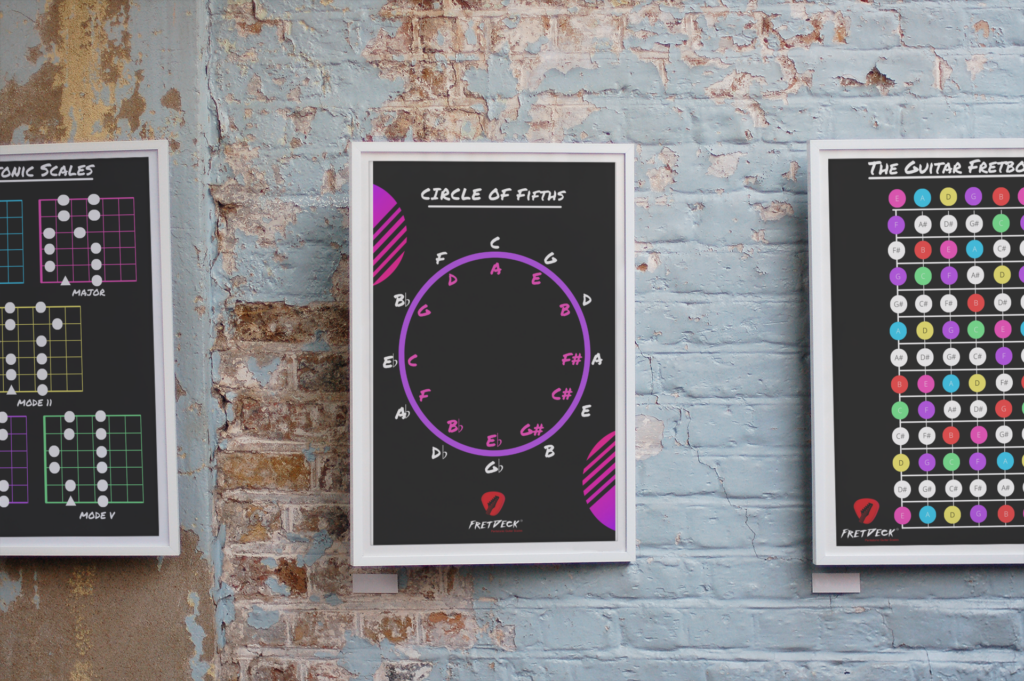
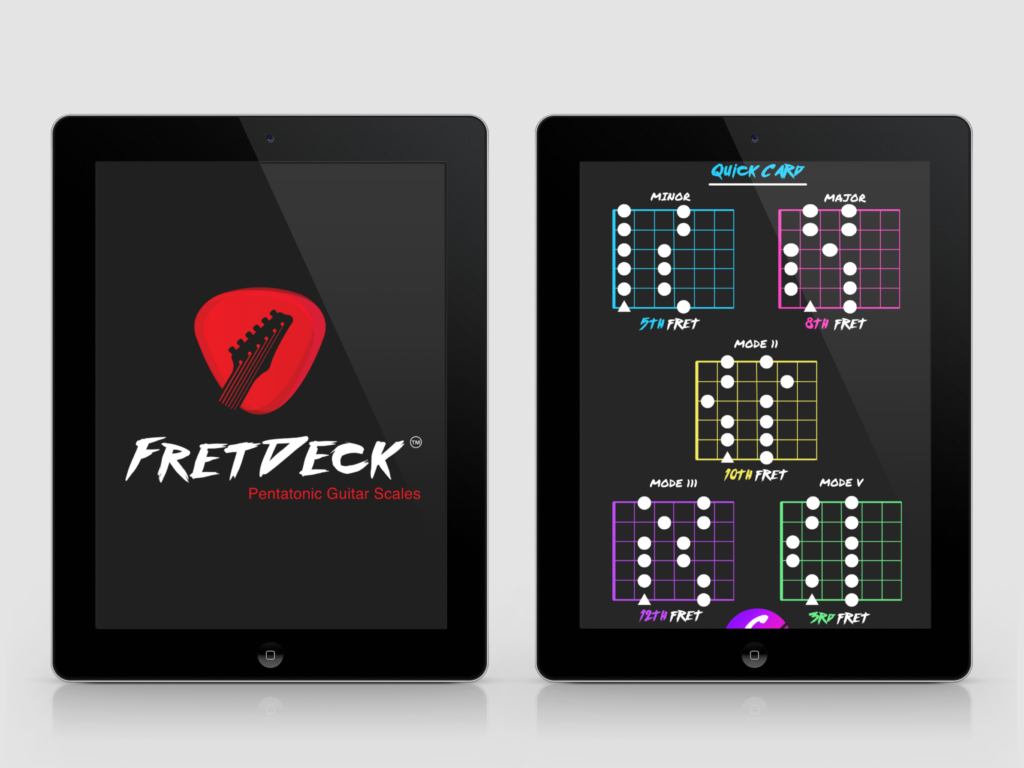
That’s why tools like physical scale systems (like my FretDeck™) work so well. When you can move shapes around with your hands, your brain starts mapping the neck visually.
It becomes less about memorization…
And more about pattern recognition.
If you struggle with fretboard clarity, physical guitar learning tools outperform digital ones every time.
Internal link example:
👉 Check out this guide on visualizing guitar fretboard notes
2. Structured Practice Prompts (This Is the Missing Link)
Let me tell you about Darren.
He knew his pentatonic shapes.
He could play them cleanly.
But every solo sounded the same.
The issue wasn’t skill.
It was direction.
So we started using structured prompts like:
- Play only 3 notes per phrase
- Target chord tones on beat 1
- Limit yourself to one string
- Bend into the 3rd of the chord
Suddenly his playing changed.
Not because he learned something new.
But because he used the right guitar learning tool: focused constraints.
That’s exactly why I built my Practice Prompts Deck.
It forces creativity.
It removes decision fatigue.
It builds musical instincts.
And unlike scrolling YouTube, it keeps you playing.
If you’re serious about improving, this is the tool that creates breakthroughs.
3. Backing Tracks (Used Correctly)
Backing tracks are powerful.
But only if you practice intentionally.
Don’t just noodle.
Try this:
- Play only chord tones for one round.
- Then only pentatonic.
- Then connect both.
- Then build a beginning, middle, and end.
This transforms backing tracks from entertainment into one of the most effective guitar learning tools available.
For high-quality jam tracks, check out:
👉 https://www.quistjam.com
👉 https://www.elevatedjamtracks.com
Use them with structure, not randomness.
The Simple Guitar Practice System That Eliminates Guesswork
So You Can Stop Stalling… and Start Sounding Better Every Time You Pick Up the Guitar
👉 Get 52 Practice Prompts Now!
4. A Guitar Practice Journal
This one might surprise you.
I write in a bullet journal every single day.
Why?
Because clarity beats chaos.
When you write down:
- What you practiced
- What improved
- What sounded weak
- What tomorrow’s focus is
You eliminate drift.
A practice journal becomes one of the most underrated guitar learning tools you’ll ever use.
It turns practice from emotional to intentional.
5. Fewer Tools, Used Better
Here’s the honest truth:
You don’t need 10 guitar learning tools.
You need 3–4 used consistently.
My personal stack:
- Fretboard visualization system
- Practice Prompts
- Backing tracks
- Bullet journal
That’s it.
No endless scrolling.
No algorithm chasing.
No random lessons.
Just focused reps.
The Real Reason You’re Stuck
It’s not discipline.
It’s fragmentation.
Most guitarists learn:
- Scales in isolation
- Chords in isolation
- Licks in isolation
But music is connection.
The best guitar learning tools force integration.
That’s why structured prompts work.
They make you:
- Connect scale to chord
- Connect rhythm to melody
- Connect phrasing to emotion
They build musicianship — not just mechanics.
If You Want a Shortcut…
Here’s the simple path:
- Learn your pentatonic shapes.
- Use prompts to apply them.
- Track progress.
- Repeat with intention.
That’s why I created the Practice Prompts Deck.
It’s not flashy.
It’s not algorithm-driven.
It’s built for players who are done guessing.
If you’re tired of:
- Playing the same licks
- Feeling stuck in boxes
- Practicing without direction
This might be the most important guitar learning tool you add this year.
👉 Grab the Practice Prompts here:
https://guitarfreaksblog.com
The Simple Guitar Practice System That Eliminates Guesswork
So You Can Stop Stalling… and Start Sounding Better Every Time You Pick Up the Guitar
👉 Get 52 Practice Prompts Now!
Final Thought
When I was younger, I thought great players were just naturally creative.
Now I know better.
Creativity is trained.
Clarity is trained.
Connection is trained.
And the right guitar learning tools make that training simple.
Less noise.
More playing.
More music.
If that’s what you’re after — you’re in the right place.
Internal Links
- Visualizing Guitar Fretboard Notes
https://guitarfreaksblog.com/visualizing-guitar-fretboard-notes/ - The Easiest Way to Learn Guitar Scales
https://guitarfreaksblog.com/easiest-way-to-learn-guitar-scales/ - Guitar Practice Cards Guide
https://guitarfreaksblog.com/guitar-practice-cards/
External Resources
- Quist Jam Tracks
https://www.quistjam.com - Elevated Jam Tracks
https://www.elevatedjamtracks.com - JustinGuitar (free structured lessons)
https://www.justinguitar.com