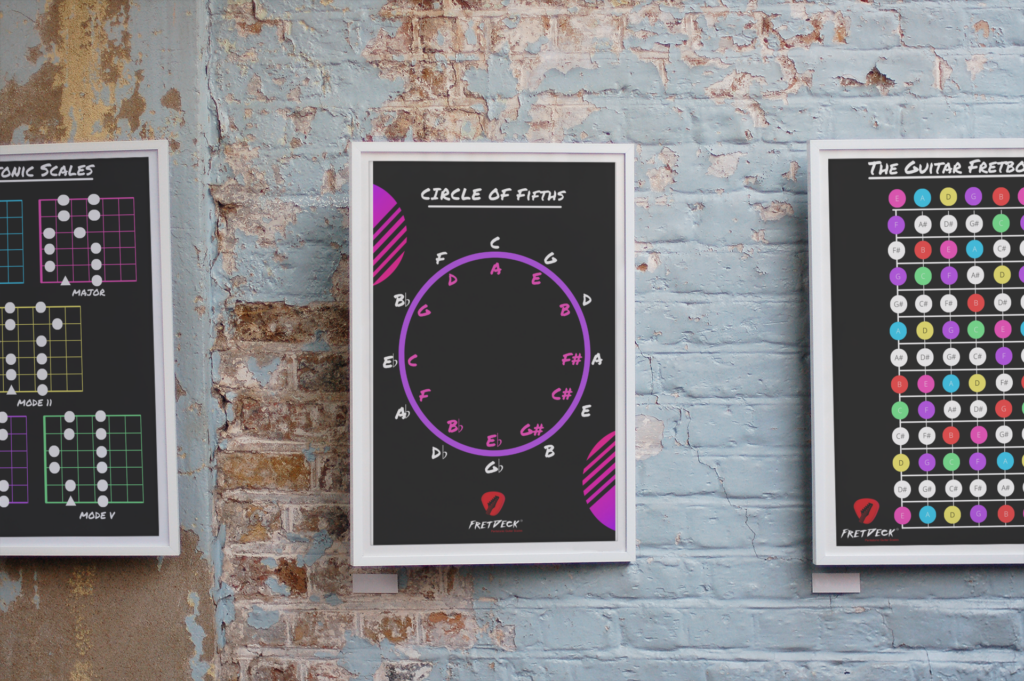
Guitar scale cheat sheet.
If that’s what you searched for, you’re probably not looking for another theory lesson.
You’re looking for something simple.
Something you can glance at…
Understand instantly…
And actually use when your fingers hit the strings.
Because most guitar players don’t struggle with scales because they’re lazy.
They struggle because everything feels scattered.
Too many diagrams.
Too many lessons.
Too many scale patterns floating around your brain.
What you really want is organization.
A guitar scale cheat sheet should bring order to the chaos.
And when that happens… the fretboard suddenly makes sense.
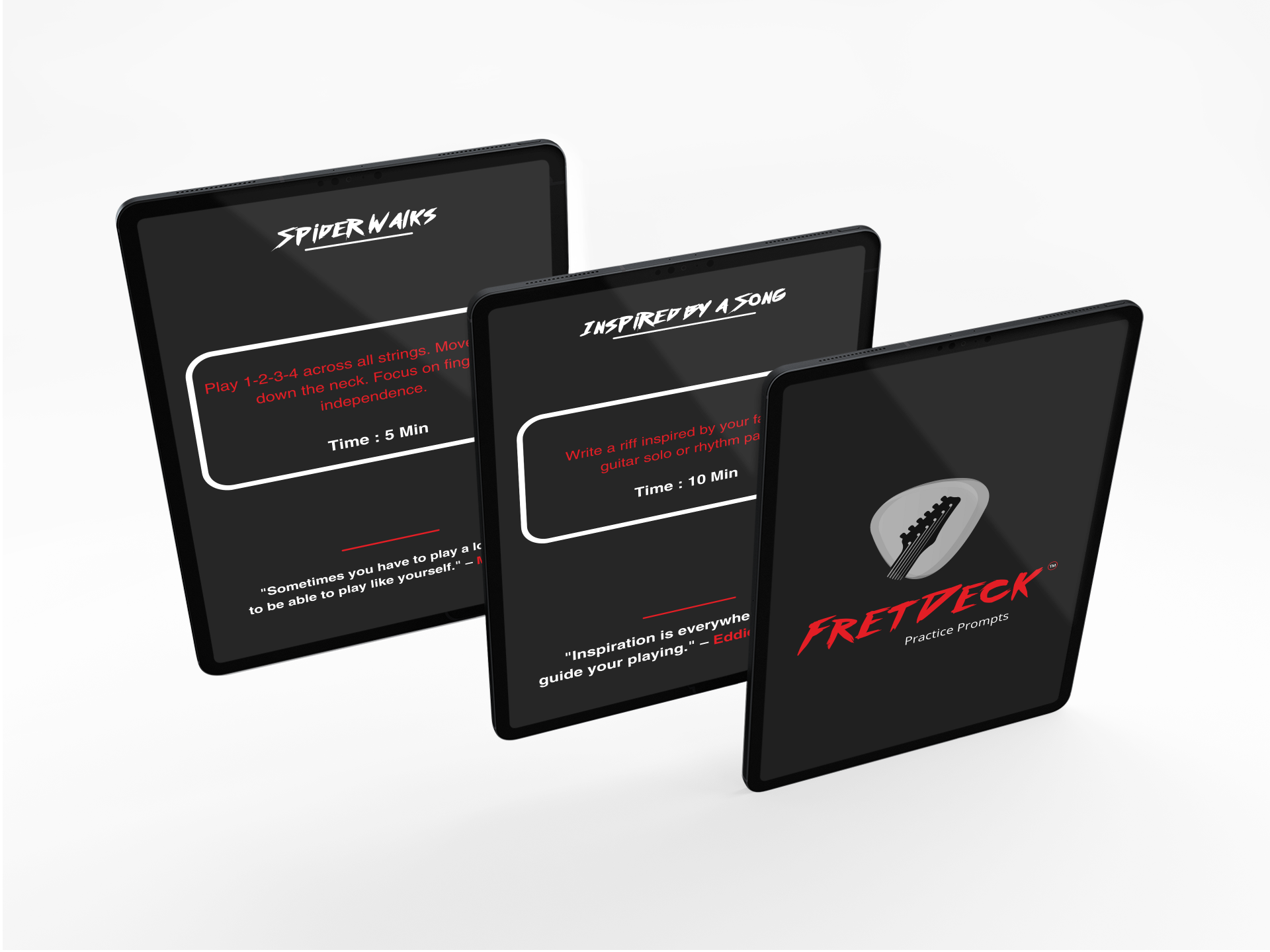
The Simple Guitar Practice System That Eliminates Guesswork
So You Can Stop Stalling… and Start Sounding Better Every Time You Pick Up the Guitar
👉 Get 52 Practice Prompts Now!
The Real Problem Isn’t Scales — It’s Overload
Almost every guitar player goes through the same cycle.
You learn the minor pentatonic scale.
Then someone tells you to learn the major scale.
Then someone else introduces modes.
Then a YouTube video shows three more scale patterns.
Suddenly you’re drowning in information.
A week later you remember maybe half of it.
It’s not because you’re incapable.
It’s because you’ve been given information without structure.
And structure is what turns scale knowledge into actual music.
What a Real Guitar Scale Cheat Sheet Should Do
A true guitar scale cheat sheet isn’t a giant theory document.
It should be simple and practical.
A great cheat sheet should:
• show the scale formula
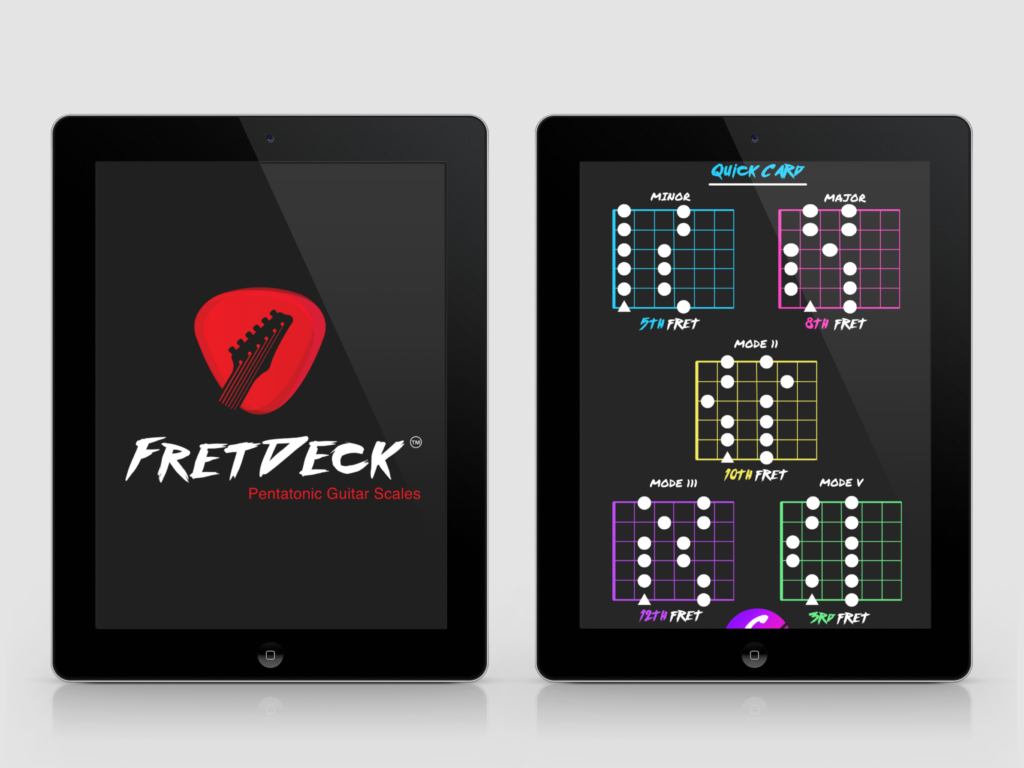
• show the fretboard pattern
• explain when to use the scale
• connect the scale to chords and progressions
• be usable in 30 seconds or less
Not twelve pages of microscopic diagrams.
Not confusing theory.
Just musical clarity.
The 4 Essential Scales Every Guitar Cheat Sheet Should Include
If your guitar scale cheat sheet doesn’t include these scales, it’s incomplete.
These four scales power most modern guitar music.
1. Minor Pentatonic Scale
This is the foundation of countless guitar solos.
Used in:
• blues
• rock
• country
• modern pop
Players like B.B. King, Stevie Ray Vaughan, and Eric Clapton built legendary careers around this scale.
Formula:
1 – b3 – 4 – 5 – b7
A useful cheat sheet should show:
• the 5 pentatonic positions
• the root notes
• the classic “home box” shape
Without those elements, it’s just theory on paper.
2. Major Scale
The major scale is the master key of music theory.
Every mode.
Every chord relationship.
Every harmony concept.
Formula:
1 – 2 – 3 – 4 – 5 – 6 – 7
But here’s where most cheat sheets fail.
They show the scale…
…but don’t show how to use it.
A great guitar scale cheat sheet should show how to:
• overlay scales on chord progressions
• extract pentatonic shapes from the major scale
• connect scale positions across the fretboard
Without that context, it’s just decorative theory.
3. Major Pentatonic Scale
This scale sounds bright, melodic, and open.
It’s everywhere in:
• country guitar
• gospel lines
• melodic rock solos
Formula:
1 – 2 – 3 – 5 – 6
A good guitar scale cheat sheet shows:
• how it connects to the minor pentatonic scale
• how to shift the pattern across keys quickly
• where the root notes live
Most players overlook this scale, but it’s one of the most expressive sounds on guitar.
4. The Blues Scale
The blues scale adds a single note to the minor pentatonic:
The blue note (b5).
That one extra note adds tension and emotion.
A real cheat sheet should show:
• where the blue note sits in the pattern
• how to resolve it into chord tones
• when to emphasize it in phrasing
This is where the magic of blues phrasing begins.
Why Most Guitar Scale Cheat Sheets Don’t Work
Most cheat sheets show shapes.
But they never answer the most important question:
What should I practice today?
A diagram doesn’t create progress.
A system does.
My “30 Minutes of Noodling” Realization
Years ago my practice sessions looked like this:
I would sit down with my guitar.
Run a scale.
Play it faster.
Play it slower.
Maybe improvise a little.
Thirty minutes later I’d stop and wonder:
“Did I actually improve… or did I just move my fingers around?”
That realization changed how I approached practice.
I didn’t need more scale charts.
I needed direction.
The Missing Piece: Prompted Practice
Instead of asking:
“What scale should I practice?”
I started asking:
“What musical problem should I solve today?”
That shift completely transformed my playing.
Instead of random practice, I began using practice prompts like:
• play the scale in thirds
• target only chord tones
• improvise using three notes
• shift scale positions every two bars
• build tension, then resolve
Suddenly something amazing happened.
Scales stopped being exercises.
They became music.
The Simple Guitar Practice System That Eliminates Guesswork
So You Can Stop Stalling… and Start Sounding Better Every Time You Pick Up the Guitar
👉 Get 52 Practice Prompts Now!
The Difference Between Information and Transformation
A guitar scale cheat sheet gives you reference.
But structured prompts give you progress.
You can download scale charts almost anywhere.
For example, great theory breakdowns are available from:
JustinGuitar
and Berklee College of Music.
But here’s the honest truth:
Information is everywhere.
Structure is rare.
And structure is what leads to fretboard mastery.
How to Use a Guitar Scale Cheat Sheet Correctly
If you want a cheat sheet to actually work, follow this simple system.
Step 1: Choose One Scale for the Week
Don’t rotate scales every day.
Go deep on one.
Step 2: Anchor the Root Notes
Find the root across the entire fretboard.
This connects the scale to the neck.
Step 3: Connect the Scale to Chords
Practice the scale over:
I chord
IV chord
V chord
Now the scale becomes musical.
Step 4: Add Constraints
Limit your playing.
Try exercises like:
• only three notes
• one string improvisation
• slides only
• no position shifts
Constraints force creativity.
What Most Guitar Players Actually Want
Most players don’t want to learn twenty scales.
They want:
• confidence
• control
• musical flow
• freedom on the fretboard
They want to stop staring at the neck like it’s a math exam.
A guitar scale cheat sheet is the doorway.
But what you do with it determines your progress.
If You’re Done Wasting Practice Time
If you want to turn scale knowledge into real guitar playing, you need more than diagrams.
You need a system.
That’s exactly why I created Practice Prompts.
These structured prompt cards eliminate:
• decision fatigue
• random noodling
• inconsistent practice
Each prompt tells you exactly what to do with a scale.
No guessing.
No confusion.
Just focused musical improvement.
👉 Get the 52 Practice Prompts here
https://fretdeck.myclickfunnels.com/practice-prompts
Final Thought
A guitar scale cheat sheet can organize your understanding.
But a guided practice system organizes your growth.
One gives you information.
The other builds skill.
Choose skill.
Continue Learning
External Resources
JustinGuitar – https://www.justinguitar.com
Berklee College of Music – https://online.berklee.edu
The Simple Guitar Practice System That Eliminates Guesswork
So You Can Stop Stalling… and Start Sounding Better Every Time You Pick Up the Guitar
👉 Get 52 Practice Prompts Now!