

For years, I bought into the big lie about guitar theory books. I thought if I just bought one more book, I’d finally crack the code. My bookshelf was a graveyard of good intentions—thick, dusty tomes filled with complex charts and academic jargon that promised to unlock the fretboard. But they never did.
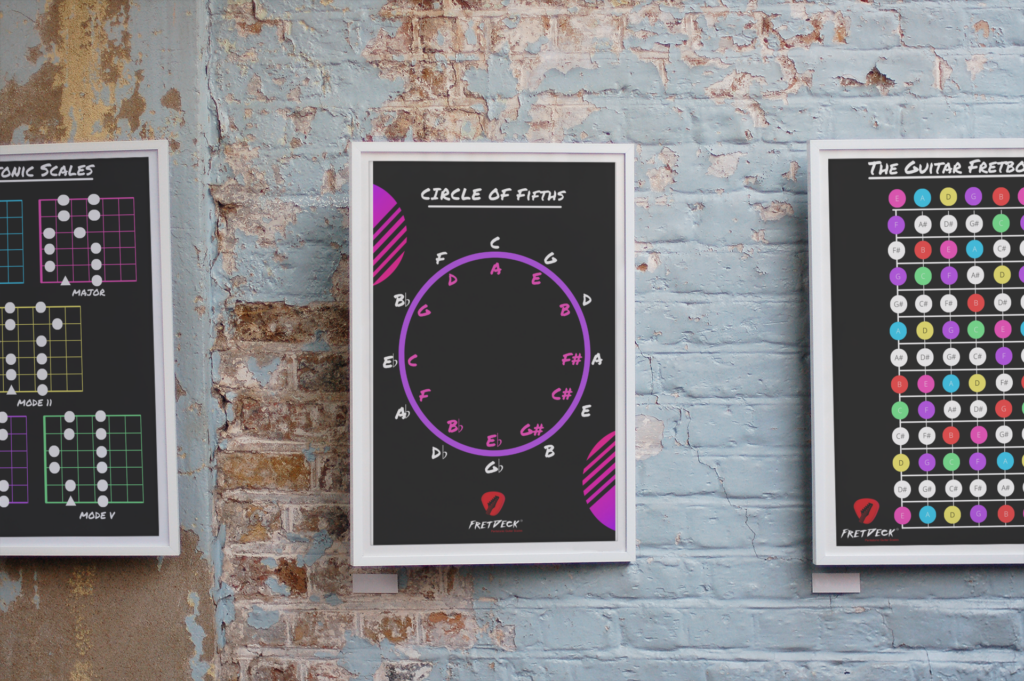
Instead of feeling enlightened, I just felt dumb. I’d read a chapter, try to apply it, and get lost in a sea of modes, intervals, and circle of fifths diagrams. It felt like trying to learn a language by memorizing a dictionary. You might know a lot of words, but you can’t form a single sentence. Sound familiar?
You see, the real problem isn’t your motivation or your intelligence. It’s the way you’ve been “sold” on learning theory. You’ve been led to believe that more information is the answer. But what if the opposite were true? What if the key wasn’t to learn more, but to understand less… but on a much deeper level?
The ‘Theory Trap’ Most Players Fall For
Let me paint you a picture. See if this is you.
You hit a wall in your playing. That same old pentatonic box feels like a cage. You can’t write a new song, and you definitely can’t improvise over anything more complex than a basic blues progression. So, you think, “I need to learn theory!”
You go online, you buy one of the highly-recommended guitar theory books, and it arrives. You feel a rush of excitement. This is it. This is the one that will change everything.
For the first few days, you’re diligent. You read about the C major scale. You look at the notes. But then you get to chapter three… triads, inversions, diatonic harmony. Your eyes start to glaze over. It feels like homework. The guitar stays in its case while you try to cram abstract concepts into your brain.
A week later, that book is holding down a corner of your desk. And you’re back to playing the same old licks, feeling even more frustrated than before. You just fell into the theory trap. The cycle of buying information but never gaining real insight.

This isn’t your fault. Most guitar theory books are written by academics, not players. They’re designed to be comprehensive references, not practical roadmaps. They give you the what, but they completely forget to show you the how and the why. It’s a broken system that leaves you feeling defeated.
But what if there was a way to bypass the academic nonsense and get straight to the visual patterns that actually matter on the fretboard?
Free Book: “Fret Logic” — Master the Fretboard Without Memorizing a Single Shape
Before we go any further, grab my free book Fret Logic — it’s the shortcut I wish I had when I was stuck staring at the neck wondering where the next note was.
Inside, you’ll learn the simple visual system that turns the fretboard from a confusing grid into a map you can actually see. No theory degree required. No boring drills. Just clarity.
👉 Download “Fret Logic” FREE here
What If You Could See the Fretboard Instead of Just Memorizing It?
Most guitarists spend years guessing where to put their fingers. They memorize shapes without understanding why — and the second they try to improvise or learn a new song, they’re lost again.
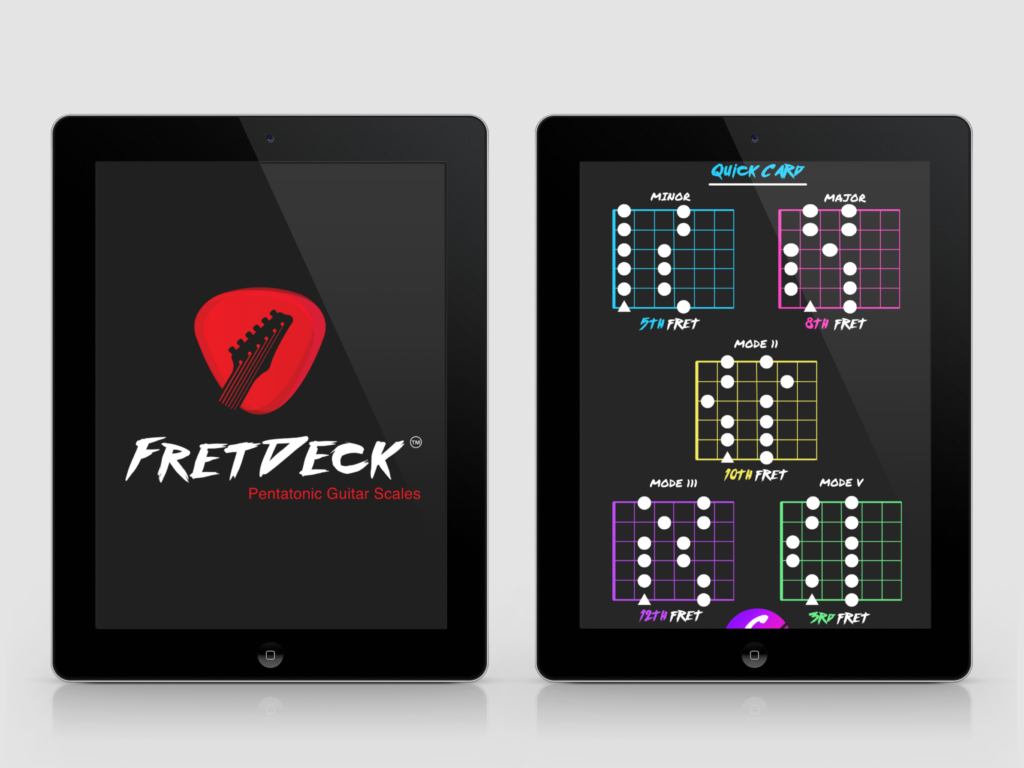
The FretDeck Practice Workstation changes that. It’s the interactive fretboard app that shows you exactly what to play, why it works, and how every note connects — so you finally understand the guitar instead of just copying tabs.
Whether you’re stuck in a rut, tired of noodling the same pentatonic box, or ready to unlock the entire neck — the FretDeck Practice Workstation gives you the visual roadmap to get there. All for just $14/month.
👉 Start Using the FretDeck Practice Workstation Now
The Shift: From ‘Knowing’ to ‘Seeing’
My big breakthrough came when I was ready to quit. I was staring at my guitar, then back at the stack of books, and it hit me. An epiphany.
Guitar isn’t played on paper. It’s played on a fretboard.
The mistake I was making—the one you’re probably making too—is trying to load theory into your brain like it’s software. But your brain isn’t a hard drive. The goal isn’t to know that an A minor triad is made of the notes A, C, and E.
The goal is to see every A, C, and E on the entire neck and understand how they connect to form a beautiful, musical shape. It’s a visual, spatial skill. Not an academic one.
As a result, I stopped trying to memorize everything. I started focusing on one simple concept at a time and finding it everywhere on the neck. I stopped reading and started looking. Suddenly, the fretboard wasn’t a random collection of dots anymore. It was a map. And for the first time, I could actually read it. This is a skill no amount of reading can give you alone; it requires a new way of practicing.
How to Choose the Right guitar theory books
Once I had this epiphany, I realized that most guitar theory books are simply the wrong tool for the job. You wouldn’t use a dictionary to learn how to have a conversation, right?
So, how do you find the right tool? You need to understand that there are two kinds of books out there:
1. The “Dictionary” Book: These are encyclopedias. They’re thick, comprehensive, and cover everything from the Phrygian mode to augmented 11th chords. While they might be useful as a reference (like the ones often featured on Guitar World), they are terrible for learning. They overwhelm you with information and create a sense of failure.
2. The “Roadmap” Book: These are rare. These books understand that you’re a player, not a musicologist. They introduce one concept at a time and immediately give you a way to apply it on the fretboard. They are less about what and more about how. They build a path, step-by-step, from where you are to where you want to go.
Therefore, when you’re looking for useful guitar theory books, your only question should be: “Does this book give me a small, actionable step I can take to my guitar right now?” If the answer is no, put it back on the shelf. It’s a dictionary, not a roadmap.
What If You Could See the Fretboard Instead of Just Memorizing It?
Most guitarists spend years guessing where to put their fingers. They memorize shapes without understanding why — and the second they try to improvise or learn a new song, they’re lost again.
The FretDeck Practice Workstation changes that. It’s the interactive fretboard app that shows you exactly what to play, why it works, and how every note connects — so you finally understand the guitar instead of just copying tabs.
Whether you’re stuck in a rut, tired of noodling the same pentatonic box, or ready to unlock the entire neck — the FretDeck Practice Workstation gives you the visual roadmap to get there. All for just $14/month.
👉 Start Using the FretDeck Practice Workstation Now
Turning Knowledge Into Actual Music
Here’s the final piece of the puzzle that most people miss. Even with the perfect “roadmap” book, the information is useless until you bridge the gap between the page and your fingers.
Information is not transformation. Application is.
You need a system for taking a single concept from a book and integrating it into your playing until it becomes second nature. This doesn’t happen by just reading. It happens through a focused, visual best practice routine. For instance, instead of just reading about the major scale, you should spend your practice time visually mapping it out, one string at a time, up and down the neck.
This is where a modern tool can do what a book never could. For example, when you learn a concept like “3rds and 7ths,” you can go to an interactive tool like the FretDeck Practice Workstation and instantly see all the 3rds and 7ths light up across the entire fretboard for any chord. You can’t get that from a static page. The book gives you the idea; the tool burns it into your visual memory and muscle memory. The experts at Fender agree that structured, focused practice is key.
You must have a way to translate theory into tangible shapes, sounds, and feelings under your fingers. Otherwise, it’s all just useless trivia.
3 Actionable Steps to Make Theory Click Today
Want to start making progress right now? Stop trying to eat the whole elephant. Just take one bite.
1. Pick ONE Concept, Not the Whole Book. Forget everything else. Find the chapter on the major scale. Read it. Now, close the book. Your mission for the next week is to do nothing but explore the C major scale. That’s it. This focused approach is one of our top beginner guitar tips.
2. Translate to Your Fretboard Immediately. As you focus on that one concept, your primary job is to find it on the guitar. Don’t just play one box shape. Find the notes of the C major scale on the low E string. Then the A string. Then find them in 3-note groupings. The goal isn’t to play a scale; it’s to learn guitar scales so deeply that the fretboard becomes transparent.
3. Hum Before You Pick. Your ear is the final filter. Before you play a lick using the major scale, try to hum it. If you can’t hear the melody in your head, your fingers are just guessing. This connects the theoretical knowledge in your brain to the musical intention in your ears, making your playing sound purposeful, not robotic.
Frequently Asked Questions
Do I really need to learn music theory to be a good guitarist?
No, not in the academic sense. However, you DO need to understand how notes relate to each other on the fretboard to break free from basic patterns. Think of it as learning the “visual grammar” of the guitar, not memorizing a dictionary. The goal is to play freely, and a practical understanding of theory is the fastest path there.
What’s the most important theory concept for a beginner?
Without a doubt, it’s understanding the major scale and how to build basic chords from it. Every other concept—modes, pentatonics, arpeggios—is derived from the major scale. Mastering that one single concept is the 80/20 of guitar theory. It’s the skeleton key that unlocks almost everything else.
Can I learn guitar theory without books?
Absolutely. In fact, for many players, it’s a better way. Using interactive visual tools, learning by ear, and analyzing songs you love can be far more effective than struggling with dry guitar theory books. The book is just one potential source of information; the real learning happens when you apply that information on the instrument itself.
What If You Could See the Fretboard Instead of Just Memorizing It?
Most guitarists spend years guessing where to put their fingers. They memorize shapes without understanding why — and the second they try to improvise or learn a new song, they’re lost again.
The FretDeck Practice Workstation changes that. It’s the interactive fretboard app that shows you exactly what to play, why it works, and how every note connects — so you finally understand the guitar instead of just copying tabs.
Whether you’re stuck in a rut, tired of noodling the same pentatonic box, or ready to unlock the entire neck — the FretDeck Practice Workstation gives you the visual roadmap to get there. All for just $14/month.
👉 Start Using the FretDeck Practice Workstation Now
Related posts: