

Finding the right electric guitar learning app can feel like searching for a needle in a digital haystack. You were told to download an app, follow the instructions, and magical progress would happen. But for most of us, that advice is completely broken.
You scroll through endless app store listings, each promising to make you a guitar god overnight. You download a few, tap through some gamified lessons, and maybe even learn a riff or two. But soon, the novelty wears off. You hit the same wall you always do, and the guitar ends up back in its stand, collecting dust.
The problem isn’t you. It’s the old model of learning. The outdated advice that a glorified tab reader or a simple color-matching game is enough to forge a real connection with your instrument. It’s time for a new approach.
The Old Way: Why Most Guitar Apps Fail You
Let’s be honest about the experience with most guitar apps. You open it up, and you’re greeted with one of two things: a massive, unorganized library of songs or a rigid, step-by-step lesson plan that feels like homework.
For example, many apps are just digital tab books. They show you where to put your fingers, but they never explain why those notes work together. Consequently, you memorize a shape or a sequence for one song, but the second you try to improvise or learn something by ear, you’re completely lost. You’re a parrot, not a musician.
Moreover, other apps try to turn practice into a video game. You play notes to match a scrolling screen, earning points and badges for accuracy. While this can be motivating for a few days, it rarely translates into genuine musical skill. As a result, you get good at the game, but you don’t actually get good at the guitar. The app trains you to react, not to create.
This old model ignores the most critical part of learning: the feedback loop. With no one there to correct your timing, your technique, or your phrasing, you’re essentially practicing in a vacuum. Therefore, bad habits become ingrained, and progress grinds to a halt. You’re left feeling frustrated, wondering why this amazing technology isn’t delivering on its promise.
What If You Could See the Fretboard Instead of Just Memorizing It?
Most guitarists spend years guessing where to put their fingers. They memorize shapes without understanding why — and the second they try to improvise or learn a new song, they’re lost again.

The FretDeck Practice Workstation changes that. It’s the interactive fretboard app that shows you exactly what to play, why it works, and how every note connects — so you finally understand the guitar instead of just copying tabs.
Whether you’re stuck in a rut, tired of noodling the same pentatonic box, or ready to unlock the entire neck — the FretDeck Practice Workstation gives you the visual roadmap to get there. All for just $14/month.
👉 Start Using the FretDeck Practice Workstation Now
The Shift: From Passive Tabs to Active Learning
The revolution in guitar education isn’t about more songs or shinier graphics. It’s about a fundamental shift from passive consumption to active, intelligent learning. Modern tools are finally catching up to how our brains actually learn music.
Instead of just showing you a static tab, a forward-thinking app provides context. It doesn’t just tell you what note to play; it shows you how that note fits into the current chord and the overall scale. This is the difference between being handed a fish and learning how to fish. One feeds you for a moment; the other feeds you for a lifetime of musical exploration.
Furthermore, the most significant breakthrough is real-time feedback. Using your device’s microphone, these apps listen to you play. They can tell you if you’re sharp or flat, if your timing is dragging, or if you hit a wrong note. This immediate correction-and-reinforcement cycle is what accelerates learning, as highlighted in many studies mentioned by outlets like Guitar World.
This active engagement prevents you from practicing mistakes. Ultimately, it turns your practice time from a frustrating guessing game into a focused, productive session where every minute counts. You start building muscle memory correctly from day one.
What Makes a Modern electric guitar learning app Different?
The single biggest difference in a truly effective electric guitar learning app is its focus on visualization and connection. It’s about transforming the fretboard from a confusing grid of frets and strings into a clear, understandable map.
Old apps force you to memorize isolated chord shapes and scale patterns. For example, you learn the A-minor pentatonic “box” and noodle around in it for years, never venturing out because the rest of the neck is terrifying, uncharted territory. You know the shape, but you don’t understand the territory. For a much better approach, check out our guide to a best practice routine.
A modern app, however, shows you the relationships between the notes. It reveals how that same A-minor scale exists all over the neck in different patterns that all connect seamlessly. Suddenly, you see the pathways. You understand that the root note, the third, and the fifth aren’t just random fret numbers—they are the building blocks of music, and they have a home everywhere on the guitar.
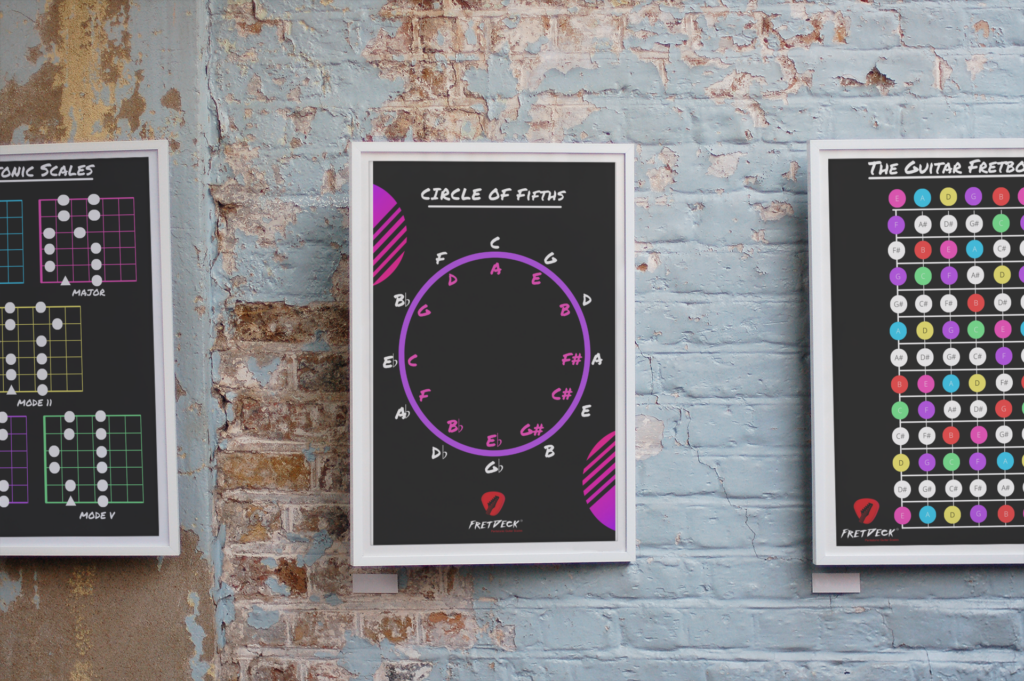
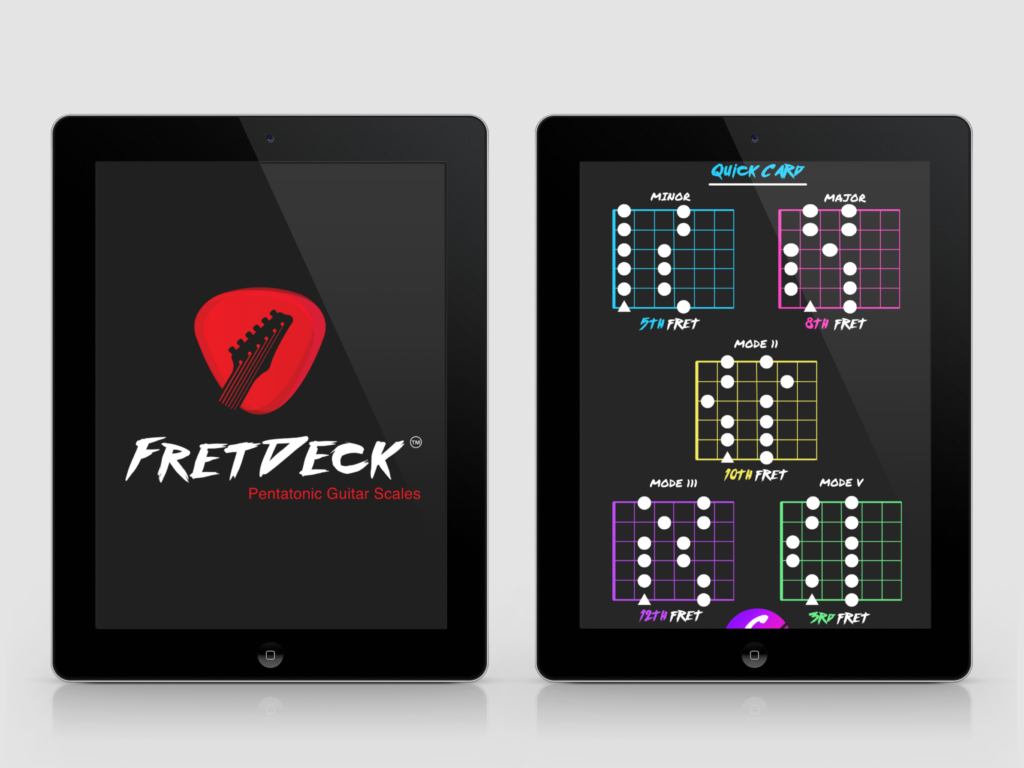
Tools like the FretDeck practice workstation are built entirely on this principle of visual understanding. It’s not about rote memorization; it’s about making the theory so intuitive and visual that you simply see the right notes to play. This is the key that unlocks improvisation and true fretboard freedom. A great app makes the complex simple.
What If You Could See the Fretboard Instead of Just Memorizing It?
Most guitarists spend years guessing where to put their fingers. They memorize shapes without understanding why — and the second they try to improvise or learn a new song, they’re lost again.
The FretDeck Practice Workstation changes that. It’s the interactive fretboard app that shows you exactly what to play, why it works, and how every note connects — so you finally understand the guitar instead of just copying tabs.
Whether you’re stuck in a rut, tired of noodling the same pentatonic box, or ready to unlock the entire neck — the FretDeck Practice Workstation gives you the visual roadmap to get there. All for just $14/month.
👉 Start Using the FretDeck Practice Workstation Now
Beyond Gamification: Building Real Musical Skills
Let’s be clear: a little bit of gamification can be a good thing. Earning points can provide a small dopamine hit that encourages you to pick up the guitar. However, this should never be the primary goal.
The real purpose of practice is to build transferable musical skills. You want to be able to sit down with another musician and jam. Want to hear a melody in your head and find it on the fretboard. You want to write your own songs, not just copy others. A great electric guitar learning app serves as a bridge to these real-world musical goals.
Specifically, it does this by linking theory to application. Instead of just drilling scales, a modern app will challenge you to improvise over a backing track using that scale. It will show you a chord progression and then break down exactly why those chords sound so good together. You’re not just learning the “what”; you are finally grasping the “why.”
As a result, your practice sessions become more creative. You start experimenting, connecting ideas, and developing your own unique voice on the instrument. The app becomes less of a rigid instructor and more of a creative partner, guiding you as you learn guitar scales and apply them in a musical context.
5 Ways to Maximize Your App-Based Practice
Simply downloading an app isn’t enough. To see real results, you need a strategy. Here’s how to get the most out of your chosen learning tool.
1. Set a Specific, Tiny Goal: Don’t just “practice guitar.” Instead, decide to nail the first four bars of a solo, or play a C-major scale cleanly at 80 VPM. A small, achievable goal makes you more likely to start and feel successful.
2. Don’t Just Follow; Actively Listen: Pay close attention to the sound you’re making. Does your note ring out as clearly as the one in the app? Is your rhythm precise? Use the app as a benchmark, but trust your ears as the final judge. This is one of the most vital beginner guitar tips out there.
3. Use the App as a Launchpad: Once the app teaches you a concept, like a new chord, don’t stop there. Immediately try to use that chord in a different context. Strum it with different rhythms. See what other chords sound good next to it. Make the knowledge your own.
4. Combine App Time with Unplugged Time: Spend 15 minutes working on a specific skill in the app, then spend 15 minutes just playing freely without any screen. This helps integrate the structured learning into your natural, creative playing style. Many pros on sites like Fender.com advocate for this balance.
5. Focus on Understanding, Not Speed: The biggest trap is trying to play everything fast. A quality electric guitar learning app will help you focus on accuracy and theory. Focus on understanding why a lick works, and the speed will come naturally as a byproduct of confidence and competence.
Frequently Asked Questions
Can an app really replace a human teacher?
An app is a powerful supplement, but it can’t fully replace the personalized feedback and motivation of a great human teacher. The best approach is to use an electric guitar learning app for daily practice, fretboard visualization, and theory reinforcement, while checking in with a teacher periodically to correct subtle technique issues and get tailored guidance.
How much time should I spend on an electric guitar learning app daily?
Consistency is far more important than duration. A focused 15-20 minutes every single day will yield dramatically better results than a single, frustrating two-hour session on the weekend. Use the app to build a consistent daily habit.
Are free guitar learning apps any good?
Many free apps are excellent for basic tasks like tuning your guitar or providing a simple metronome. However, for deep, structured learning that involves feedback and visual theory, you often get what you pay for. A premium electric guitar learning app is an investment in a faster, more effective learning path, saving you months or even years of frustration.
What If You Could See the Fretboard Instead of Just Memorizing It?
Most guitarists spend years guessing where to put their fingers. They memorize shapes without understanding why — and the second they try to improvise or learn a new song, they’re lost again.
The FretDeck Practice Workstation changes that. It’s the interactive fretboard app that shows you exactly what to play, why it works, and how every note connects — so you finally understand the guitar instead of just copying tabs.
Whether you’re stuck in a rut, tired of noodling the same pentatonic box, or ready to unlock the entire neck — the FretDeck Practice Workstation gives you the visual roadmap to get there. All for just $14/month.
👉 Start Using the FretDeck Practice Workstation Now
Related posts: