If your practice feels random, guitar learning cards might be the missing link between memorizing shapes and actually making music.
There are so many notes on the guitar.
Six strings.
Twenty-something frets.
Infinite combinations.
And yet… most players wander.
We memorize shapes. We memorize scales. We memorize chord forms.
But the fretboard still feels like fog.
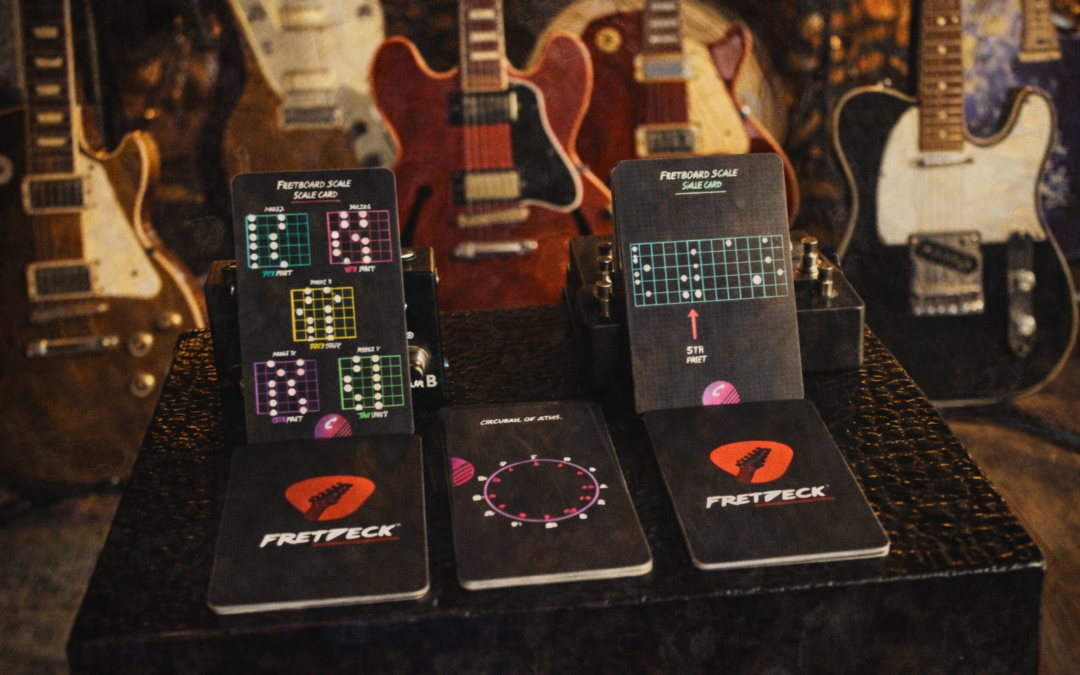
That’s where guitar learning cards become surprisingly powerful.
Not as flashcards.

Not as trivia.
But as a map.
The Fretboard Is Not Linear
The piano is linear. Low to high. Left to right.
The guitar is not.
The same note appears in multiple places.
Intervals shift depending on the string set.
The B string quietly rearranges the geometry.
It’s an ecosystem, not a straight line.
When you understand that, you stop thinking in patterns and start thinking in relationships.
That’s what good guitar learning cards train.
They don’t just show you information.
They train your perception.
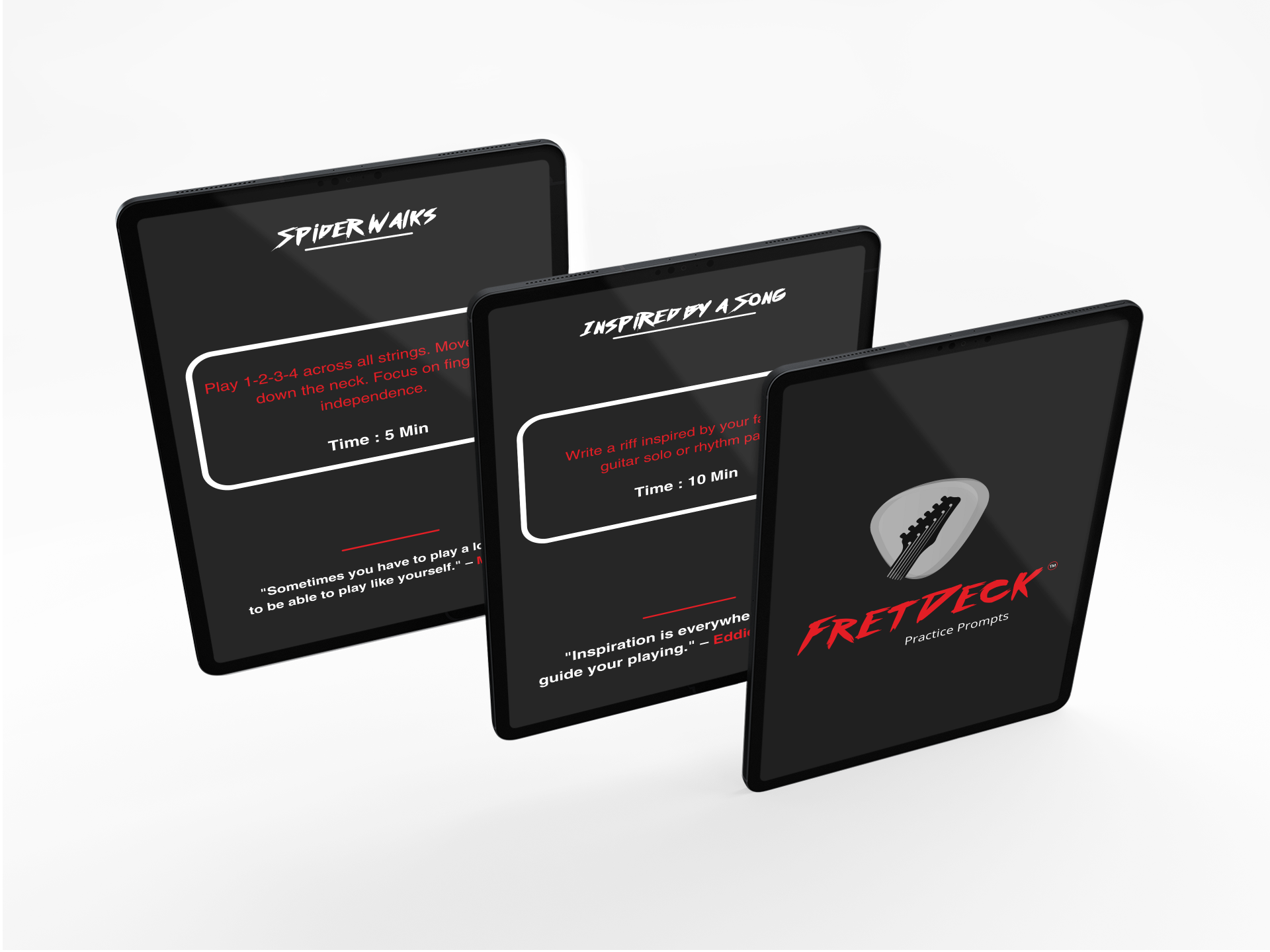
The Simple Guitar Practice System That Eliminates Guesswork
So You Can Stop Stalling… and Start Sounding Better Every Time You Pick Up the Guitar
👉 Get 52 Practice Prompts Now!
Mapping Through Constraint
One of my favorite exercises is this:
Take a single string.
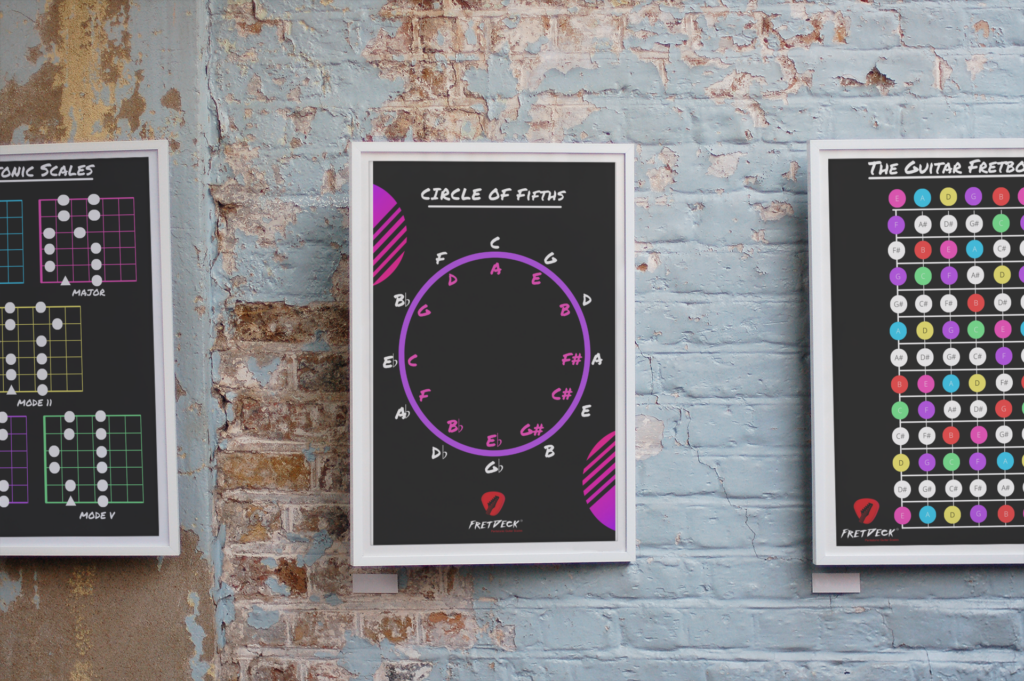
Now move around the circle of fourths.
Say each note out loud.
Play it slowly. Let it resonate.
You’re not racing. You’re mapping.
This does something subtle but important:
It connects your hands to your ears — and both to your mind.
Guitar learning cards built around interval movement, string mapping, and circle-based exploration accelerate this process dramatically.
Instead of asking:
“What should I practice?”
You pull a card.
Now your brain has a task.
Why Most Players Stay Stuck
Here’s the uncomfortable truth:
Most guitarists consume more than they integrate.
YouTube teaches you new shapes daily.
But integration requires repetition and variation.
Without a system, you collect shapes.
With structure, you build fluency.
A well-designed deck of guitar learning cards introduces:
- Interval mapping prompts
- Root relocation exercises
- Circle-of-fourths challenges
- Two-note shape drills
- Octave displacement work
- String-set awareness
This isn’t about memorizing diagrams.
It’s about building internal geography.
Intervals Are the Real Language
If you can see a root note…
Can you immediately find the 3rd?
The 6th?
The 9th?
Can you do it without thinking?
That’s the goal.
Guitar learning cards that focus on interval mapping train you to:
- Hear before you play
- Anticipate movement
- Understand voicing relationships
- Adapt chord shapes across the neck
When you understand intervals, you’re no longer trapped inside patterns.
You’re navigating.
The B String Problem (And Why It Matters)
The guitar is tuned mostly in fourths.
Except for one string.
That slight shift between G and B is small — but it changes everything.
Good practice systems don’t ignore this.
They train around it.
Structured guitar learning cards can include B-string adjustment drills so your shapes don’t collapse when you cross strings.
That’s the difference between “knowing shapes” and “knowing the instrument.”
Visualization Is the Turning Point
Eventually, the goal is this:
Close your eyes.
See the map.
Not abstractly — clearly.
See the root.
See its intervals radiating around it.
See where the octave lives.
When that happens, improvisation changes.
Chord voicings become fluid.
Melodies become intentional.
Your hands stop searching.
They move with purpose.
The Problem With Most Practice
Most “learning tools” are passive.
They show diagrams.
They label notes.
They test memory.
But they don’t force movement.
They don’t create scenarios.
They don’t create pressure.
That’s why I built something different.
The Simple Guitar Practice System That Eliminates Guesswork
So You Can Stop Stalling… and Start Sounding Better Every Time You Pick Up the Guitar
👉 Get 52 Practice Prompts Now!
The Guitar Learning Cards I Wish I Had
When I was younger, I practiced obsessively.
Pentatonic shapes.
Chord forms.
Modal patterns.
But I didn’t always connect them.
If I had a structured deck built around:
- Fretboard mapping
- Circle movement
- Interval awareness
- Root relocation
- String-set discipline
My fluency would have accelerated dramatically.
That’s exactly why I created Practice Prompts.
This Is Not Just Another Deck
These aren’t flashcards.
They’re musical scenarios.
Each card forces you to:
- Apply theory in motion
- Think relationally
- Explore constraints
- Build internal mapping
- Strengthen visualization
Instead of asking, “What should I work on?”
You draw a card.
And you build.
Who Are Guitar Learning Cards For?
They’re ideal if:
- You feel lost on the fretboard
- You know scales but can’t apply them
- You want faster integration
- You teach and need structured drills
- You crave creative constraints
If you’ve ever thought:
“I know this stuff… but it doesn’t feel connected.”
This is the bridge.
Ready to Build the Map?
If you want structured prompts that train fretboard fluency instead of surface memorization, grab Practice Prompts here:
👉 https://fretdeck.myclickfunnels.com/practice-prompts
Draw a card.
Set a timer.
Build pathways.
Six months from now, you won’t just “know” the fretboard.
You’ll see it.
And once you see it…
You’re never lost again.
If you want to see how structured prompts turn repetition into real musical progress, check out my guide on turning practice into music here:
https://guitarfreaksblog.com/the-guitar-learning-tool-that-finally-turns-practice-into-music/
The Simple Guitar Practice System That Eliminates Guesswork
So You Can Stop Stalling… and Start Sounding Better Every Time You Pick Up the Guitar
👉 Get 52 Practice Prompts Now!
Related posts: