

Walk into any guitar shop, and you’ll hear scales—fluid patterns dancing up and down the fretboard, a conversation between player and instrument. But behind those licks and runs is a secret not every guitarist talks about: the real power of scales isn’t just in the notes. It’s in how they’re mapped to the fretboard—and more importantly, how well you understand that map.
In this deep dive, we’re going to unpack how to approach guitar scales and fretboard mastery with intention, clarity, and a bit of soul. We’ll take cues from the greats but apply fresh insights that align with your journey as a modern guitarist. We’ll also explore how tools like the FretDeck and our Guitar Freaks Hangout Discord community can radically improve your learning path.
Part I: Why Guitar Scales Matter (More Than You Think)
You’ve heard it before: scales are the building blocks of music. That’s true—but let’s zoom in.
Guitar scales are not just sequences of notes. They’re blueprints. They give you insight into harmony, phrasing, rhythm, and even the emotional weight of a solo. But their power multiplies when they’re paired with fretboard fluency. A scale in your head is theory; a scale under your fingers is expression.
Learning scales in isolation—without understanding where you are on the fretboard—is like reading a poem in a language you barely understand. You can sound out the words, but you miss the meaning.
Part II: The Modern Problem—Fretboard Fog
Let’s be honest. Most guitarists hit a wall not because they lack talent, but because they never fully own the fretboard. They memorize patterns, but they don’t connect them.
I call this fretboard fog—the hazy in-between where you kind of know where you are, but not really. You can solo in A minor pentatonic on the fifth fret, but ask you to shift into D Dorian on the 10th, and your fingers freeze.
The cure? Not more YouTube videos. Not another scale book.

You need a system. A repeatable framework that you practice with purpose. That’s where the FretDeck comes in.
The Simple Guitar Practice System That Eliminates Guesswork
So You Can Stop Stalling… and Start Sounding Better Every Time You Pick Up the Guitar
👉 Get 52 Practice Prompts Now!
Part III: Building a Fretboard Framework
The key to navigating the guitar neck isn’t learning more—it’s connecting more. You want to see scales not as separate positions, but as interconnected pathways.
Here’s a three-part framework I teach to my students:
- Anchor Points – Know where your roots are. Every scale has anchor notes—roots, thirds, fifths. Identify them in every position.
- Shape Recognition – Learn the five core shapes (CAGED system, for example), but see them as sliding, flexible zones—not static boxes.
- Interval Thinking – Practice seeing intervals within scales (minor thirds, perfect fourths). This unlocks melody and phrasing.
Once you internalize this, your fretboard stops being a maze. It becomes a map.
Part IV: Practicing Scales With Intention
Most guitarists play scales up and down. That’s fine for mechanics, but it won’t train your musical mind.
Try these:
- Directional Sequences: Play your scales in 3s or 4s (e.g., A-B-C, B-C-D, C-D-E)
- Melodic Fragments: Isolate 3-note segments and improvise with just those
- Connect the Shapes: Play through all 5 scale shapes ascending the neck on one string set (e.g., just the G and B strings)
- Root Navigation: Start and end on different scale degrees to shift tonal focus
This is where the FretDeck becomes powerful. With 60+ scale cards in every key, you’re not just learning—you’re exploring, connecting, and building muscle memory across the neck.
Part V: Real Guitarists. Real Application.
Let’s pull this out of theory. B.B. King didn’t solo with every scale mode known to man—he mastered a few, and he played them with soul, conviction, and fretboard awareness.
John Scofield? He bends the rules of theory because he understands them so well. His phrasing jumps across positions because he knows where every scale tone lives.
The difference isn’t knowledge. It’s fretboard confidence.
When I was learning, I practiced every day with backing tracks, vinyls spinning in the background. I didn’t just play scales—I listened to what they sounded like against chords. I trained my ears as much as my fingers.
That’s what we teach inside the Guitar Freaks Hangout. It’s not just about practice. It’s about musical context. It’s about feedback, growth, and real community.
Part VI: The FretDeck Advantage
Here’s the thing: learning guitar scales across the fretboard isn’t just about grit. It’s about tools.
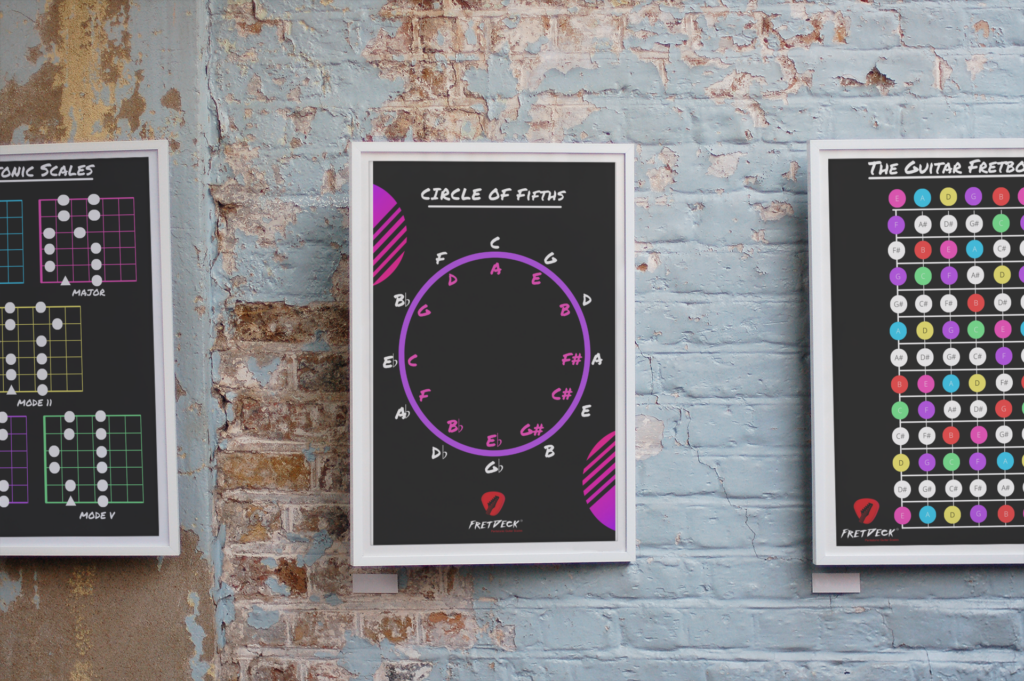
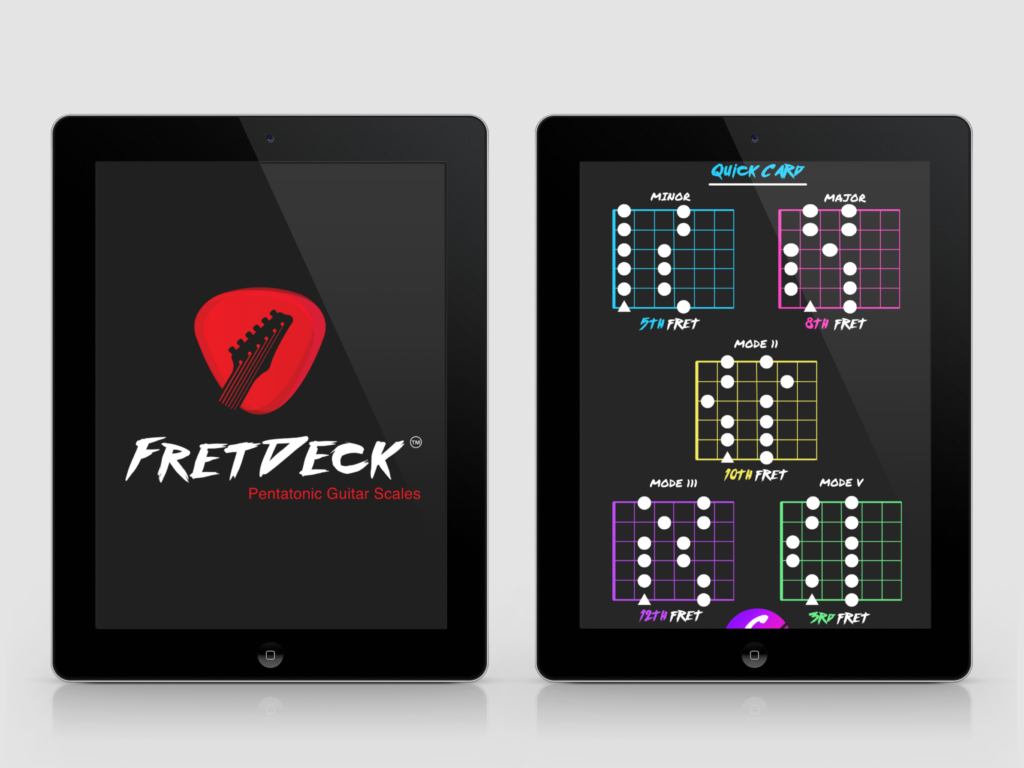
FretDeck: Pentatonic Scales Edition is a physical card deck that breaks down all five pentatonic patterns in every key. But it’s not just flashcards. It’s a system:
- Tabs for every pattern
- Visual fretboard diagrams
- Highlighted root notes
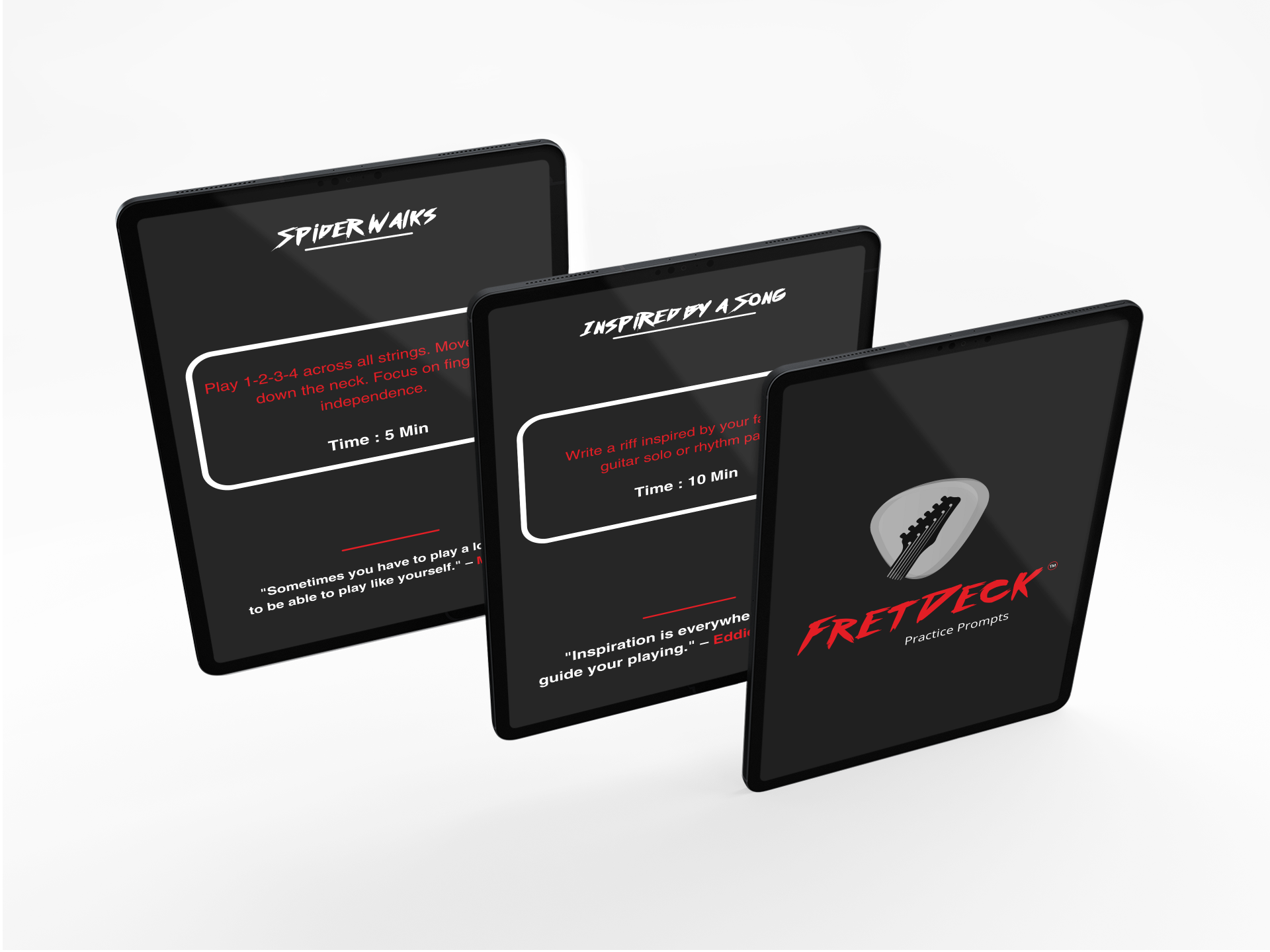
- Practice prompts and improvisation challenges
Imagine grabbing 3 random cards from the deck and challenging yourself to solo through them in time with a jam track. That’s real practice.
And if you want feedback, join the Guitar Freaks Hangout Discord. Post your videos. Ask questions. Learn from other guitar freaks like you.
The Simple Guitar Practice System That Eliminates Guesswork
So You Can Stop Stalling… and Start Sounding Better Every Time You Pick Up the Guitar
👉 Get 52 Practice Prompts Now!
Part VII: Practical Fretboard Exercises You Can Try Today
1. Root Note Locator
- Pick any key. Find all the root notes for that scale on every string.
- Say them out loud. Train your eye-hand-brain connection.
2. Scale Shape Switch Up
- Play one shape of the scale ascending.
- Switch to the next shape descending.
- Connect at common notes between patterns.
3. Interval Jump Drills
- Pick two intervals (e.g., major 3rd, perfect 5th)
- Practice jumping to those intervals within any scale you play.
4. Three-Note Jam
- Limit yourself to three notes in a scale.
- Play a solo using only dynamics, rhythm, and phrasing.
Part VIII: Bring Soul to the Science
Scales and fretboard visualization can be mechanical—or they can be emotional.
Every note on the neck has a personality. A tension. A color.
When you learn scales as expressions, not just positions, the fretboard becomes a canvas.
Play like a painter, not a typist.
Final Thoughts: From Fog to Freedom
Most guitarists float in fretboard fog for years. But you don’t have to.
When you learn guitar scales and the fretboard together—intentionally, musically, visually—you start to see the whole neck as one continuous instrument, not a collection of boxes.
That’s the power of smart practice. That’s the heart of FretDeck.
And that’s why we built the Guitar Freaks Hangout—because no one should go it alone.
Join Guitar Freaks Hangout on Discord! 🎸
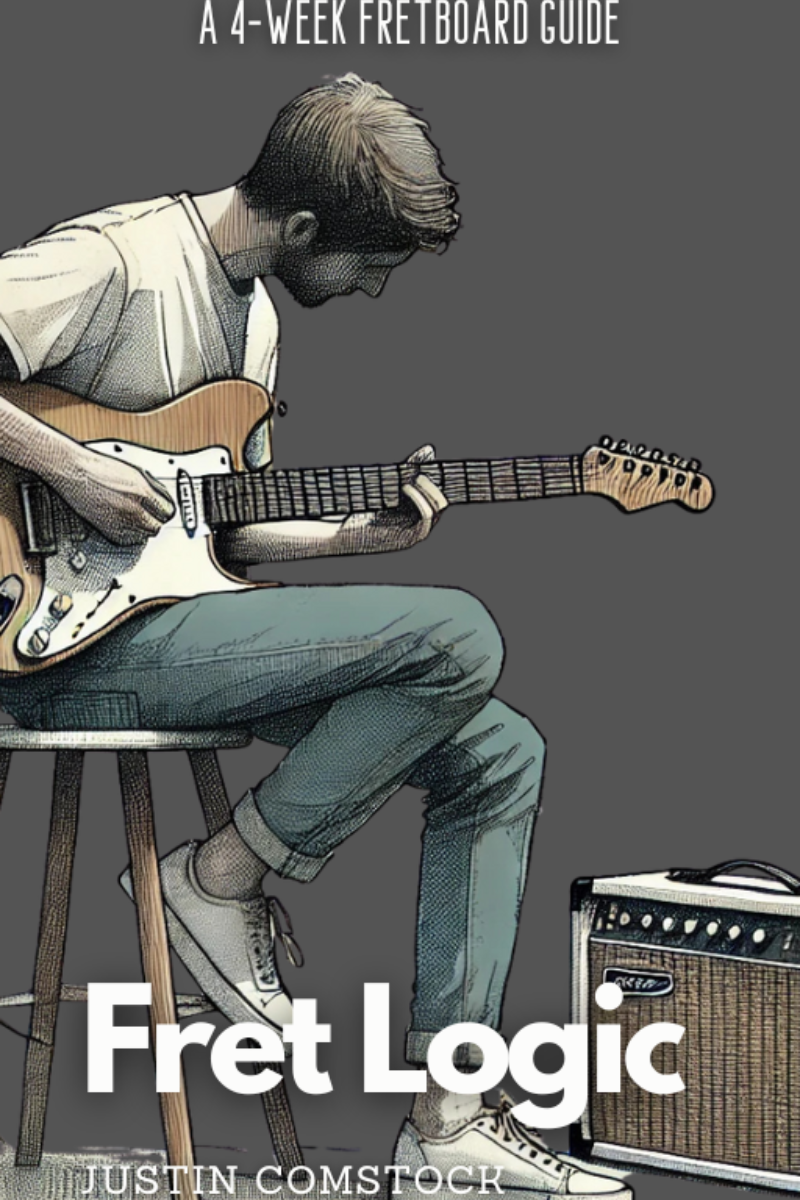
Get Fret Logic FREE!
Join the Guitar Freaks Hangout Discord and get exclusive access to my entire e-book, Fret Logic! Master the fretboard and elevate your solos with this comprehensive guide.
👉 Don’t miss out—join now and download your free copy!
Ready to break out of the fog?
Play smarter. Play freer. Play like you.
For a deeper understanding of how scales connect to musical expression, check out this excellent guide from JustinGuitar on how to learn scales effectively.
Related posts: