

There’s a moment in every guitarist’s life when the fretboard stops looking like a grid of strings and dots—and starts becoming a landscape. Learning guitar fretboard is a journey.
But getting there? That’s the hard part.
Learning the guitar fretboard is one of those milestones that separates casual players from confident ones. It’s not about memorizing every note by brute force or cramming all five pentatonic shapes in a week. It’s about something deeper: recognition, relationship, and repetition with meaning.
In this post, we’ll explore what it really means to learn the fretboard. We’ll take cues from the greats, share creative strategies, and show how tools like FretDeck and our Guitar Freaks Hangout community can accelerate your learning curve.
Part I: The Fretboard Isn’t a Puzzle. It’s a Story.
When I first started playing guitar, I saw the fretboard as a puzzle to solve. Notes, shapes, patterns—nothing seemed to connect.
But then something clicked.
I stopped trying to conquer it and started listening to it. I realized the fretboard is more like a story than a map. Each fret is a word, each string a voice. When you read the neck, you begin to speak through it.
Great players—like Robben Ford, Eric Johnson, and Adam Levy—don’t think in patterns. They think in phrases. And phrases live in regions of the fretboard, not boxes.

That’s why learning the guitar fretboard isn’t just about knowing where the C is on the 8th fret of the low E string. It’s about knowing what you can do from that note.
Download The FretDeck & Pentatonic Secrets Course!
Download Our Course
Part II: Why Most Guitarists Stay Stuck
Let’s be real: most guitarists stay stuck in one or two positions for years. The infamous pentatonic box 1 becomes both a comfort zone and a cage.
Here’s why:
- They learn patterns, but not notes.
- They practice scales, but not intervals.
- They chase speed, but ignore navigation.
The result? The fretboard stays foggy. You can solo in A minor at the 5th fret, but you get lost the moment someone changes keys.
The solution isn’t more content. It’s better practice. Focused repetition with visual and sonic context.
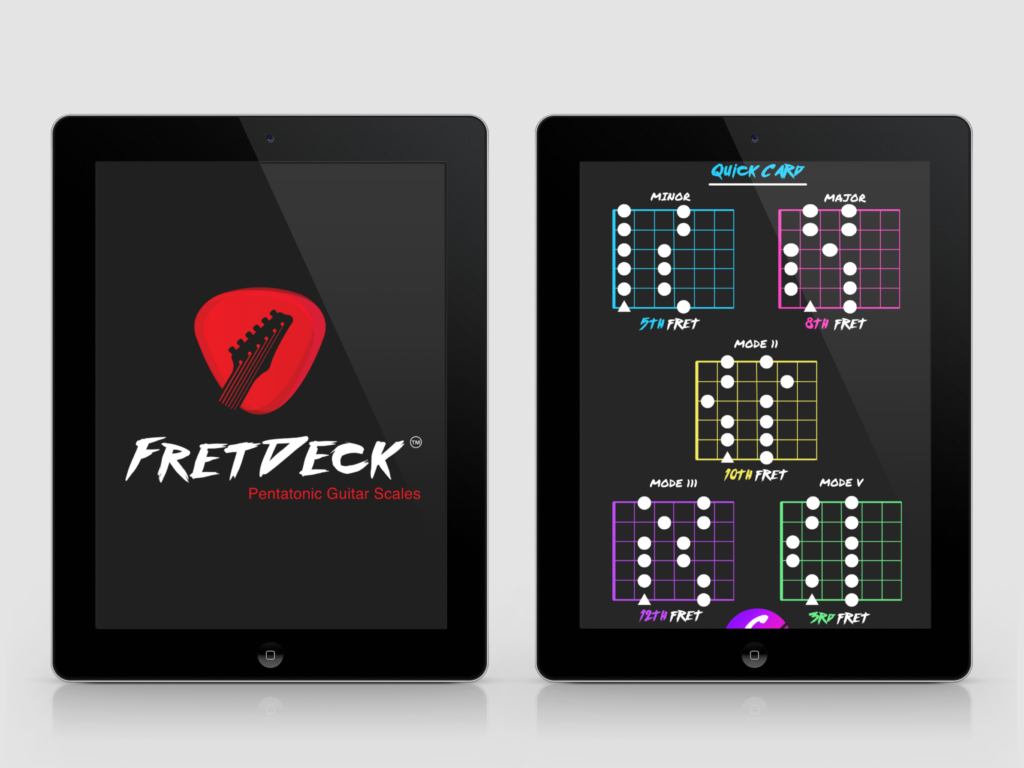
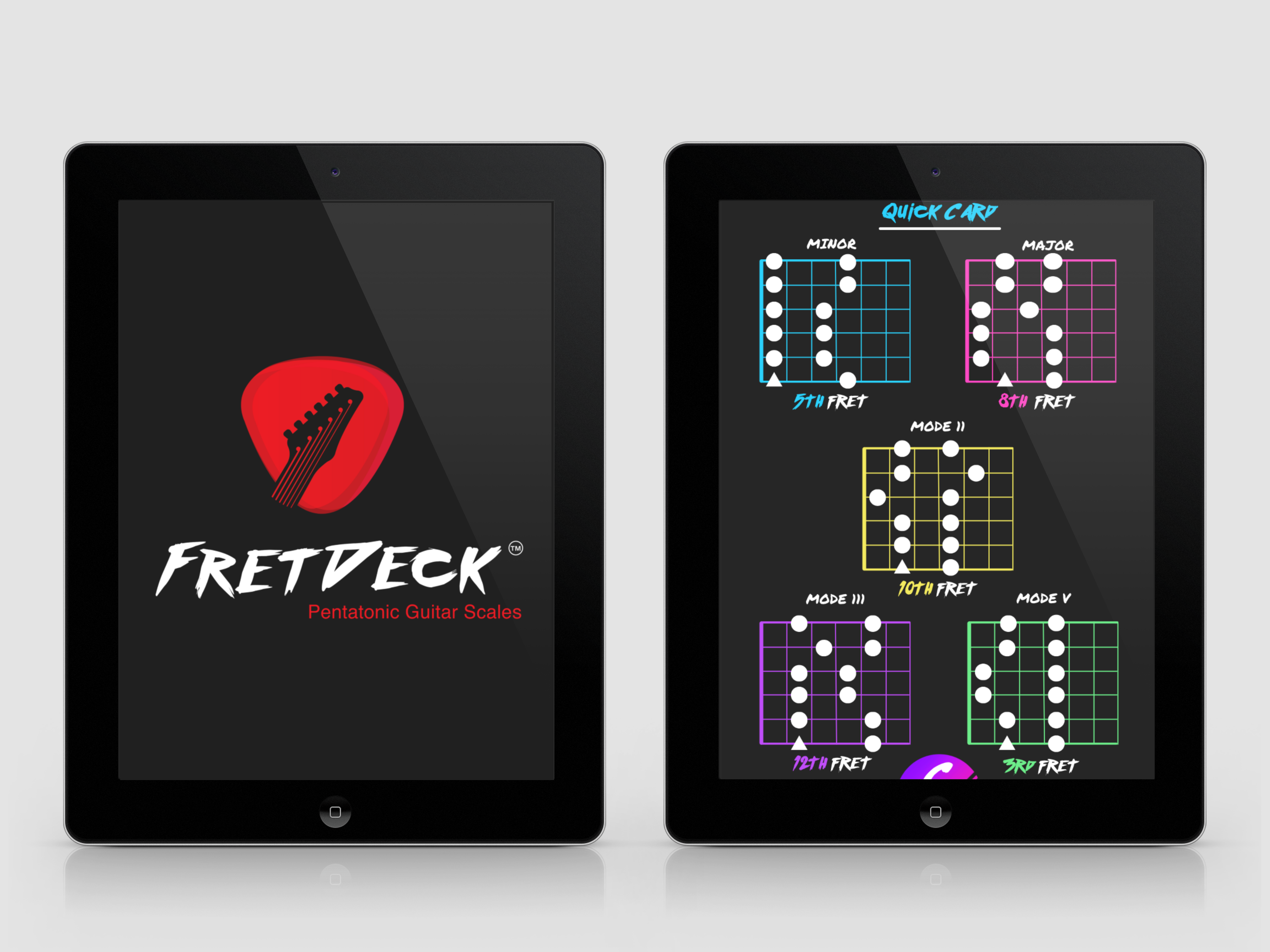
That’s exactly what FretDeck is built for.
If you’re diving deep into scale work as part of your fretboard journey, I also recommend reading our post on 5 Killer Ways to Use the Pentatonic Scale Guitar A Minor. It offers practical, melodic ideas to help your solos sound less like exercises and more like music.
Part III: The 3 Levels of Fretboard Fluency
1. Note Recognition
You should know where every A, E, G, and D is on the neck. Not by rote memorization—but by usage.
Practice Prompt: Take 5 minutes per day to locate all the G notes on the fretboard. Say them out loud. Play them in time. Change keys tomorrow.
2. Interval Awareness
Intervals are the DNA of music. Minor thirds, perfect fourths, sixths—these are what melodies are built on.
Practice Prompt: Pick a root note. Play up a perfect 5th, then a major 3rd, then a minor 7th. Do this in different positions. You’ll begin to “see” the fretboard like a jazz player.
3. Shape Integration
Shapes are great—if you can connect them. The goal is to glide across the fretboard, not teleport between boxes.
Practice Prompt: Use FretDeck to pull two random pentatonic shapes. Improvise through both with no breaks. Think of it like stitching two neighborhoods together on your mental map.
Part IV: Creative Ways to Learn the Guitar Fretboard
Let’s break out of the grid.
1. The One String Exercise
Limit yourself to playing melodies and scales on just one string. You’ll be forced to learn the notes and intervals.
2. Drone and Improv
Use a drone note (like a low A) and improvise melodies in a scale over it. This teaches tonal awareness and fretboard navigation.
3. Triad Shapes in Open Voicings
Instead of cowboy chords, play triads all over the neck. Learn them in root, first, and second inversions. You’ll start recognizing shapes that mirror real music.
4. Fretboard Flashcards
Yep. Analog works. Write a note (like C#) on one side. On the other, write all the frets/strings where that note lives. Use these flashcards alongside FretDeck for reinforcement.
5. FretDeck Challenges
Grab three random cards. Play a solo using only those shapes. Add a new shape every 60 seconds. Post your session in our Guitar Freaks Hangout for feedback.
Part V: Stories from the Fretboard Frontline
Jack, one of our Guitar Freaks Hangout members, struggled to memorize scales for years. But once he started visualizing intervals—and using FretDeck’s color-coded root system—something unlocked. Now, he solos confidently in any key.
Jennifer learned chords before scales, so she had trouble navigating the neck. We challenged her to build progressions using triads across three string sets. Within weeks, she was hearing her solos more melodically and connecting scale shapes to chord shapes.
Learning the fretboard is about patterns—but also about people. That’s why our Discord community exists: to give players a place to share struggles, breakthroughs, and licks.
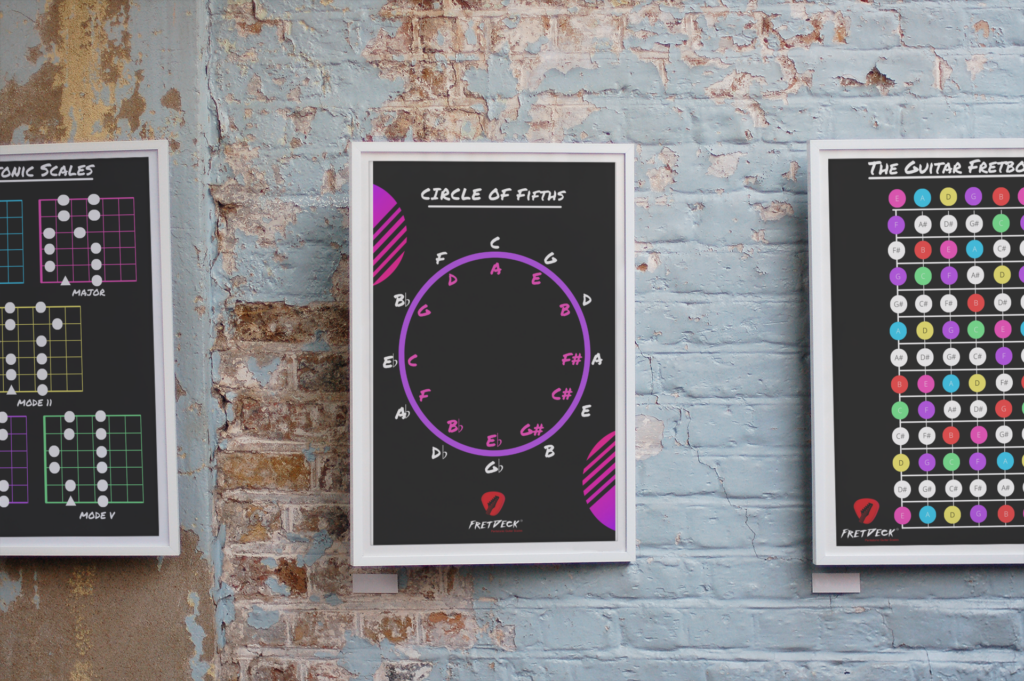
Part VI: How FretDeck Makes the Fretboard Visual
You can’t learn what you can’t see.
FretDeck is the only physical guitar learning system built specifically to help you:
- Visualize pentatonic and modal shapes
- Understand root positioning
- Connect scale shapes across the neck
- Practice with improvisation prompts
The cards are designed to be portable, practical, and playable. You can keep them next to your amp, throw them in your gig bag, or lay them out like a setlist for practice.
Imagine this:
- Draw 5 cards in the key of G minor
- Practice connecting all 5 patterns without stopping
- Record yourself and listen back for phrasing
This is how real fretboard fluency is built.
If you want another perspective on fretboard visualization and scale fluency, check out this excellent breakdown from JustinGuitar: How to Learn Scales. It’s packed with practical tips that pair well with FretDeck-based practice.
Download The FretDeck & Pentatonic Secrets Course!
Download Our Course
Part VII: The Emotional Payoff
Why does fretboard fluency matter?
Because it lets you stop thinking—and start feeling. When you know the neck, you can:
- Play what you hear in your head
- Craft solos that move people
- Break out of licks and play stories
Learning the guitar fretboard is a rite of passage. It’s not easy. But it’s worth it.
Once you know it, the neck becomes a place of freedom, not frustration.
Final Thoughts: You Don’t Have to Learn Alone
If you’re tired of feeling stuck in a few patterns… If you want to finally learn the guitar fretboard… If you want to feel confident soloing in any key…
Then you need the right tools—and the right people around you.
Here’s what to do next:
- Grab your FretDeck
- Join the Guitar Freaks Hangout Discord
- Share your first fretboard breakthrough with the community
Let’s be the kind of players who don’t just memorize the fretboard—we live on it.
See you in the Hangout. 🎸
Join Guitar Freaks Hangout on Discord! 🎸
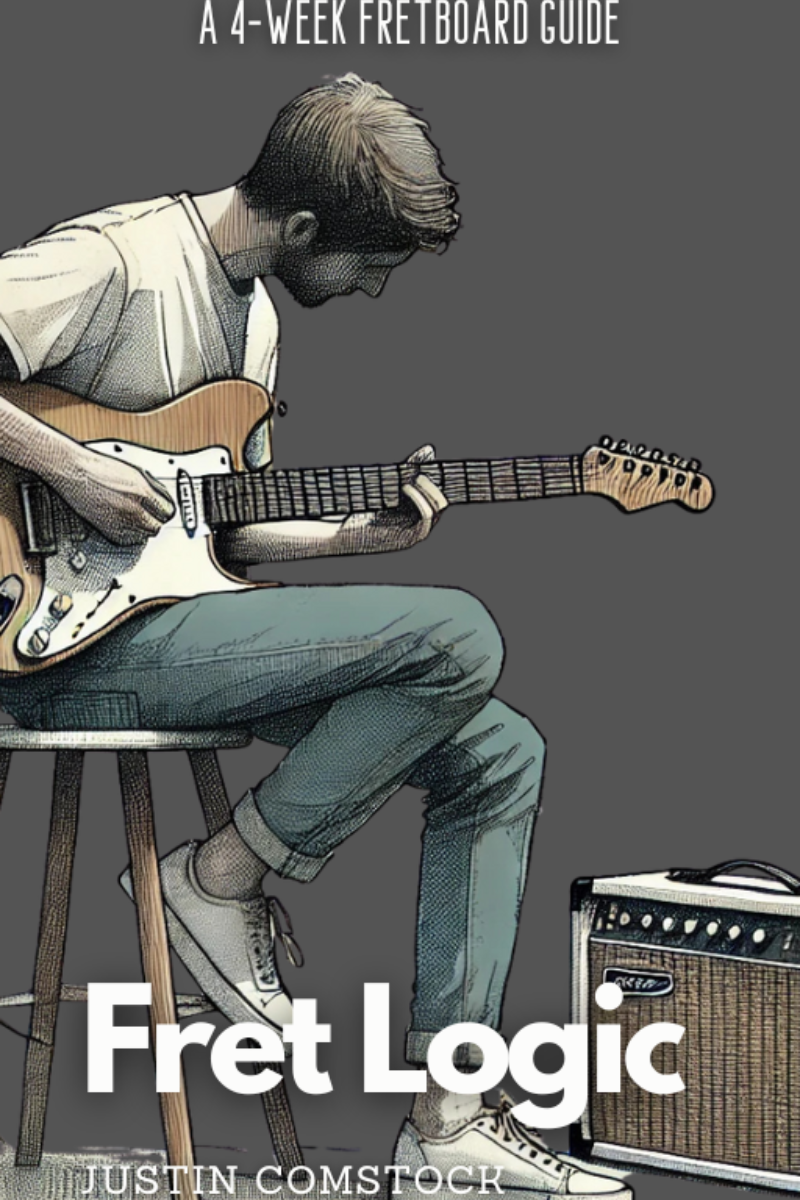
Get Fret Logic FREE!
Join the Guitar Freaks Hangout Discord and get exclusive access to my entire e-book, Fret Logic! Master the fretboard and elevate your solos with this comprehensive guide.
👉 Don’t miss out—join now and download your free copy!
Related posts: