

Practicing guitar scales isn’t just a chore—it’s a window into better technique, creativity, and musical understanding. If you’ve ever felt stuck noodling around with scales but not seeing much payoff, this guide is for you. We’ll dig into the “why” and the “how” of scale practice to help you unlock new levels of speed, accuracy, and musicality. Think of this as your blueprint to turn a mundane task into a transformative experience.
Why Practicing Guitar Scales Matters
Scales are the DNA of music. They’re behind every lick, riff, and solo you admire. By practicing scales, you’re not just building finger strength or muscle memory; you’re laying a foundation for improvisation, songwriting, and understanding the fretboard. Plus, when you practice them well, you’ll start to notice your phrasing becomes more fluid, and your playing sounds…well, more musical.
But practicing scales isn’t just about running through them from low E to high E on autopilot. It’s about intentionality.
Join Guitar Freaks Hangout on Discord! 🎸
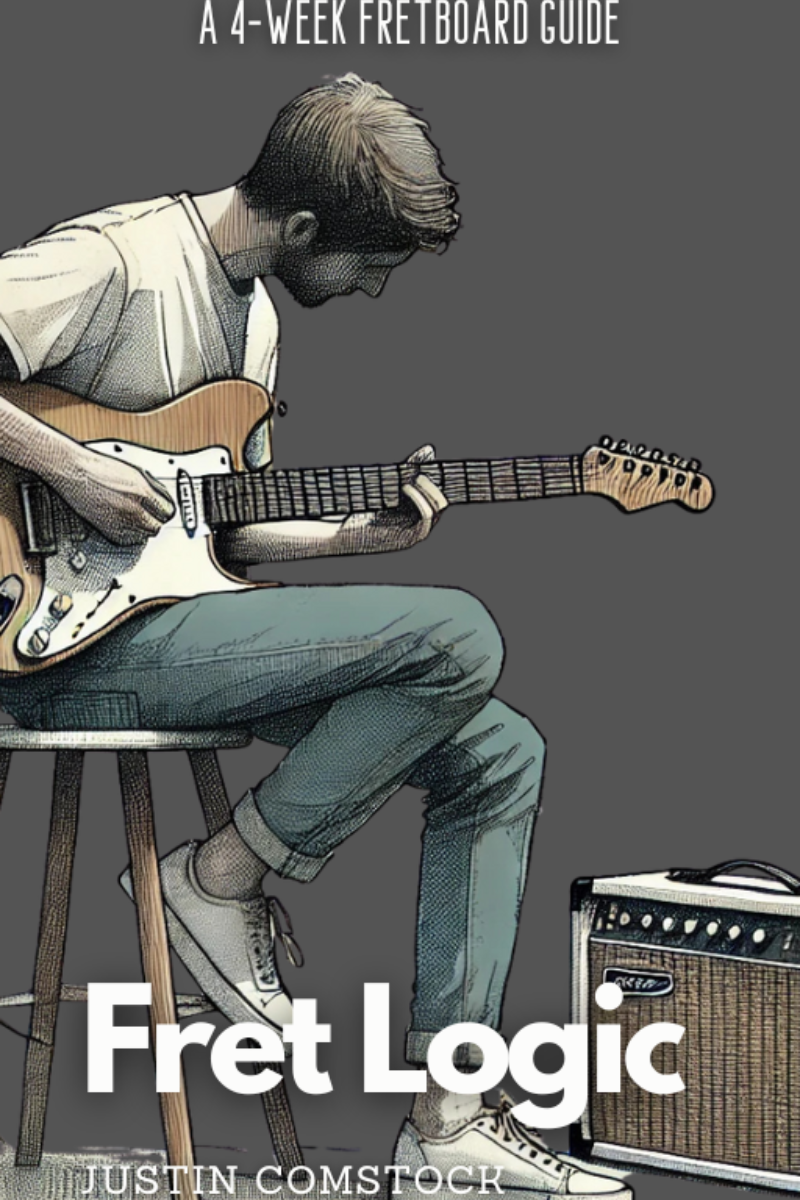
Get Fret Logic FREE!
Join the Guitar Freaks Hangout Discord and get exclusive access to my entire e-book, Fret Logic! Master the fretboard and elevate your solos with this comprehensive guide.
👉 Don’t miss out—join now and download your free copy!
Step 1: Slow It Down and Focus on Accuracy
Start slow. I can’t stress this enough. Grab a metronome, set it to a tempo where you can play cleanly, and focus on each note.
- Why slow? It helps you identify sloppy transitions, uneven timing, or weak finger positioning.
- Pro Tip: Use alternate picking for every note. Down-up-down-up. No exceptions.
Try this exercise with a C Major scale:
- Play ascending notes in perfect time with the metronome.
- Once you reach the highest note, pause.
- Descend back down, ensuring every note rings clearly.
Step 2: Explore Patterns and Positions
The guitar neck is like a puzzle, and scales are the pieces. Learn the five common CAGED positions for any scale you’re working on. These will help you map out the fretboard and understand how the notes connect across octaves.
Here’s a fun challenge:

- Play your scale in one position for two octaves.
- Move up the neck and play the same scale in another position.
- String these positions together to create seamless transitions.
Step 3: Add Rhythmic Variations When Practicing Guitar Scales
A scale isn’t just a series of notes; it’s a canvas for rhythm. Experiment with:
- Triplets: Play groups of three notes per beat.
- Swing feel: Add some bounce to your picking for a jazzy vibe.
- Odd groupings: Try five or seven notes per beat for a progressive twist.
Step 4: Incorporate Dynamics When Practicing Guitar Scales
Play the scale at different volumes. For example:
- Start soft (piano) on the lower notes.
- Gradually get louder (crescendo) as you ascend.
- Reverse the process as you descend.
This adds an emotional element to your playing and mimics the natural dynamics of a melody.
Step 5: Make It Musical
Here’s the game-changer: use scales to craft mini-solos.
- Pick a backing track in the scale’s key (C major, for instance).
- Use the scale to play a few melodic phrases.
- Add slides, hammer-ons, and bends to give it personality.
Over time, your improvisation will start sounding like music rather than an exercise.
Join Guitar Freaks Hangout on Discord! 🎸
Get Fret Logic FREE!
Join the Guitar Freaks Hangout Discord and get exclusive access to my entire e-book, Fret Logic! Master the fretboard and elevate your solos with this comprehensive guide.
👉 Don’t miss out—join now and download your free copy!
Step 6: Build Speed Gradually
Once you’ve nailed accuracy and musicality, it’s time to push the tempo.
- Increase the metronome by 2–5 BPM at a time.
- Only speed up when you can play cleanly without tension.
For shredders-in-training, three-note-per-string scales are great for building speed and fluidity.
Bonus Tip: Practicing Guitar Scales with Intent
When practicing scales, ask yourself:
- Am I just going through the motions, or am I making every note count?
- How does this scale sound against a chord progression?
- Can I add vibrato or dynamics to bring this scale to life?
Practicing scales shouldn’t feel robotic—it should feel like music.
Wrap-Up
Practicing guitar scales is about more than finger exercises; it’s about transforming raw technique into artistic expression. Take it slow, focus on the details, and always aim to play musically. Before you know it, scales will be second nature, and your playing will shine.
Want to connect with others working on their scales? Join the Guitar Freaks Hangout on Discord to share progress, trade tips, and get feedback from a supportive community of players like you. Let’s grow together.
For a deeper dive into practicing guitar scales and modes, check out our comprehensive guide: Guitar Major Scales: A Guide to Mastering Scales and Modes.
Join Guitar Freaks Hangout on Discord! 🎸
Get Fret Logic FREE!
Join the Guitar Freaks Hangout Discord and get exclusive access to my entire e-book, Fret Logic! Master the fretboard and elevate your solos with this comprehensive guide.
👉 Don’t miss out—join now and download your free copy!
Related posts: